

Home Composting: What to Add (and Never Add)
What can I compost at home and what should I never put in a compost bin?
Home composting works best when you treat your bin like a simple recipe: a balanced mix of “greens” (nitrogen-rich, moist materials) and “browns” (carbon-rich, dry materials), plus airflow and a little water. Get those basics right, and you can turn everyday scraps into dark, crumbly compost for gardens and planters.
What you can compost at home (the “yes” list)
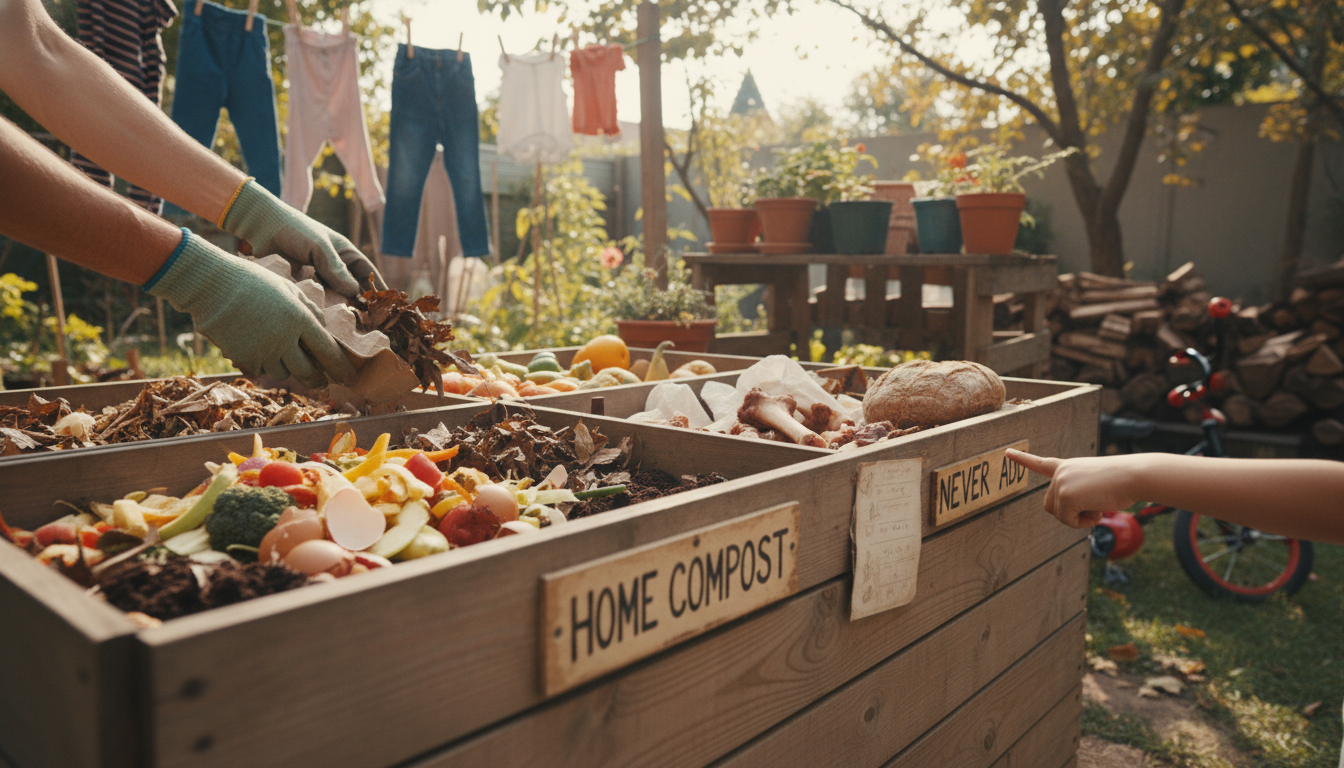
Kitchen scraps: Fruit and vegetable peels and trimmings, coffee grounds and paper filters, tea leaves (and many paper tea bags), eggshells (crushed), and stale grains like bread or rice in small amounts.
Yard and paper items: Dry leaves, grass clippings (thin layers so they don’t mat), small plant prunings, untreated wood chips, shredded newspaper, plain cardboard (no glossy coating), paper towels/napkins (when used for food), and dryer lint from natural fibers.
Best practice: Aim for roughly 2–3 parts browns to 1 part greens by volume. Chop larger scraps, bury fresh food waste under browns, and keep the pile as damp as a wrung-out sponge.
What you should never put in a compost bin (the “no” list)
Animal products: Meat, fish, bones, dairy, grease, oils, and fatty foods. These attract pests and can create strong odors.
Pet and human waste: Dog/cat feces, litter, diapers—these can contain pathogens and parasites not reliably neutralized in typical backyard systems.
Problem plants and materials: Weeds with mature seeds, invasive plants, diseased plant material, and “compostable” plastics unless your local program confirms they break down in home conditions.
Treated or contaminated inputs: Pressure-treated wood, coal/charcoal ash, glossy paper, and anything exposed to pesticides or chemical cleaners.
For a simple, step-by-step setup (including bin options and troubleshooting), follow the full guide here: Home Composting Made Simple: Beginner Guide.
FAQ
How do I keep my compost from smelling bad?
Smell usually means too many “greens” or not enough airflow. Add dry browns (shredded cardboard/leaves), turn the pile, and avoid adding meat, dairy, or oily foods.










Leave a comment