

Wall Charging Station: Power Tool Organizer With Strip
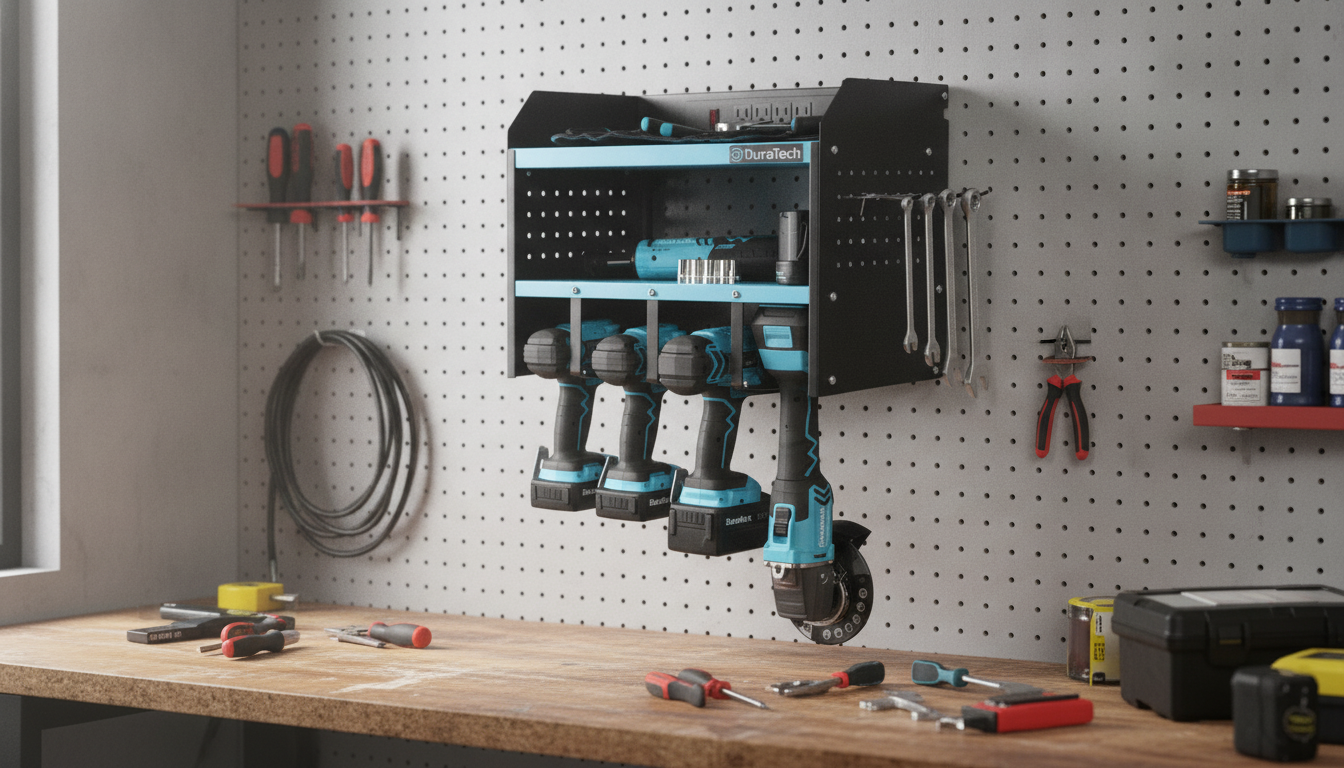
Wall-Mounted Power Tool Organizer with Built-in Power Strip: Cleaner Storage and Charging in One Spot
A wall-mounted organizer that holds drills, drivers, batteries, and accessories while also providing outlets for charging can simplify a garage, shed, or workshop fast. The right setup keeps tools visible, cords controlled, and frequently used items within easy reach—without sacrificing bench space. Instead of juggling chargers across multiple outlets (or letting batteries drift into random drawers), a single “charging wall” makes it easier to keep tools ready and the work area clear.
Why a wall-mounted organizer with power makes a difference
Most tool clutter starts on the workbench: a drill set down “for a minute,” a charger that stays plugged in, a few loose batteries, then a pile that never quite resets. A wall-mounted station changes the default behavior by giving every item a vertical home.
- Frees up workbench and floor space by moving storage vertically
- Creates a consistent “home base” for tools, chargers, and batteries
- Reduces cord clutter by consolidating charging to one mounted station
- Helps protect tools from being knocked off benches or buried in drawers
- Speeds up project setup and cleanup when everything has a dedicated spot
As a bonus, tools stored handles-forward and evenly spaced are easier to inventory at a glance—so it’s obvious when a battery is missing or a driver didn’t make it back to the rack.
What to look for before buying
Not every rack works for every tool ecosystem. A little planning up front helps prevent annoying issues like blocked outlets, cramped handles, or a station that feels awkward to use.
- Outlet access and cord routing: confirm the strip and cord placement won’t interfere with tool hanging positions
- Mounting method: choose a design that fastens securely into wall studs or a properly anchored surface
- Tool slot spacing: ensure handles and battery packs won’t collide when tools are stored side-by-side
- Weight capacity: account for heavier tools (hammer drills, impact wrenches) and multiple batteries
- Charger fit: check whether common charger footprints can sit securely without blocking outlets
- Workshop conditions: consider dust exposure and plan for periodic cleaning around outlets and chargers
Electrical safety matters in any charging station. If your workspace gets dusty or you routinely run high-draw tools, it’s worth reviewing basic guidance from OSHA’s electrical safety resources and general best practices from the NFPA.
Quick comparison: wall storage vs. bench storage vs. rolling cart
Choosing the right storage style depends on how often you use the tools and how tight the shop space is. Here’s a simple side-by-side look:
| Option | Best for | Tradeoffs |
|---|---|---|
| Wall-mounted organizer with power | Dedicated charging + daily tool access | Requires drilling and planning layout |
| Workbench organizers/shelves | Quick setup and repositioning | Uses workspace; cords can sprawl |
| Rolling tool cart | Mobile projects and shared spaces | Takes floor space; can get cluttered |
For most home garages and compact workshops, a wall station is the fastest way to reclaim usable bench area while keeping chargers tidy and predictable.
Installation basics for a sturdy, safe setup
A good organizer should feel solid: no wobble when you remove a tool, no strain on the power cord, and no chargers crammed together. These basics help you get there.
- Choose a location near an existing wall outlet and away from water sources or damp areas
- Mount into studs when possible; if mounting to masonry or drywall without studs, use anchors rated for the load
- Place the organizer at a height that allows tools to lift off cleanly without scraping the wall
- Leave enough clearance above chargers for heat dissipation and easy battery removal
- Route cords so they do not cross tool handles or hang where they can snag
- Do a quick “reach test”: simulate grabbing the most-used tool and battery without bumping adjacent items
If you’re building a dedicated “charging corner,” consider adding a small sweep zone below the station (nothing stored on the floor directly underneath). It makes cleaning easier and discourages the return of cord piles.
Everyday layout ideas that keep things tidy
Once the organizer is up, the layout determines whether it stays organized. A few habits make the station feel effortless instead of fussy.
- Group by workflow: drilling/fastening tools together; sanding/cutting tools together
- Keep chargers centered and tools to the sides to reduce cord crossings
- Store the heaviest tools in the most secure, lowest positions
- Add small bins or hooks nearby for bits, blades, and driver sets
- Label charging positions if multiple battery platforms are used
- Maintain a small “inbox” spot for items that need repair or replacement so they don’t migrate back into storage
If the station supports multiple chargers, spacing is your friend. A little breathing room between chargers reduces heat buildup and makes it easier to grab a battery without tugging a cord.
Product spotlight: Wall Mounted Power Tool Organizer with Built-in Power Strip
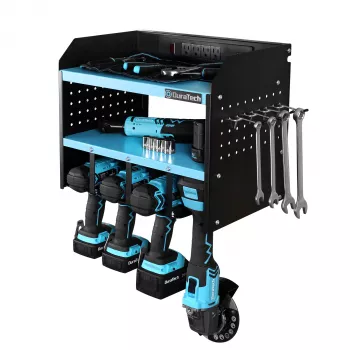
For a simple, no-drama upgrade, the Wall Mounted Power Tool Organizer with Built-in Power Strip combines tool storage and a built-in power strip so charging happens where tools live. It’s a practical way to create a dedicated station for drills, drivers, and related accessories while keeping cords from spreading across the bench.
| Item | Detail |
|---|---|
| Product | Wall Mounted Power Tool Organizer with Built-in Power Strip |
| Price | 39.67 USD |
| Availability | In stock |
More in-stock picks to complement a well-organized workspace
- 125mm F10 Schmidt-Cassegrain Computerized GoTo Astronomical Telescope with StarBright XLT (in stock)
Care, cleaning, and long-term use
FAQ
What is wall power called?
Wall power is commonly referred to as mains electricity, household AC power, or line voltage. It’s the alternating current delivered through standard wall outlets at the typical voltage used in your region.










Leave a comment