

Toddler Slide & Playhouse with Kitchen and Picnic Table
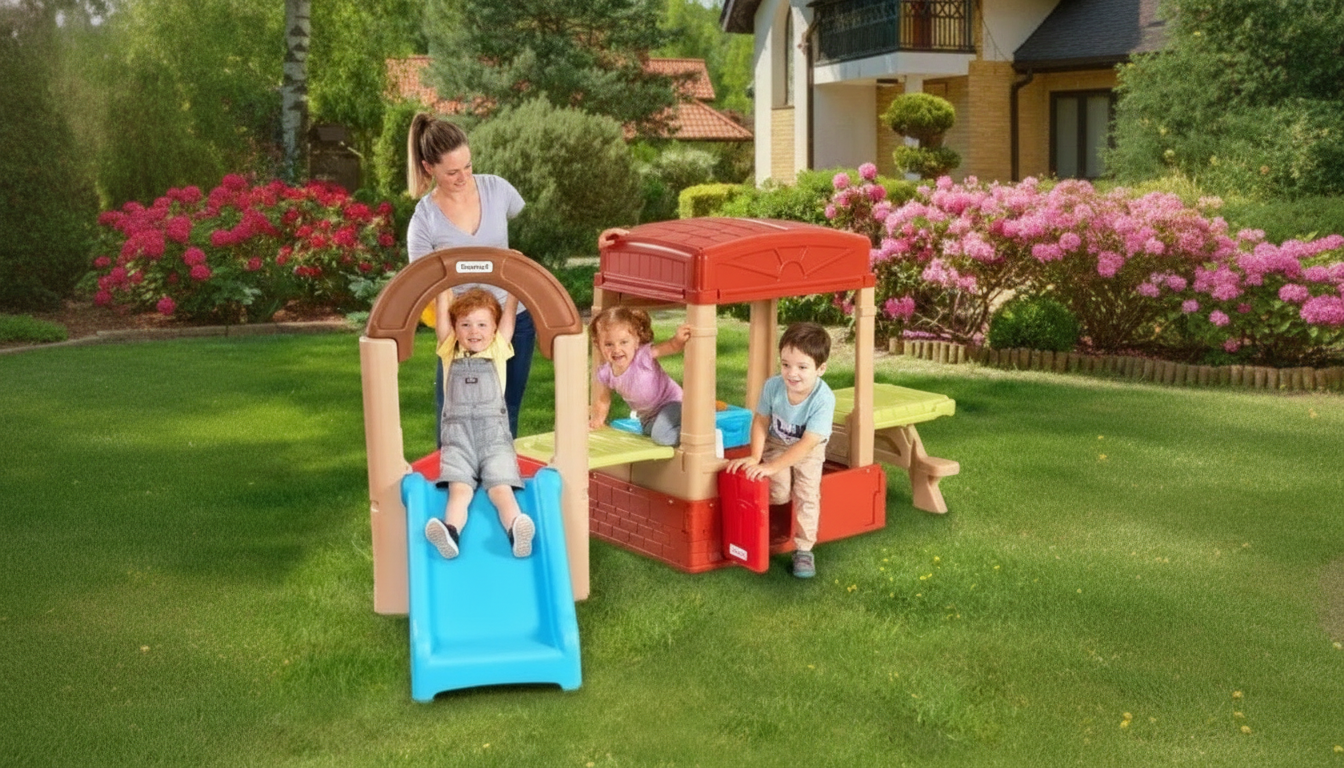
Sunny Slide and Climb Playhouse with Kitchen, Picnic Table & Toddler Activity Center: Outdoor Play in One Compact Set
A combined slide, climber, playhouse, and pretend-kitchen setup can keep toddlers moving, practicing balance, and exploring imaginative play without needing multiple bulky toys. This guide breaks down what this playhouse includes, how it supports everyday development, where it fits best, and what to check before setting it up for safe, repeatable fun.
What’s Included and How Toddlers Use It
One of the biggest perks of an all-in-one toddler unit is how easily kids can “flow” from one kind of play to another. A quick climb-and-slide loop burns energy, then the playhouse and kitchen naturally pull them into calmer make-believe and conversation.
- Slide + climb elements support active play, turn-taking, and confidence with short, repeatable challenges that feel manageable for toddlers.
- Playhouse space encourages role-play and quieter reset moments between active bursts (think: a quick “hideout” break).
- Kitchen play area promotes pretend cooking, sorting, and early language through storytelling, “menu” games, and naming foods.
- Picnic table setup creates a natural spot for snacks (with supervision), crafts, sensory bins, or pretend café play.
- Toddler activity center footprint makes it easier to rotate between movement, make-believe, and tabletop play without hauling out extra gear.
Feature-to-Play Value Snapshot
| Component | Common play ideas | Skills supported | Best ages (general) |
|---|---|---|---|
| Slide | Short rides, racing toys down, stop-and-go games | Coordination, spatial awareness, confidence | 2–5 |
| Climb section | Climb-and-slide loops, “mountain” pretend play | Balance, leg strength, risk assessment | 2–5 |
| Playhouse zone | Hide-and-seek, quiet play, storytelling | Social-emotional regulation, imagination | 2–6 |
| Kitchen area | Pretend meals, sorting utensils, role play | Language, fine motor, cooperative play | 2–6 |
| Picnic table | Snack time, coloring, sensory bins, café play | Fine motor, routines, sharing/turn-taking | 2–6 |
If you’re shopping for a single set that covers active and pretend play, the Sunny Slide and Climb Playhouse with Kitchen, Picnic Table & Toddler Activity Center is designed to keep those options within arm’s reach—helpful for toddlers who switch interests fast.
Why This Style of Set Works for Everyday Play
Some toddler toys are exciting for a week and then fade out. Integrated slide-and-playhouse sets tend to last longer in daily rotation because they offer multiple “reasons” to come back—movement, role-play, and tabletop activity—without needing a big reset from adults.
- Built-in variety reduces boredom: active play and pretend play can alternate naturally, especially helpful during long afternoons.
- Grows with social skills: younger toddlers can do parallel play (side-by-side), and older preschoolers can coordinate roles (“you cook, I serve”).
- Matches toddler stamina: short climb-slide cycles deliver a burst of gross motor activity without requiring a huge yard or a full playground trip.
- Kitchen + table create “sticky” play: kids often return to the same scenario repeatedly—restaurant, picnic, grocery pickup—building language and routines.
- Easier supervision: one integrated unit can be simpler to watch than multiple separated pieces spread across the yard or rooms.
For extra pretend-play storytelling, a simple character can extend the kitchen and picnic table scenarios. Pairing the set with a small companion like the Little Angel 28cm Fashion Doll with Mechanical Joint Body can encourage “guest” role-play (taking orders, setting a table, helping with cleanup routines).
Sizing, Placement, and Safe Setup Checks
Where you place a toddler slide-and-climb unit matters just as much as what it includes. Before the first play session, plan for clearance and surfaces so kids can climb and slide without bumping into furniture, fences, or hard edges.
- Choose a flat, stable surface; avoid slopes where sliding speed or tipping risk can increase.
- Leave open clearance around the slide exit and climbing side for safe movement and adult access.
- Consider ground cushioning: grass, rubber mats, or other impact-attenuating surfaces can reduce injury risk from falls.
- Confirm limits and guidelines: check weight limits, number of simultaneous users, and any anchoring recommendations in the manufacturer instructions.
- Do a quick routine check before play: tight connections, no sharp edges, and dry, debris-free steps and slide surface.
For additional safety guidance, review the CPSC Public Playground Safety Handbook and the American Academy of Pediatrics resource on Outdoor Safety for Kids.
Indoor vs. Outdoor Use: What Changes
Many families like the flexibility of moving toddler equipment between indoors and outdoors depending on weather, nap schedules, or how much energy needs to be burned. The main differences come down to clearance, flooring, and exposure.
If you like knowing how equipment is typically evaluated, ASTM provides an overview of playground equipment standards and related safety concepts.
Keeping Play Fresh: Easy Activity Rotations
Care, Cleaning, and Longevity Tips
FAQ
What age is this slide-and-climb playhouse best for?
Most families use this style of set from toddlerhood through early preschool (often around ages 2–5, with some pretend-play features staying fun up to about 6). Readiness matters more than age, so check the manufacturer’s height/weight guidance and plan on close supervision for younger climbers.
Can it be used indoors as well as outdoors?
Yes, it can work in either setting if you have enough open space and safe clearance at the slide exit. Indoors, consider a protective mat and keep the slide pointed away from walls or furniture; outdoors, plan for shade and routine wipe-downs after wet weather.
How much space should be left around the slide and climbing area?
Leave generous open space on all sides—especially in front of the slide exit—so kids can land, stand up, and move around without obstacles. Follow the product manual for exact clearance recommendations and adjust based on your child’s speed and play style.









Leave a comment