
Best Age for a Toddler Play Kitchen (18 Months–3 Years)
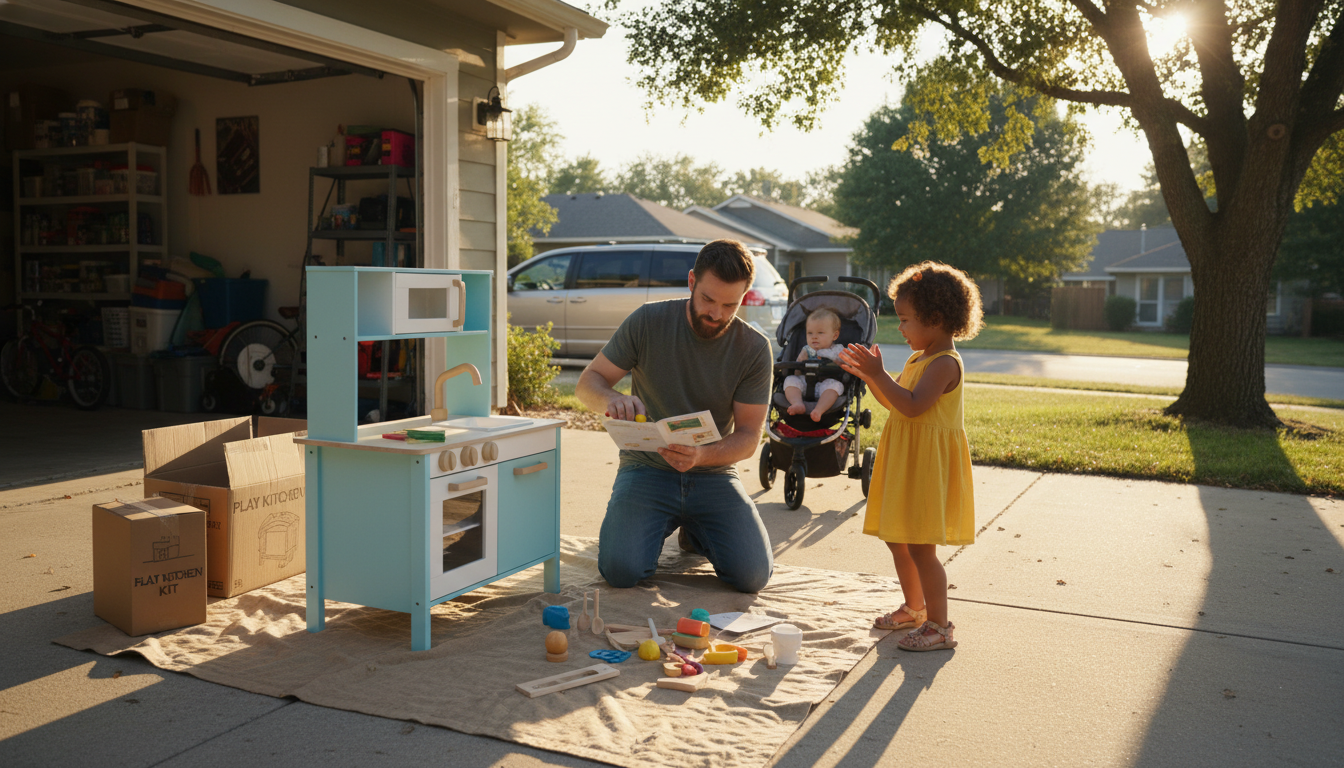
What is the best age to get a toddler a play kitchen?
Most toddlers are ready for a play kitchen around 18 months to 2 years old, with many families finding the “sweet spot” right around age 2. At that stage, kids typically start copying everyday routines—stirring, serving, washing, and “cooking”—and a play kitchen gives them a safe, satisfying way to practice those new skills through pretend play.
Answer
Best overall age: 2 years old (with a strong range of 18 months to 3 years). A play kitchen can stay engaging well beyond toddlerhood—often through ages 4–6—because the play evolves from simple imitation to more imaginative “restaurant,” “grocery,” or “family dinner” scenarios.
18–24 months: A gentle introduction
At this age, toddlers tend to enjoy big, obvious actions: opening doors, turning chunky knobs, placing play food in a pot, and “washing” dishes. Look for sturdy construction, simple features, and larger accessories that are easy to grasp. Short play sessions are common, but frequent.
Age 2–3: Peak pretend-play momentum
Two- and three-year-olds often start stringing steps together—“cook, plate, serve”—and they may use more language while playing. This is when accessories like toy meals, plates, and utensils can really expand the possibilities and keep the kitchen interesting day after day.
Age 3+: More storytelling and sharing
Older toddlers and preschoolers can handle more elaborate kitchens and enjoy role-play with siblings or friends. Extra storage, a wider set of pretend foods, and themed items can support longer, more detailed play.
How to tell your toddler is ready
A play kitchen is likely to be a hit if your child enjoys copying you in the real kitchen, likes pretend play with dolls or stuffed animals, can follow simple directions (like “put the cup on the table”), and is practicing turn-taking or “serving” others.
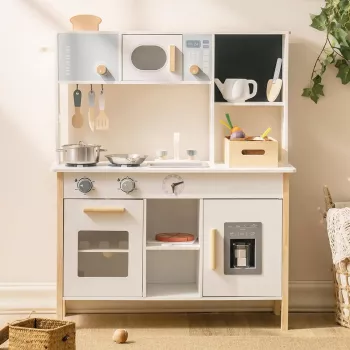
For ideas on choosing a durable setup and fun add-ons, see this guide to wood play kitchens and toy meal sets.
FAQ
What accessories make a play kitchen more engaging for toddlers?
A small set of pretend foods, plates, cups, and a pot with a spoon is usually enough to start. As your child grows, adding more varied toy meals and a few pretend “ingredients” can spark longer, more imaginative play.










Leave a comment