
Waterproof Outdoor Dog Kennel: Stairs, Double Doors, Vents
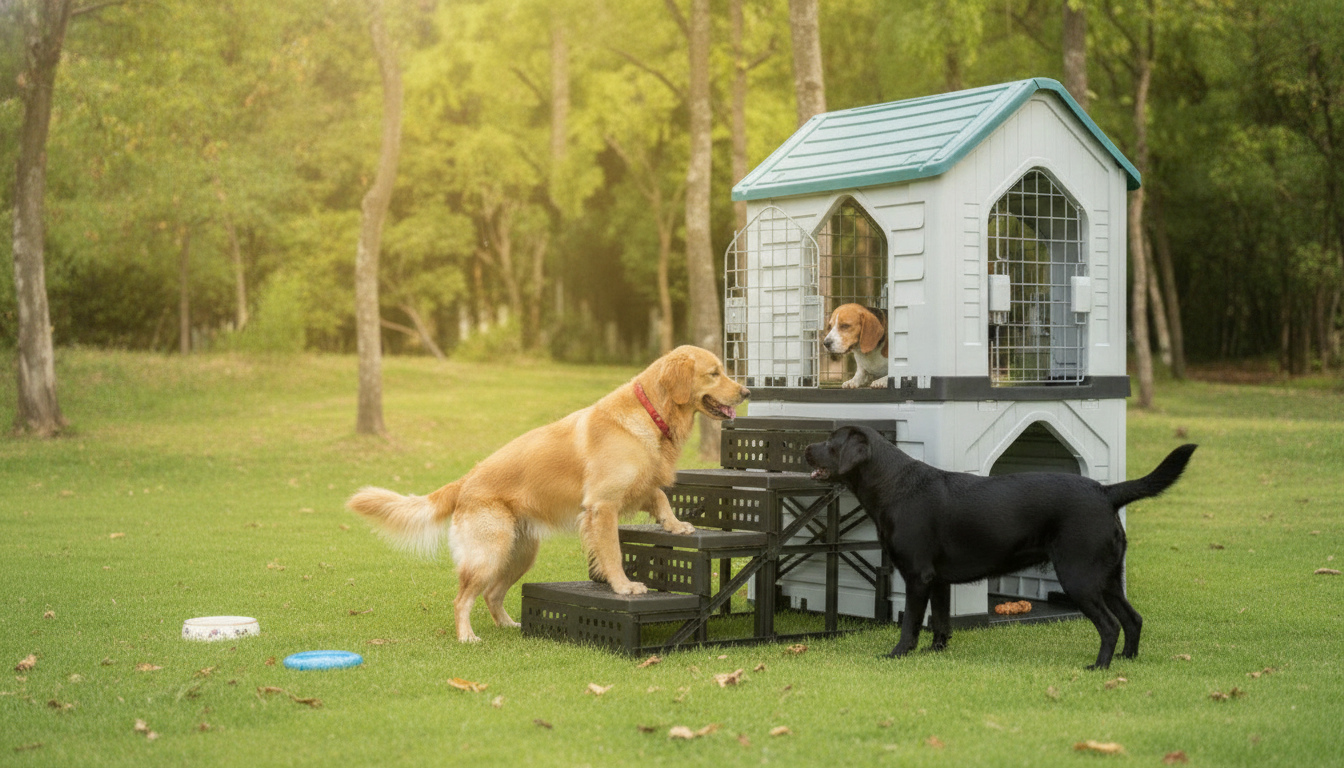
Outdoor Waterproof Dog Kennel with Stairs, Double Door, and Ventilation
An outdoor kennel needs to do more than keep rain out—it should stay dry at ground level, feel comfortable in heat and cold, and be easy for a dog to enter and exit safely. A waterproof outdoor kennel with stairs, double doors, and built-in ventilation is designed to handle everyday weather swings while making routine cleaning and access simpler.
Below is a practical breakdown of what this kennel style helps solve, which features matter most, and how to place and maintain it so the interior stays clean, dry, and inviting through changing seasons.
What this kennel style is designed to solve
- Rain and splashback protection: A weather-resistant shell and roof geometry help water run off instead of seeping in around edges.
- Safer entry: Stairs reduce the need for a big step-up, which can be challenging for small dogs, seniors, and dogs recovering from injury.
- Better airflow: Ventilation reduces humidity buildup that can lead to odors, condensation, and overheating.
- Flexible access and easier cleaning: Two doors allow you to choose the best yard-facing entry while keeping a second side available for quick wipe-downs or airflow control.
- More comfortable outdoor time: When paired with smart placement and the right bedding, the space can stay noticeably drier and more stable in temperature.
Key features to look for
- Waterproofing approach: Look for sealed panels, covered seams, and a roof design that directs water away from door frames.
- Elevated floor or moisture barrier: Getting the kennel up off wet soil helps reduce dampness, puddle intrusion, and chill from cold, saturated ground.
- Stairs and traction: Steps should be stable, secure, and grippy. A non-slip surface matters even more in rain, frost, or after sprinkler cycles.
- Double-door layout: One door can face the yard while the other supports cleaning access, ventilation tuning, or a shaded entry depending on placement.
- Vent placement: Vents placed higher on side walls or near the roofline help release warm, humid air while reducing the chance of rain blowing in.
- Hardware and latches: Rust-resistant fasteners and secure closures hold up better during storms and strong winds.
- Interior space: The dog should be able to stand up, turn around, and lie down comfortably. In colder climates, extremely oversized interiors can be harder for a small dog to warm.
- Ease of cleaning: Wide door openings, wipeable surfaces, and a base that discourages standing water make regular maintenance faster.
| Feature | What to check | Why it matters |
|---|---|---|
| Water shedding roof | Overhangs and pitch that direct runoff away from openings | Helps prevent leaks and door-edge seepage |
| Raised base | Clearance from ground or integrated floor barrier | Reduces dampness, mold risk, and chill from wet soil |
| Stair traction | Textured steps or grip strips; stable attachment | Prevents slips in rain and improves confidence for seniors |
| Two-door access | Doors open/close smoothly; seals align; easy cleaning access | Improves placement options and makes cleaning faster |
| Protected vents | Vents positioned to avoid direct rain entry | Maintains airflow without inviting water intrusion |
Sizing and placement for real-world weather
- Choose natural drainage: Avoid low spots where water pools after storms. Even a “waterproof” kennel can struggle if it sits in standing water.
- Turn doors away from prevailing wind: This reduces wind-driven rain at thresholds. Use the second door on calmer days to fine-tune airflow.
- Add overhead cover when possible: An awning, roof eave, or shade sail reduces direct rain impact and lowers sun load in summer.
- Leave breathing room around the walls: Keeping the kennel slightly offset from fences or walls helps surfaces dry and reduces musty odors.
- Build a stable base: Pavers, a small platform, or compacted gravel keep the floor level and help prevent ground moisture from wicking upward.
For hot days, follow recognized heat-safety practices—shade and airflow still matter even with vents. The American Kennel Club’s guidance on hot weather safety is a helpful reference: AKC – Hot weather safety tips for dogs.
Keeping the interior dry and comfortable
For cold snaps, practical safety reminders from veterinary sources can help you decide when outdoor time should be shortened. See: AVMA – Cold weather animal safety.
Stairs and accessibility: safer entry for more dogs
Ventilation and odor control without letting rain in
Featured product
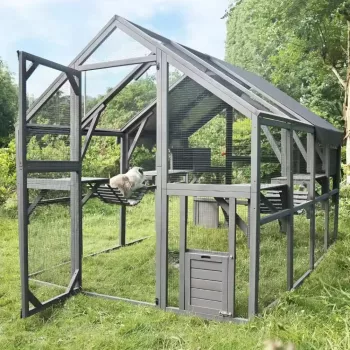
Outdoor Waterproof Dog Kennel with Stairs, Double Door, and Ventilation is built for outdoor placement with weather resistance, easier access via stairs, dual entry points, and airflow management. It’s a strong match for yard or patio setups where you want more flexibility in positioning and faster daily maintenance.
Maintenance routine for long-lasting waterproof performance
More in-stock picks
- 125mm F10 Schmidt-Cassegrain Computerized GoTo Astronomical Telescope with StarBright XLT
- Naturally Awake: Puffy Eye Solutions – Natural Remedies for Puffy Eyes Guide
FAQ
How do I make my dog house waterproof?
Seal seam lines with an exterior-grade sealant, make sure the roof sheds water away from door edges, and elevate the base so wet ground doesn’t wick moisture into the floor. Adding an overhang or overhead cover also reduces wind-driven rain, while quick-dry bedding helps prevent interior humidity buildup.
Which dog breed has a waterproof coat?
Some breeds have water-resistant double coats that were developed for retrieving and cold-water work. Even with a water-resistant coat, a dog still benefits from a dry, ventilated shelter to reduce chilling and moisture-related skin issues.








Leave a comment