

Tiny Steps to Self-Motivation Through Depression
Depression can drain energy, dull motivation, and make even small tasks feel impossible. When everything feels heavy, a gentler approach—built around safety, self-compassion, and tiny repeatable steps—can help rebuild momentum without forcing “big” change all at once. The goal isn’t to power through pain; it’s to create small supports that make the next hour a little more doable, and the next day a little less overwhelming.
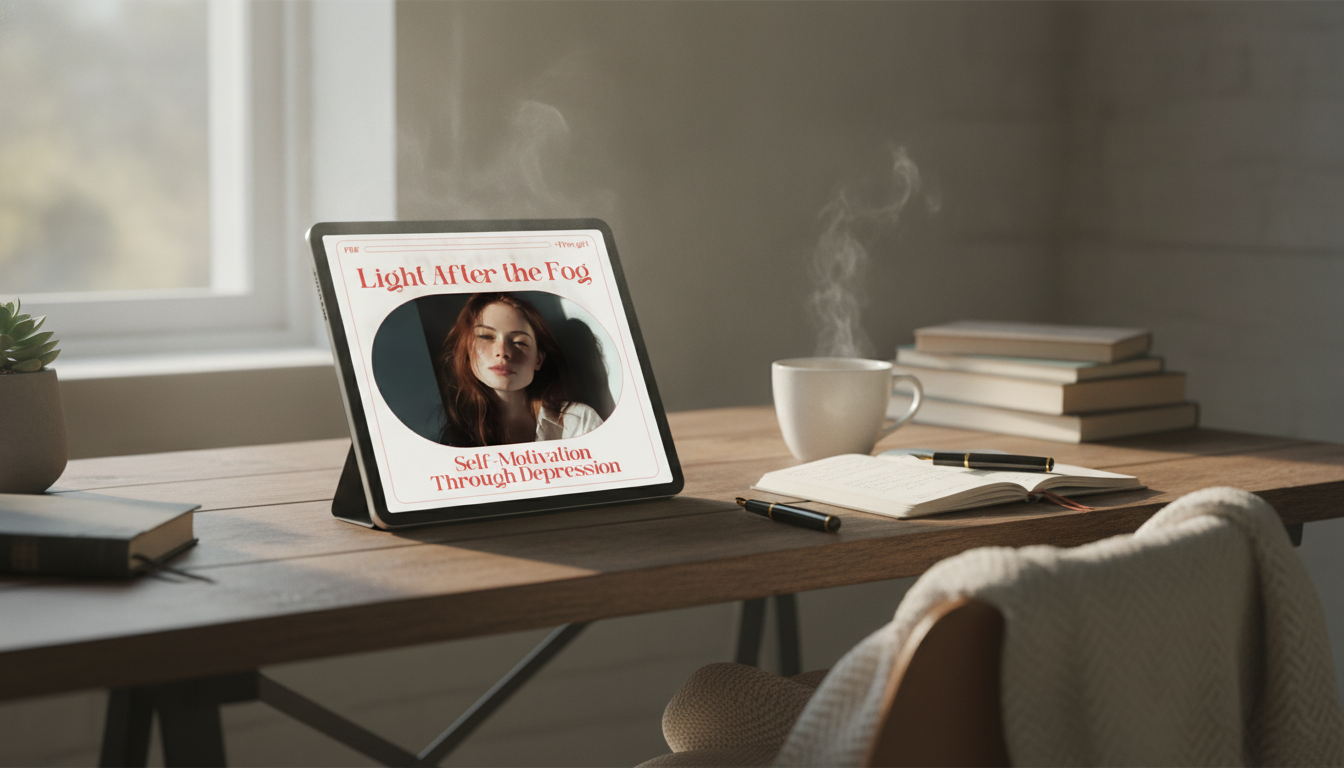
If you want a simple structure to lean on when decisions feel too hard, Light After the Fog: A Gentle Guide to Self-Motivation Through Depression offers prompts, tiny-step plans, and check-ins designed for low-energy days.
When Motivation Disappears: What Depression Does to Energy and Drive
Depression isn’t just “feeling sad.” It can affect sleep, appetite, concentration, and decision-making—core systems that normally power follow-through. When sleep is disrupted, the body’s stress response runs higher and basic tasks cost more. When appetite changes, energy gets less steady. When concentration and memory get foggy, planning and starting become harder.
Low motivation is often a symptom, not a character flaw. Shame (“Why can’t I just do it?”) and self-criticism can intensify the shutdown cycle by adding emotional weight to an already overloaded system. A recovery-focused approach usually works best when it starts with very small actions that reduce friction and restore a sense of control.
If symptoms include thoughts of self-harm, feeling unsafe, or being unable to care for basic needs, urgent help is essential. In the U.S., call or text 988 (Suicide & Crisis Lifeline) or contact local emergency services. For broader education on depression, reputable resources include NIMH, the WHO, and the APA.
Stabilize First: A Gentle Baseline for Hard Days
On hard days, aim for a “minimum viable day”—a short plan that covers the basics without turning life into a performance. Think: one small hydration step, one food step, one light movement step, and one connection step. This is less about optimizing and more about keeping your system supported enough to reduce suffering.
Reducing cognitive load helps. Pre-decide essentials: a few simple meals you can tolerate, a short walk route (even to the mailbox), and a check-in message you can copy/paste. Add one calming cue that marks “start of day,” such as opening curtains, sitting by a window for two minutes, or playing a consistent grounding sound.
Tracking symptoms and triggers can be useful if it stays loose—just a few words. The point is pattern-spotting (sleep, isolation, stress, medication changes), not grading yourself.
Minimum Viable Day: Tiny Actions That Still Count
| Need | 2-Minute Option | If You Can Do a Bit More |
|---|---|---|
| Hydration | Sip water or warm tea | Refill a bottle and place it where you rest |
| Food | Eat one easy item (banana, yogurt, toast) | Add a protein or soup for steadier energy |
| Movement | Stand and stretch for 60 seconds | 5–10 minute walk or gentle mobility |
| Connection | Send a one-line text: “Thinking of you” | Brief call or sit near someone you trust |
| Self-care | Brush teeth or wash face | Shower or change into clean clothes |
Micro-Motivation: How to Start When You Feel Stuck
When motivation is near zero, “try harder” usually backfires. Instead, use a “next right step” lens: focus only on the very next action, not the whole task. If “clean the kitchen” is too big, try “put one cup in the sink.” If “go outside” is too big, try “stand by the door with shoes on.” Starting is the win.
Lower the bar deliberately. Choose a goal so small it feels almost silly: open the laptop (not “finish the email”), place dirty clothes in one pile (not “do laundry”), step outside for 30 seconds (not “take a walk”). Small actions create evidence that movement is possible.
Pair actions with cues to remove decision fatigue. Examples: after using the bathroom, drink a few sips of water; after coffee or tea, stand in daylight for two minutes; after brushing teeth, put one item back where it belongs. Cue-based routines reduce the need to “feel motivated” first.
“Body first” strategies can also help. Depression often lives in the nervous system as heaviness and slowed activation. A slow walk inside your home, gentle stretching, or a brief temperature change (warm shower, cool face rinse) can shift state just enough to begin.
Daily Momentum Without Pressure: Routines That Support Healing
Routines work best when they’re simple, forgiving, and built for setbacks. A steady three-part rhythm can support healing without demanding high output:
- Morning anchor: light + hydration (open curtains, sit near a window, drink water).
- Midday reset: food + short movement (something easy to digest, then a few minutes of walking or stretching).
- Evening wind-down: reduce screens + calming routine (dim lights, gentle music, shower, or a consistent bedtime cue).
Hope-Forward Tools: Gentle Reframes That Don’t Invalidate Pain
A Supportive Digital Guide for Healing, Hope, and Daily Momentum
Light After the Fog: A Gentle Guide to Self-Motivation Through Depression is designed as a low-pressure companion for hard days, with tiny-step plans you can return to whenever you need a softer starting point.
For days when depression shows up physically (like tired, puffy eyes after poor sleep), a small self-care guide can support your reset routine: Naturally Awake: Puffy Eye Solutions – Natural Remedies for Puffy Eyes Guide offers simple, practical options that pair well with a gentle morning anchor.
When to Reach for Extra Support
FAQ
How do I pull myself out of depression?
Depression often requires time and support rather than willpower alone. Start with safety and basics (sleep, food, hydration), take one tiny step at a time, and add connection where possible; if symptoms feel dangerous or you’re thinking about self-harm, seek urgent professional help right away.












Leave a comment