


Seasonal Home Maintenance Checklist by Season (Printable)
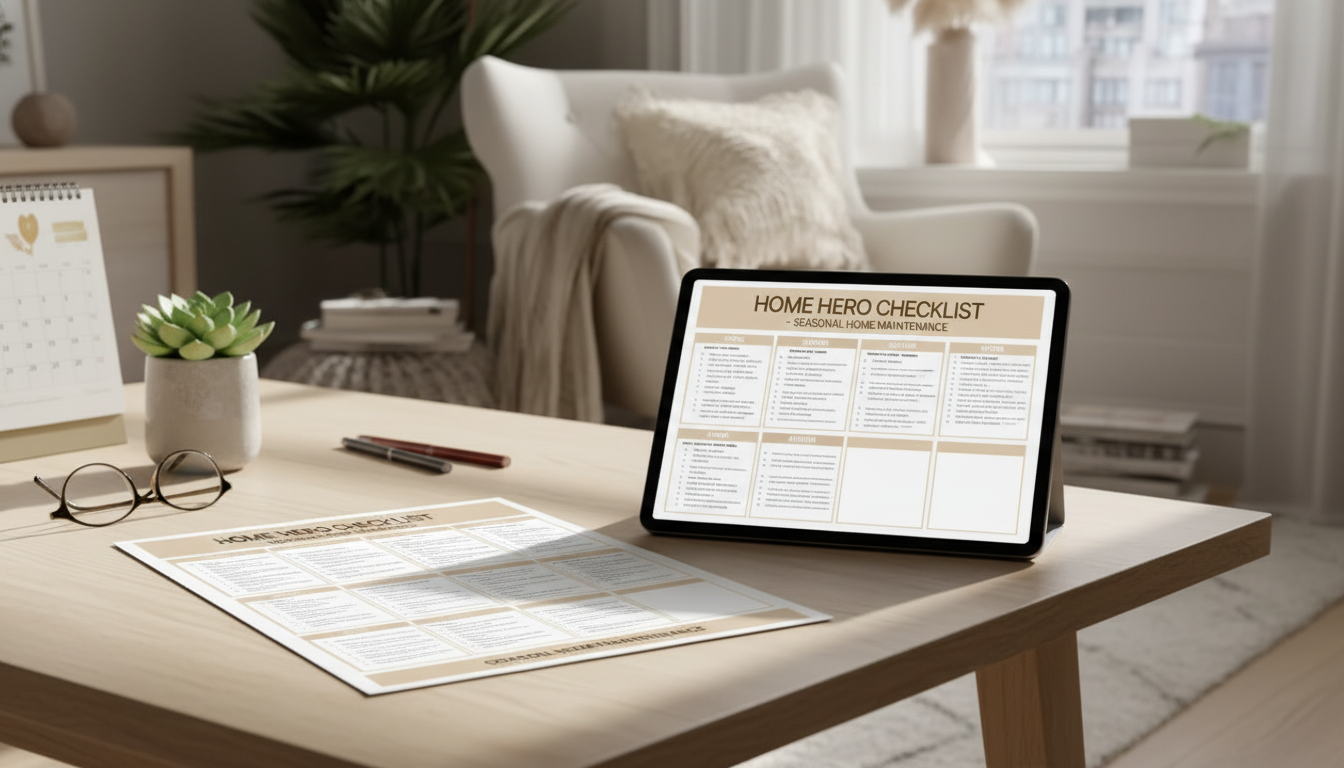
Home Hero Checklist: Seasonal Home Maintenance Made Simple
Seasonal home maintenance gets dramatically easier when tasks are organized by time of year, priority, and effort level. A simple, repeatable checklist helps prevent expensive repairs, improves comfort and safety, and reduces the mental load of remembering what to do and when. Below is a practical, season-by-season plan you can follow in real life—plus a prioritization system to keep progress steady even during busy months.
Why seasonal maintenance pays off
Homes don’t usually fail all at once—small issues quietly stack up until they turn into a weekend-killing emergency. A seasonal rhythm makes problems easier to spot early, when fixes are faster and cheaper.
- Reduces surprise breakdowns by catching leaks, worn seals, and clogged drains before they escalate.
- Supports energy efficiency through targeted tasks like HVAC filter changes, sealing drafts, and cleaning vents. (The EPA has helpful basics on indoor air and filtration: Guide to Air Cleaners in the Home.)
- Protects home value by preventing moisture damage, pest entry, and exterior deterioration.
- Improves safety with recurring checks for smoke/CO alarms, dryer vent lint buildup, and trip hazards. (See additional fire safety guidance from the U.S. Fire Administration.)
- Creates a predictable rhythm: smaller tasks each season instead of one overwhelming “catch-up” weekend.
How to use a seasonal checklist without falling behind
The key is consistency, not intensity. Aim for steady, low-friction habits that fit a normal schedule.
- Block a short “maintenance hour” once per month and assign 2–4 items; skip the all-at-once marathon approach.
- Sort tasks into three tiers: safety first, water/moisture second, comfort/efficiency third.
- Keep a simple home log (date + what was done + notes). It’s useful for warranties, resale, and troubleshooting patterns.
- Bundle tasks by location (kitchen, exterior, mechanical room) to reduce setup/cleanup time.
- Set reminders for recurring items: filters, alarm tests, water heater checks, and gutter inspections.
Prioritization guide for any season
| Priority | What it includes | Why it matters | Typical timing |
|---|---|---|---|
| Must-do | Smoke/CO alarms, dryer vent lint, active leaks, electrical hazards, handrails/steps | Prevents injury, fire, and major damage | Start of each season + after storms |
| Should-do | HVAC filter, gutters, caulking, exterior drainage, plumbing slow drains | Avoids costly repairs and improves efficiency | Early in the season |
| Nice-to-do | Deep cleaning, paint touch-ups, organization, landscaping upgrades | Boosts comfort and appearance | Anytime |
Spring checklist: reset after winter
Spring is a quick diagnostic season—walk, look, test, and clear pathways for water to leave the property.
- Exterior walk-around: look for loose shingles, damaged siding, cracked caulk, and peeling paint.
- Gutters and downspouts: clear debris and confirm water routes away from the foundation.
- Foundation and grading: check for pooling water and soil sloping toward the house.
- HVAC: replace filters; consider scheduling cooling system service before peak summer demand.
- Windows and screens: inspect seals, repair torn screens, and clean tracks for smoother operation.
- Basement/crawl space: look for dampness, musty odors, and signs of mold or pests.
- Safety refresh: test smoke/CO alarms and confirm extinguisher location and pressure gauge.
Summer checklist: protect against heat, storms, and heavy use
Summer maintenance focuses on airflow, moisture control, and preventing storm-related damage before it starts.
- Cooling efficiency: keep supply vents clear, clean return grilles, and replace filters on schedule.
- Outdoor water use: inspect hose bibs, irrigation lines, and sprinkler heads for leaks and overspray.
- Decks, patios, and steps: check for loose boards, popped nails/screws, and slippery mildew.
- Storm readiness: trim branches away from rooflines and confirm drainage paths handle heavy rain.
- Dryer vent: clean the lint trap every load and periodically inspect the vent run for buildup and airflow.
- Kitchen and bath fans: confirm they vent properly and remove dust buildup for better moisture control.
Fall checklist: prep for cold weather and shorter days
Fall is about sealing, servicing, and setting the house up to handle freezing weather with fewer surprises.
Winter checklist: prevent freeze damage and indoor air issues
- Freeze protection: know where the main water shutoff is and insulate vulnerable pipes.
- Moisture control: watch for condensation on windows; use bath/kitchen fans consistently.
- Roof and attic basics: monitor for ice dams and signs of attic moisture (frost, damp insulation).
- Safety routine: test smoke/CO alarms monthly and keep vents/exhausts clear of snow or debris. For CO prevention basics, reference the CDC’s carbon monoxide resources.
- Water heater: check for leaks and unusual noises; review temperature setting for safety and efficiency.
- Entryways: keep steps and walkways safe; address slippery areas and loose railings quickly.
Make it effortless with a printable, seasonal plan
Recommended downloads and essentials
- Home Hero Checklist – Seasonal Home Maintenance Checklist by Season | Easy Digital Download for Smarter Homeowners (a simple, repeatable seasonal plan you can reuse year after year)
- 100W USB-C to USB-C Fast Charging Cable with PD 3.0 & QC 4.0 – 5A Power (useful for keeping phones and backup batteries charged for storm alerts, checklists, and emergency communication)
FAQ
How often should home maintenance tasks be done?
It varies by task: many items are seasonal (gutters, weather sealing), some are monthly anchors (alarm tests, quick leak checks), and others are annual (HVAC service, chimney inspection). A seasonal checklist plus a few monthly reminders is usually enough to stay on track.
What are the most important tasks to never skip?
Never skip safety and water-control basics: smoke/CO alarm testing, dryer vent lint control, checking for active leaks, keeping gutters/drainage working, and changing HVAC filters. These reduce the biggest risks—fire, carbon monoxide exposure, and expensive moisture damage.
Is a seasonal checklist useful for renters or condo owners?
Yes—just adapt it to what’s in-scope. Focus on interior items like filters (if accessible), alarms, moisture/condensation checks, and reporting issues early while documenting dates and symptoms for property management or the HOA.












Leave a comment