


Impactful Leadership Traits: Build Trust, Clarity, Results

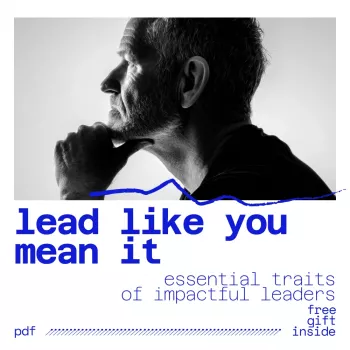
Lead Like You Mean It: Essential Traits of Impactful Leaders
Impactful leadership is less about a title and more about consistent behaviors that earn trust, create clarity, and move people toward meaningful outcomes. Purpose-driven leaders balance results with respect for people, communicate in a way that reduces friction, and make decisions that hold up under pressure. The traits below turn big leadership ideals into practical, observable habits that can be strengthened in any role—new manager, team lead, founder, or experienced executive.
What “impactful” leadership looks like in day-to-day work
In busy weeks, leadership shows up in small, repeatable moves. Teams don’t need a perfect vision statement—they need direction they can execute, support they can count on, and a steady pace that doesn’t burn people out.
- Creates direction: goals are specific, priorities are visible, and trade-offs are explained rather than hidden.
- Builds trust: commitments are kept, feedback is candid, and decisions are consistent with stated values.
- Enables performance: obstacles are removed, roles are clear, and the team gets the resources and autonomy needed to deliver.
- Develops people: coaching is routine, growth is planned, and wins are shared while accountability stays clear.
- Sustains energy: pace is managed, recovery is respected, and progress is measured to avoid burnout cycles.
Essential traits of leaders who leave a positive mark
These traits matter because they’re visible. People can feel the difference between a leader who “talks leadership” and one who practices it under deadlines, conflict, and uncertainty. Strong leaders also build emotional intelligence and psychological safety as performance tools, not perks—both are supported by research and widely used in high-performing organizations (see Harvard Business Review on emotional intelligence and the American Psychological Association on psychologically safe workplaces).
- Integrity: tells the truth early, owns mistakes, and avoids “spin” that erodes credibility.
- Clarity: communicates decisions in plain language; confirms understanding with summaries and next steps.
- Empathy: listens for context, notices load and morale, and responds without lowering standards.
- Courage: addresses conflict directly, makes hard calls with incomplete data, and protects the team from unfair pressure.
- Humility: remains teachable, credits contributors, and separates identity from outcomes.
- Consistency: applies expectations evenly and avoids sudden shifts that create anxiety and politics.
- Accountability: defines ownership, sets measurable outcomes, and follows through with support and consequences.
Traits, what they look like, and how to practice them
| Trait | Observable behaviors | Simple practice to build it |
|---|---|---|
| Integrity | Keeps promises; admits errors; aligns actions with values | Make a “say/do” list weekly and close open loops by Friday |
| Clarity | Explains the why; defines success; sets boundaries | End meetings with: decision, owner, deadline, metric |
| Empathy | Asks before assuming; recognizes constraints; treats people with respect | Use one question in 1:1s: “What’s hardest right now?” |
| Courage | Names problems early; handles conflict; makes calls | Write the difficult sentence first, then schedule the conversation |
| Humility | Invites critique; shares credit; learns publicly | Ask: “What am I missing?” before final decisions |
| Accountability | Holds standards; gives feedback; follows up | Use a scoreboard: 3 outcomes, weekly review, no surprises |
Purpose-driven leadership: turning values into decisions
Purpose becomes real when it changes what gets funded, what gets fixed first, and what gets protected when trade-offs collide. “Values” that don’t guide decisions are décor.
- Define a north star: be specific about who is served, what problem is solved, and what quality bar is non-negotiable.
- Translate values into behaviors: “customer-first” becomes response times, quality checks, and escalation rules.
- Use decision principles: principles act as a filter when priorities collide, reducing debate and rework.
- Keep purpose visible in rituals: connect work to impact in kickoffs, monthly retros, and performance conversations.
- Watch for value drift under stress: pressure reveals real priorities; address misalignment quickly.
One practical way to keep purpose concrete is to write two to four “decision rules” the team can cite. Example: “We optimize for customer retention over short-term revenue,” or “We ship only when monitoring and rollback are ready.” Rules like these help newer leaders act confidently without waiting for permission.
Communication habits that raise trust and speed
Communication is leadership’s multiplier. When the message is fuzzy, teams spend energy interpreting, hedging, and re-checking decisions. When it’s clear, teams execute.
- Make context explicit: share constraints, risks, and what is still unknown to reduce rumor and second-guessing.
- Separate facts, interpretations, and decisions: it prevents emotional escalation and keeps discussions productive.
- Use fewer, clearer channels: decide what belongs in meetings, docs, async updates, and 1:1s.
- Give feedback as a skill, not an event: timely, specific, and tied to impact; include what “good” looks like next time.
- Create psychological safety without lowering the bar: invite dissent, then commit to a decision and execution plan.
For leaders building a steady system, a simple “decision recap” habit helps: after any meeting with real consequences, send three lines—what we decided, who owns it, and when it will be reviewed. That cadence cuts repeated questions and prevents silent disagreement from becoming late-stage resistance.
Coaching, delegation, and growing future leaders
Coaching improves when leaders adopt a learning posture. A growth mindset—treating skills as developable—supports better feedback and reduces shame-based dynamics (see Stanford GSB on growth mindset).
Leading through uncertainty and change
Putting the traits into practice: a 30-day leadership rhythm
For a structured, practical reference you can keep open while building these habits, see Lead Like You Mean It: Essential Traits of Impactful Leaders | Leadership Traits Guide for Modern, Purpose-Driven Leaders. For leaders also working on sustainable routines and looking more refreshed during intense seasons, Naturally Awake: Puffy Eye Solutions – Natural Remedies for Puffy Eyes Guide can complement a recovery-first approach.
FAQ
What are the traits of an impactful leader?
Impactful leaders consistently show integrity, clarity, empathy, courage, humility, consistency, and accountability. Each trait becomes real through observable behaviors—keeping commitments, communicating decisions plainly, addressing conflict early, and setting measurable ownership that the team can execute.











Leave a comment