Accessory Matching Checklist: Color, Metal, Scale & Focus
How to Choose Accessories That Match: The Ultimate Checklist for Personal Style
Accessories should support the outfit’s message, not compete with it. A simple checklist makes choices faster: start with the occasion and outfit lines, pick a metal and color direction, choose one focal piece, then balance scale and texture so everything looks intentional. The result is a look that feels “finished” without feeling fussy. For more guidance, see How to Accessorize an Outfit Like a Pro.
Start With the Outfit’s “Job”
Before you reach for jewelry, shoes, or a bag, get clear on what the outfit needs to do for you. When the “job” is defined, accessory choices get easier—and mismatches become obvious. For further reading, see The 5 Best Fashion Accessories To Elevate ANY Outfit ….
- Name the occasion: work, weekend, formal, travel, date night—each has different expectations for shine, movement, and practicality.
- Identify the outfit’s main feature: neckline, print, tailoring, or a standout color—and avoid covering it with competing details.
- Decide the vibe in one phrase: polished, relaxed, edgy, romantic, minimalist—then filter every accessory through that phrase.
- Set a comfort rule: if it pinches, tangles, slips, or feels loud after 10 minutes, it rarely becomes a favorite.
Use a Simple Color Strategy (So Everything Coordinates)
Color is the fastest route to a cohesive look. Instead of guessing, choose a clear “role” for accessories: match, echo, or contrast. If you want a deeper dive on how color systems work, resources like Pantone color guides and Britannica’s color basics explain why certain combinations feel harmonious.
- Choose a color role: match (same family), echo (repeat one outfit color), or contrast (intentional pop).
- For prints: pull one small color from the pattern for jewelry or a bag to create cohesion.
- Keep neutrals consistent: warm neutrals (cream, camel, tan) pair easily with gold; cool neutrals (white, gray, black) often pair easily with silver.
- Limit statement colors: one main accessory at a time (bag OR shoes OR bold earrings) to avoid visual clutter.
Fast matching guide: outfit colors → accessory colors
| Outfit base | Easy accessory palette | Best “pop” options |
|---|---|---|
| Black | Silver, gold, pearls, black leather | Red, emerald, cobalt |
| Navy | Gold, tan/cognac leather, tortoiseshell | Coral, white, chartreuse |
| White/Cream | Gold, natural textures, soft pastels | Hot pink, bright blue |
| Beige/Camel | Gold, brown leather, warm stones | Teal, burgundy |
| Gray | Silver, charcoal leather, clear stones | Purple, lime, fuchsia |
| Denim | Gold or silver, brown leather, boho textures | Red, mustard |
Pick One Focal Point, Then Support It
Think of accessories like a cast: one “lead actor,” everyone else in a supporting role. This creates polish even when the pieces are simple.
- Choose the hero item: statement earrings, a bold necklace, a standout bag, or dramatic shoes—only one should dominate.
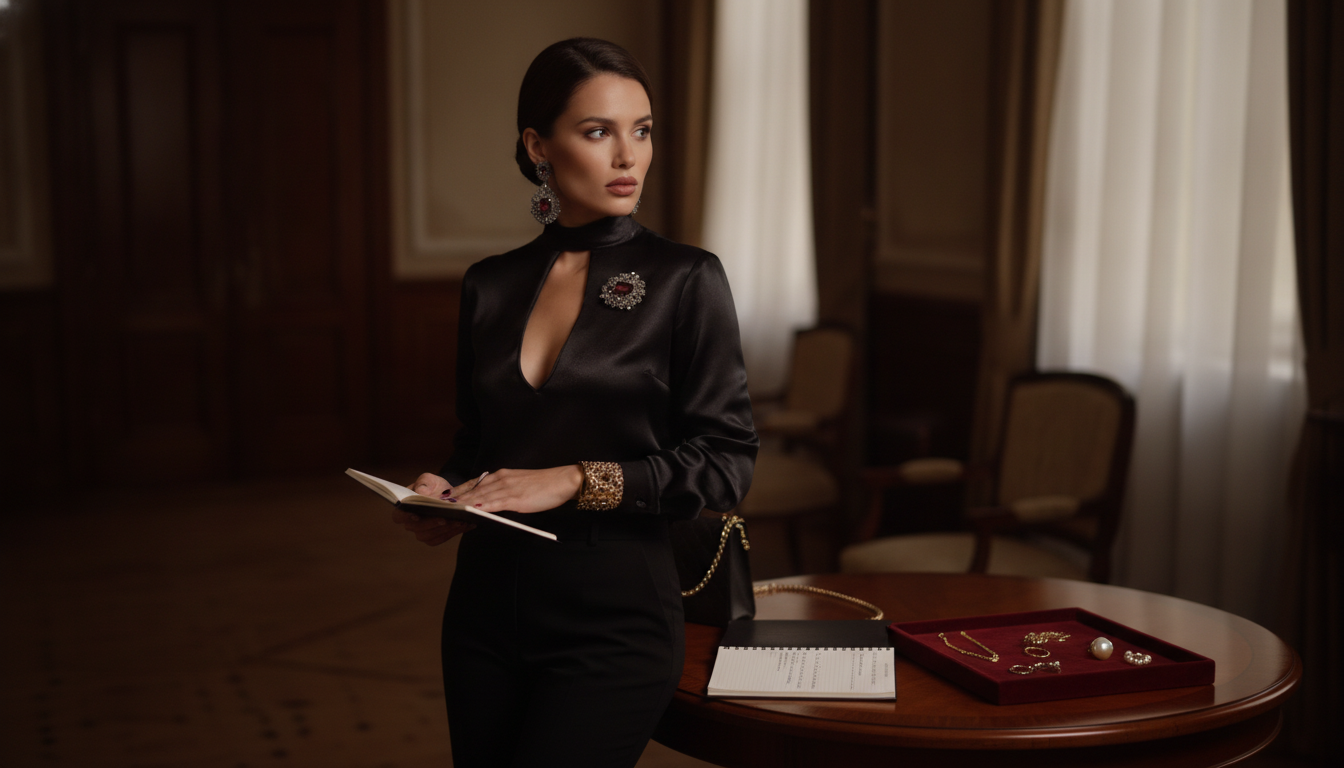
- Let the neckline decide: if it’s detailed (ruffles, high neck, embellishment), shift emphasis to earrings, hair accessories, or a bracelet stack.
- Minimal outfit, strong accent: clean basics look elevated with one sculptural piece (a cuff, bold hoops, a sleek pendant).
- Use the distance test: step back 6–8 feet—if multiple items fight for attention, remove one.
Match Scale to Body Proportions and Outfit Volume
Scale is where “cute pieces” become a truly intentional look. If the outfit has visual weight, your accessories can carry more presence; if the outfit is delicate, keep the lines lighter.
- Balance volume: chunky knits and oversized blazers handle larger earrings, thicker chains, and structured bags.
- Refined fabrics: silk, satin, and fine knits often look best with sleeker metals and lighter visual weight.
- Consider face framing: shorter necks often pair well with V-shapes and longer pendants; long necks can handle collars and chokers.
- Repeat shape language: angular tailoring pairs naturally with geometric jewelry; soft drape pairs with rounded shapes.
Choose a Metal “Home Base” (Then Break the Rule on Purpose)
A dominant metal gives the whole look a backbone. Once you choose it, everything else—belt buckle, bag hardware, jewelry—starts to coordinate faster.
- Use undertone as a shortcut: warmer undertones often glow with gold; cooler undertones often pop with silver; neutral undertones can wear both easily.
- Commit to one dominant metal: aim for about a 70/30 split for a cleaner finish.
- If mixing metals: repeat each metal at least twice (earrings + ring, or necklace + bracelet) so it looks intentional.
- Tie hardware together: match belt buckle and bag hardware when you want a polished, classic effect.
Texture, Shine, and Material: The Quiet Details That Make a Look Expensive
Two outfits can use the same colors and still feel different in quality depending on finish. Texture and shine are the “silent stylists” that signal casual, dressy, or in-between.
- Match shine to setting: matte and brushed metals read casual; high-polish metals and crystals read dressy.
- Pair textures thoughtfully: leather + metal feels structured; pearls + knits feel soft; straw + linen feels summery.
- Avoid too many finishes: limit to 2–3 main textures (smooth leather, metal, plus one soft fabric, for example).
- Use subtle anchors: eyewear, watches, and hair accessories can unify a look without adding “noise.”
The Ultimate Checklist: A 60-Second Decision Flow
Build a Small “Accessory Capsule” for Easy Matching
Shop Helpful Guides
- How to Choose Accessories That Match – The Ultimate Checklist for Personal Style
- Naturally Awake: Puffy Eye Solutions – Natural Remedies for Puffy Eyes Guide
FAQ
How many accessories are too many?
Use one focal piece, then keep the rest minimal. If two items compete for attention from 6–8 feet away, remove one and let the hero piece lead.
Can gold and silver be worn together?
Yes—choose one dominant metal and repeat the secondary metal at least twice so the mix looks deliberate. A mixed-metal piece can also bridge the look and make the blend feel natural.
How can accessories make a basic outfit look polished?
Match hardware, choose a structured bag or sleek shoe, and add one intentional focal piece. Keeping a tight palette and consistent finishes is what creates that elevated, put-together effect.






Leave a comment