6×7.5 Ft Polycarbonate Greenhouse: Quick Setup + Vent
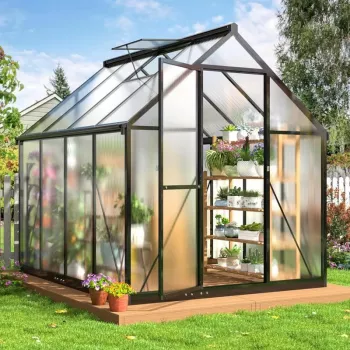
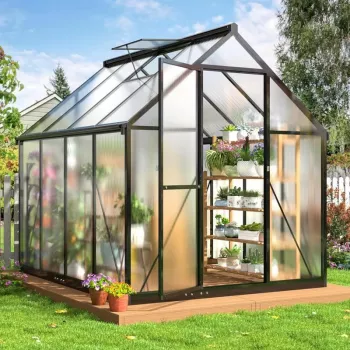
6×7.5 FT Aluminum Polycarbonate Greenhouse with Quick Setup and Roof Vent
A compact backyard greenhouse can extend the growing season, protect tender plants from wind and pests, and make temperature control more predictable. This 6×7.5 ft aluminum and polycarbonate model is designed for fast assembly, steady light diffusion, and a roof vent that helps release heat on warm days—an efficient footprint for patios, small yards, and raised-bed growers.
What This Greenhouse Is Best For
- Season extension: Start earlier in spring and harvest longer into fall with a protected growing zone that buffers cold snaps and wind.
- Seed starting and propagation: Polycarbonate panels soften and diffuse sunlight, helping reduce harsh “hot spots” that can stress small seedlings.
- Warm-weather control: A roof vent supports passive ventilation so plants are less likely to overheat on bright, still days.
- Small-space gardening: The 6×7.5 ft footprint balances walk-in usability with a manageable yard requirement.
If your goal is reliable, daily-access growing space without committing to a large permanent structure, this size class is a practical middle ground—big enough for a real workflow, small enough to site and anchor without a major remodel.
Size, Layout, and Space Planning
Before assembly, pick a level location and plan how you’ll move through the interior. A well-planned layout improves plant health (airflow) and makes the greenhouse more enjoyable to use week after week.
- Footprint considerations: Confirm a level area slightly larger than 6×7.5 ft to allow for edging, anchoring, and comfortable door clearance.
- Access paths: Plan a central aisle or side access so watering and pruning stay comfortable without stepping into beds.
- Bench and shelf planning: Use vertical space for seed trays while keeping airflow paths open to reduce condensation.
- Door and vent clearance: Ensure the roof vent can open fully without contacting nearby fences, branches, or wall overhangs.
| Planning Item | What to Verify | Why It Matters |
|---|---|---|
| Ground surface | Level, well-drained base (pavers, compacted gravel, or slab) | Reduces frame stress and improves door alignment |
| Sun exposure | At least 6 hours of sun in growing season | Supports stronger seedlings and better flowering |
| Wind placement | Avoid direct wind tunnels; consider windbreaks | Improves temperature stability and reduces panel strain |
| Water access | Hose reach and drainage route | Simplifies irrigation and prevents puddling |
Materials and Build: Aluminum Frame + Polycarbonate Panels
This greenhouse pairs an aluminum structure with polycarbonate glazing—a common combination for backyard durability and easier handling during setup.
- Aluminum framing: Rust-resistant and lightweight, which helps during positioning, squaring, and anchoring.
- Polycarbonate glazing: Diffuses sunlight to reduce sharp intensity spikes that can scorch seedlings compared with clear glazing on bright days.
- Everyday durability: Polycarbonate is typically more impact-resistant than glass, which can be an advantage in hail-prone regions or active households.
- Condensation management: Keep panels clean, maintain airflow, and avoid overcrowding plants to reduce dripping and mildew pressure.
For deeper guidance on environmental control, Cornell’s controlled environment resources are a helpful reference for how light, humidity, and airflow interact: Cornell University Controlled Environment Agriculture.
Quick Setup: What Makes Assembly Easier
“Quick setup” is easiest when the build is treated like a short project rather than an improvised weekend scramble. A little prep helps the door close cleanly and the vent open smoothly.
| Step | Goal | Tip |
|---|---|---|
| 1. Prepare base | Stable, level foundation | Use a long level and confirm both diagonals match |
| 2. Build frame | Square structure | Tighten gradually after alignment checks |
| 3. Install panels | Weather barrier + light diffusion | Seat panels evenly; avoid overtightening |
| 4. Fit door and vent | Smooth operation | Test open/close before final tightening |
| 5. Anchor | Wind stability | Use appropriate anchors for soil, pavers, or concrete |
Roof Vent and Airflow: Keeping Plants Comfortable
For ventilation fundamentals and practical greenhouse airflow concepts, see: University of Georgia Extension. For broader season-extension planning and conservation considerations, USDA resources can also be useful: USDA NRCS.
Growing Tips for a 6×7.5 ft Greenhouse
| Season | Primary Task | Outcome |
|---|---|---|
| Spring | Check seals, clean panels, confirm vent function | Strong light and reliable airflow for seedlings |
| Summer | Vent early, add shade if needed, water consistently | Reduced overheating and steadier growth |
| Fall | Remove spent plants, sanitize surfaces, tighten frame | Lower disease carryover into winter |
| Winter | Monitor snow/wind, keep vent paths clear | Less structural stress and fewer drafts |
At-a-Glance Specs and Buying Notes
| Detail | What It Means |
|---|---|
| Size | Fits compact spaces while still allowing walk-in access for daily care |
| Frame | Aluminum for rust resistance and manageable weight |
| Panels | Polycarbonate for light diffusion and impact resistance |
| Vent | Roof vent for natural heat release and improved airflow |
Featured Items Available Now
- 6×7.5 FT Aluminum Polycarbonate Greenhouse with Quick Setup and Roof Vent
- 125mm F10 Schmidt-Cassegrain Computerized GoTo Astronomical Telescope with StarBright XLT
- Naturally Awake: Puffy Eye Solutions – Natural Remedies for Puffy Eyes Guide
FAQ
How many roof vents should a greenhouse have?
The ideal number depends on greenhouse size, sun exposure, and local climate. For a compact greenhouse, one roof vent can be effective when it’s paired with a slightly open door or lower intake gap, while hotter conditions or larger structures may benefit from multiple vents and dedicated intake openings.
What are the disadvantages of polycarbonate greenhouses?
Polycarbonate can scratch, collect dirt or algae if not cleaned, and may yellow over many years depending on UV protection and exposure. It also requires basic condensation management—good airflow and sensible plant spacing—to help reduce dripping and moisture-related issues.
Is twin wall polycarbonate good for a greenhouse?
Yes—twin wall polycarbonate is popular because it improves insulation and diffuses light, which can help stabilize temperatures compared with single-layer materials. Proper sealing and ventilation are still important to reduce moisture buildup and keep the structure performing well over time.








Leave a comment