
Green Cutwork Tablecloth: Airy Texture for Everyday Tables
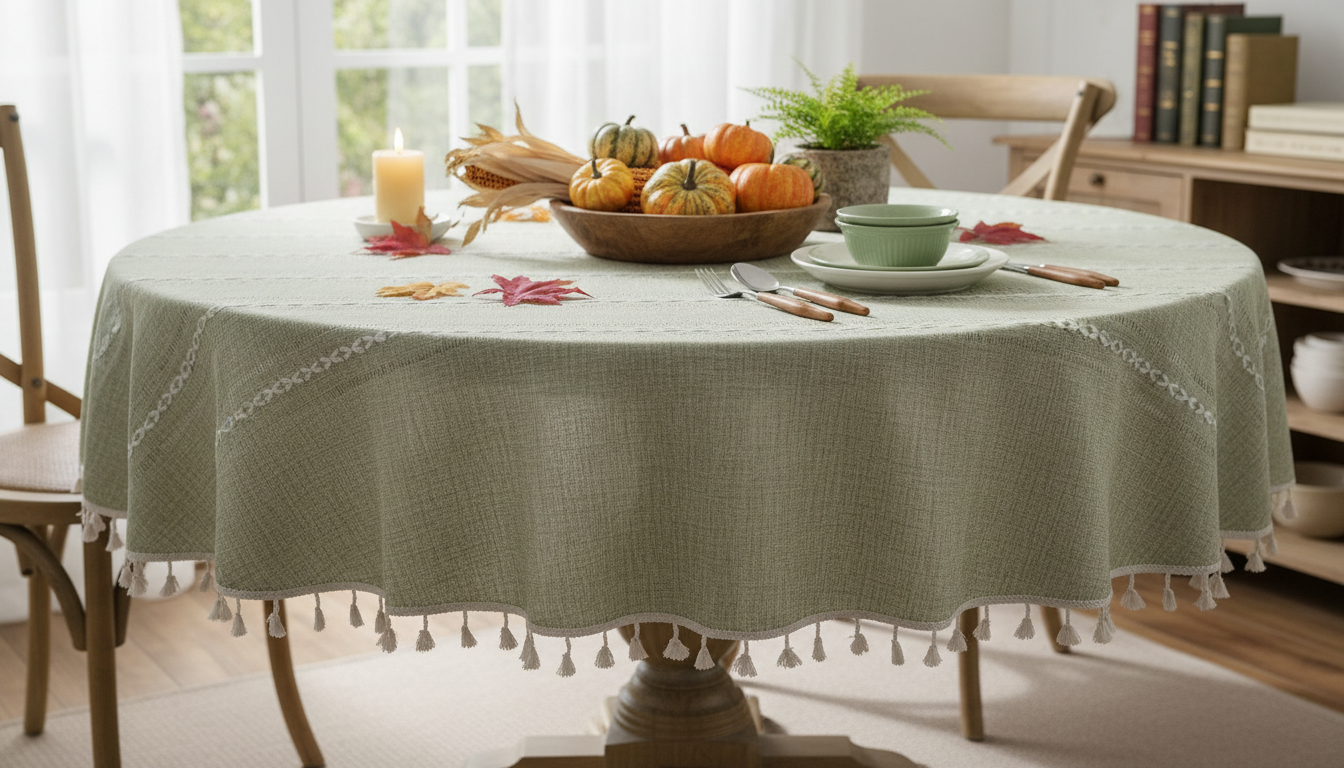
Green Hollowed Out American Style Tablecloth: A Fresh, Textured Layer for Everyday Dining
A hollowed-out tablecloth adds texture without feeling heavy, making it easy to brighten daily meals and dress up gatherings. This green American-style design balances airy cutwork with a classic look that works across farmhouse, traditional, and cottage settings. The result is a table that looks thoughtfully finished—without needing a lot of extra décor. For more guidance, see Blog – Fabric of Life.
What Makes a Hollowed-Out Tablecloth Different
Unlike a fully solid weave, a hollowed-out (cutwork-style) tablecloth uses patterned openings to create dimension and visual movement. It reads as “styled” even when the rest of the setting stays simple. For further reading, see Mary Constance Moniz Lewis – Little Compton Historical Society.
- Cutwork-style openings create a light, dimensional surface that looks finished with everyday dinnerware.
- The pattern helps visually break up large tabletops, especially on longer dining tables.
- Pairs well with solid placemats or a simple runner when a layered look is desired.
- Works as a decorative layer for sideboards, coffee tables, and console tables beyond dining use.
Color and Style Pairings for a Green Table Setting
Green is an easy “bridge” color: it can feel cozy and traditional or crisp and modern, depending on the materials around it. A hollowed-out texture adds interest, so the best pairings often keep other elements clean and intentional.
- Warm and inviting: combine with natural wood, cream plates, and woven chargers.
- Crisp and classic: pair with white dinnerware, clear glassware, and brushed silver flatware.
- Seasonal decorating: add citrus tones in spring/summer, or rust and brass accents in fall.
- Modern update: mix with matte black candlesticks and a simple centerpiece to keep the cutwork as the focal point.
Easy Pairing Ideas
| Look | Best with | Centerpiece suggestion |
|---|---|---|
| Farmhouse | wood table, linen napkins, stoneware | low greenery garland |
| Classic | white plates, clear glass, silver accents | white flowers in a simple vase |
| Coastal-fresh | light neutrals, rattan, pale blues | citrus bowl or sea-glass tones |
| Modern contrast | black accents, minimalist dishes | single sculptural vase |
Choosing the Right Size and Drop
Getting the right size makes a tablecloth look polished and helps it function well day to day. Start with your tabletop measurements, then decide how much “drop” (overhang) you want on each side.
- Measure the tabletop length and width; add the desired drop to each side for the final tablecloth size.
- Common drop guidelines: 6–10 in for casual dining, 10–15 in for a more dressed look, and longer drops for formal settings.
- Round tables: use the table diameter plus twice the desired drop.
- If using chairs with arms, keep the drop shorter to prevent snagging during seating.
For a deeper measuring walkthrough, The Spruce’s tablecloth measuring guide is a helpful reference.
Layering Tips: Liners, Runners, and Placemats
Because cutwork includes open areas, layering can change the entire look—from airy and casual to more defined and “set for company.” Choose layers based on how much contrast and coverage you want.
- Liner underneath: Use a solid liner to emphasize the cutwork pattern and reduce show-through on busy tabletops.
- Runner on top: Add a runner in a complementary solid color to anchor a centerpiece and keep place settings visually organized.
- Placemats for high-traffic spots: Placemats protect where plates and cutlery move the most while keeping the tablecloth as the decorative base.
- Outdoor dining: Consider cloth weights or low-profile décor to help keep edges in place and reduce shifting in a breeze.
If you like the idea of a soft underlayer for picnics or travel dining setups, a simple cotton textile can pull double duty. The Cotton Sleeping Bag Liner can also work as a lightweight liner for a casual, on-the-go table setup when you want a clean base layer.
Care and Maintenance for Cutwork-Style Textiles
Cutwork-style textiles are easier to maintain when routine care prevents particles from settling into the openings and avoids stress on the detailed areas.
- Shake out crumbs after use and store folded loosely to reduce deep creases along the hollowed areas.
- Avoid harsh bleaching agents that can weaken fibers around cutwork details.
- If ironing is needed, use a moderate setting and press from the reverse side when possible to protect texture.
- Treat stains early: blot (don’t rub), and test any stain remover on an inconspicuous area first.
Where It Works Best at Home
Product Spotlight: Green Hollowed Out American Style Tablecloth
If you want one piece that can carry everyday dining and still look special for guests, the Green Hollowed Out American Style Tablecloth brings that mix of freshness and structure. The green tone adds color without overpowering a room, while the hollowed-out detailing adds texture that reads as styled even when the centerpiece is simple.
Quick Details
| Item | Details |
|---|---|
| Name | Green Hollowed Out American Style Tablecloth |
| Price | 34.51 USD |
| Availability | In stock |
FAQ
How do you measure for a tablecloth drop?
Measure the tabletop length and width (or diameter for round tables), then add twice your desired drop to each measurement. For casual dining, a 6–10 inch drop is common; for a more dressed look, aim for about 10–15 inches.
Should a hollowed-out tablecloth be used with a liner?
A liner is a good idea when you want stronger contrast behind the cutwork or more coverage over a patterned tabletop. If you prefer an airier look and don’t mind show-through, the tablecloth can also be used on its own.
How can a cutwork-style tablecloth be protected from snags?
Keep the drop shorter around armchairs, be mindful when sliding chairs in and out, and avoid rough décor bases that can catch on openwork. Gentle washing and careful folding/storage also help protect the cutwork areas over time.










Leave a comment