


Aerial Yoga Contraindications: Who Should Avoid It?
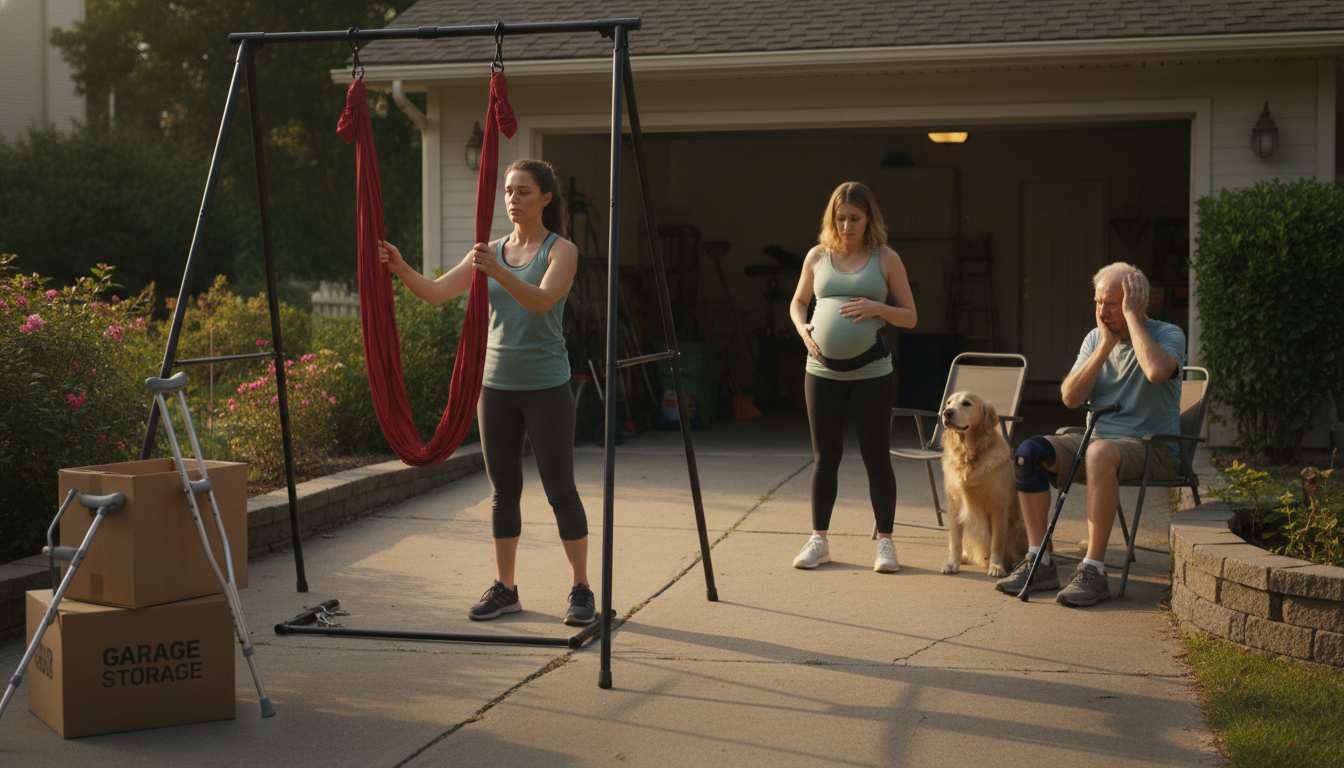
Who should not do aerial yoga?
Aerial yoga can be a fun, low-impact way to build strength and mobility, but it isn’t a fit for everyone. Because poses are done in a suspended hammock and often involve inversion or partial inversion, certain conditions can raise the risk of dizziness, falls, or injury. When in doubt, get medical clearance before trying a class.
People who should avoid aerial yoga (or only practice with medical approval)
Pregnant individuals: The combination of balance challenges, pressure from the fabric, and potential inversions can be unsafe during pregnancy. Many studios recommend avoiding aerial classes unless a healthcare provider explicitly approves and the instructor is trained in prenatal modifications.
Anyone with uncontrolled high blood pressure, glaucoma, or eye pressure issues: Inversions can increase pressure in the head and eyes, which may worsen these conditions.
People with heart conditions or a history of stroke: The intensity changes and inverted positions can place additional strain on the cardiovascular system. Clearance from a clinician is important.
Those with recent surgery or acute injuries: Shoulder, neck, back, hip, or knee injuries may be aggravated by traction, hanging, or instability. Post-surgical restrictions often include limits on stretching, rotation, and load-bearing.
Individuals with severe vertigo, fainting episodes, or balance disorders: Being off the ground and changing head position quickly can trigger symptoms and increase fall risk.
People with osteoporosis or fragile bones: Even gentle aerial work can involve leverage and pressure points; a fall or abrupt load could cause fractures.
Anyone with hernias or conditions affected by abdominal pressure: Core engagement and fabric compression may increase discomfort or risk.
When aerial yoga may be okay with modifications
Some people with mild back discomfort, tight hips, or limited flexibility do well with beginner-friendly classes that stay mostly upright. Look for an instructor who offers clear safety cues and uses accessible progressions. For setup and safety fundamentals, see the complete guide here: aerial yoga hammock guide, setup tips, and beginner safety.
FAQ
Is aerial yoga safe for beginners?
It can be safe for beginners when the hammock is properly rigged, the class is beginner-level, and you avoid inversions until you’re comfortable. Start slow, communicate any medical concerns, and choose an instructor who emphasizes spotting and controlled transitions.










Leave a comment