

Engine Overheated While Driving: Is It Still OK?
Will my engine be ok after overheating while driving?
Maybe—but it depends on how hot it got, how long it stayed hot, and whether you kept driving. A brief temperature spike that you caught quickly can leave an engine completely fine. But if the gauge went deep into the red, steam was pouring out, or the car lost power and you continued driving, overheating can cause anything from a minor coolant leak to serious internal damage.
What overheating can damage
Modern engines run tight tolerances, so excessive heat can warp cylinder heads, damage head gaskets, crack plastic cooling components, and degrade oil so it stops protecting bearings. Even if the car seems “normal” afterward, hidden issues like a small head-gasket leak or a weakened radiator hose can show up days later.
Signs your engine may not be OK
Watch for coolant loss, white smoke from the exhaust, a sweet smell, milky oil on the dipstick or oil cap, rough running, misfire codes, overheating again at idle, or bubbles in the coolant reservoir. Any of these can point to a cooling-system failure or combustion gases entering the cooling system.
What to do next
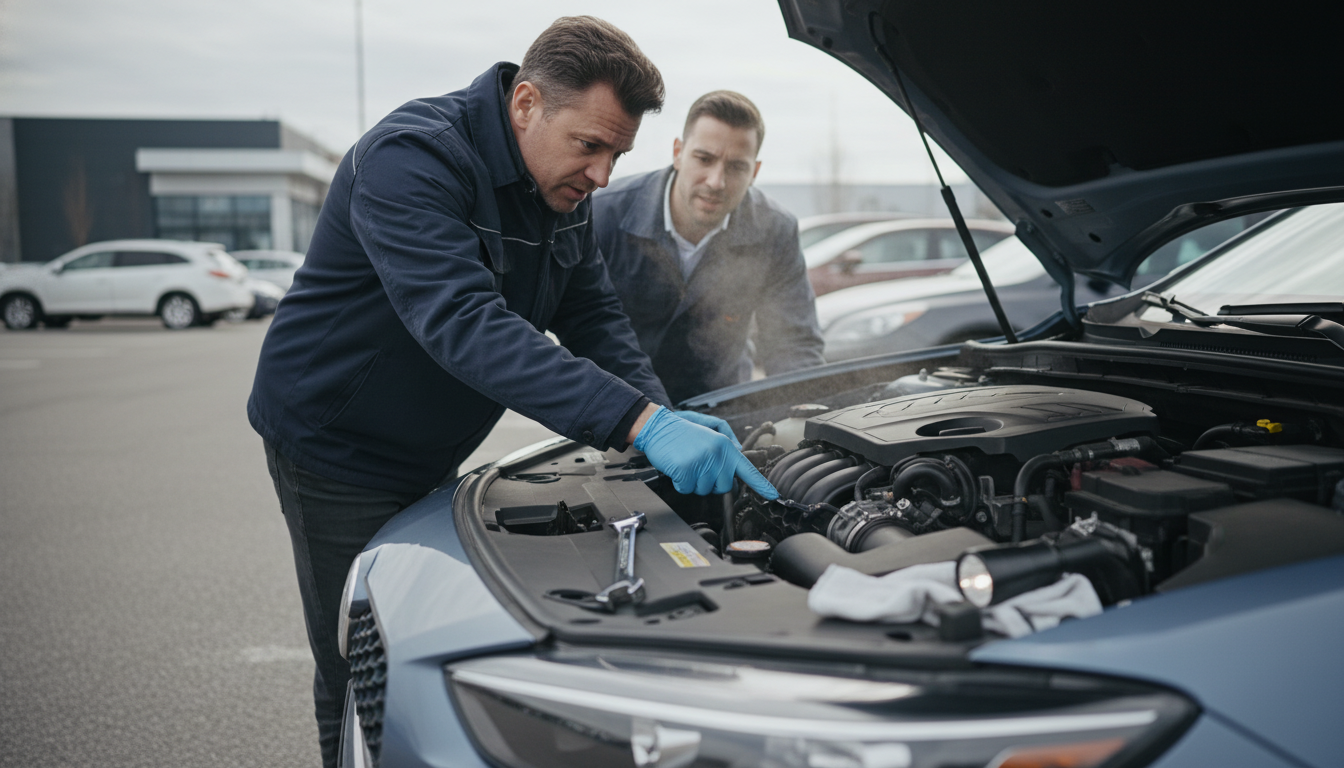
Do not keep driving if it starts to overheat again. Let the engine cool completely before opening the hood; never remove a hot radiator cap. Check coolant level in the reservoir, look for wet spots or crusty residue around hoses and the radiator, and confirm the cooling fans run when the engine warms up. If the temperature climbs quickly, the heater blows cold at idle, or coolant keeps disappearing, get the car inspected promptly.
When it’s safer to tow
If the temperature warning light is on, steam is visible, the engine is knocking, or you see coolant pouring out, shut it down and tow it. Driving even a few miles while severely overheated can turn a repairable leak into a costly head-gasket or engine repair.
For step-by-step instructions on what to do immediately when a car overheats, read this guide: car overheating—what to do immediately.
FAQ
How long should I wait before adding coolant after overheating?
Wait until the engine is fully cool—typically at least 30–60 minutes. Adding coolant to a hot system can cause burns and may crack components due to rapid temperature change.











Leave a comment