


Poor Grooming in Cats: Signs, Causes, and Next Steps
What is poor grooming in cats?
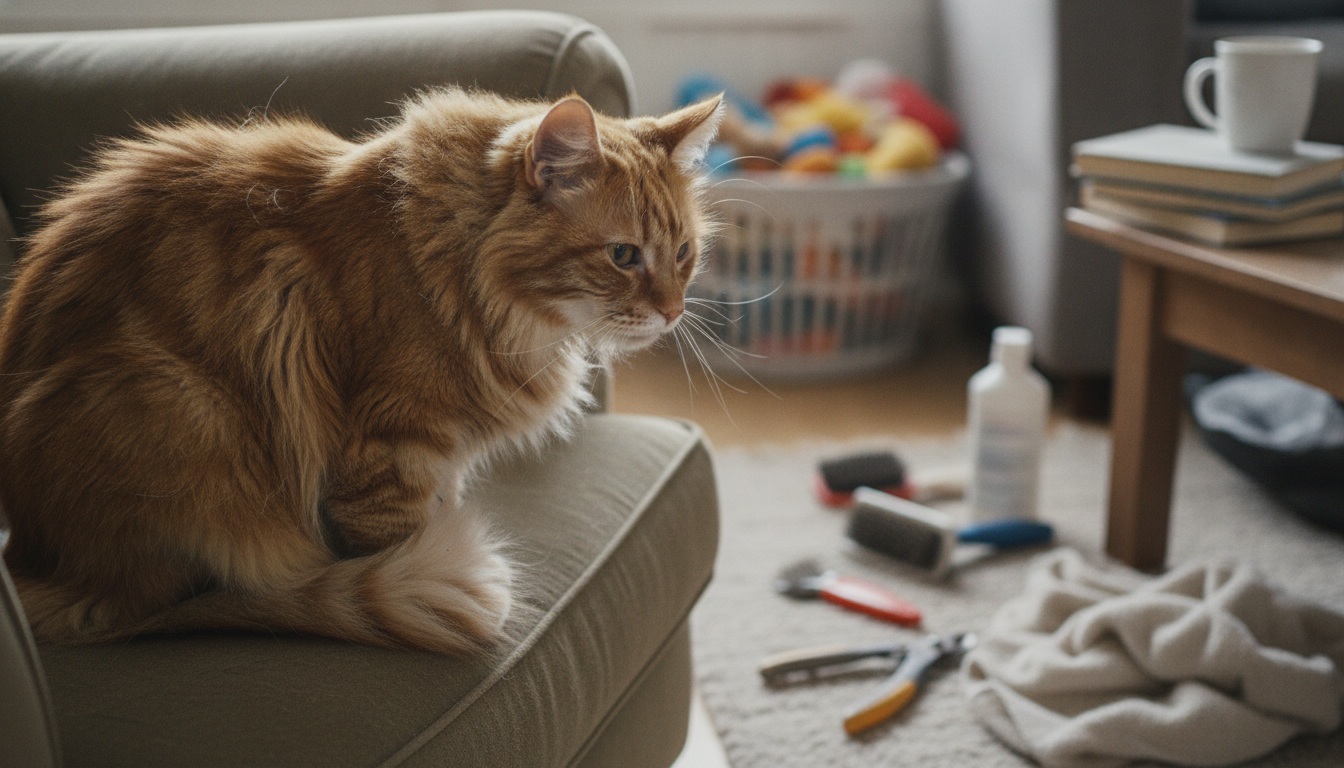
Poor grooming in cats means a cat isn’t keeping its coat and skin in normal, healthy condition—either because it can’t groom effectively, it’s grooming too little, or it’s grooming in an unhelpful way. Since most cats spend a good amount of time self-grooming, noticeable changes in coat quality or cleanliness can be an early sign that something is off.
Common signs of poor grooming
Poor grooming often shows up as a dull, greasy, or unkempt coat, clumps of loose hair, increased shedding, dandruff-like flakes, or small mats that start forming behind the ears, under the collar area, along the belly, or near the hindquarters. You might also notice litter sticking to the fur, a urine smell around the back end, or food residue around the mouth and chin.
Why it happens
Many issues can reduce a cat’s ability or desire to groom. Pain and limited mobility (such as arthritis), dental disease, obesity, stress, skin allergies, parasites (like fleas), or underlying illness can all interfere with normal grooming. Senior cats and long-haired cats are especially prone to matting when grooming drops off even slightly.
Why poor grooming matters
When grooming declines, tangles can turn into tight mats that pull on the skin, trap moisture, and lead to irritation or infection. Excess oil and debris can also worsen itching and inflammation, creating a cycle where the cat feels worse and grooms even less (or overgrooms certain spots).
What to do next
If poor grooming is new, worsening, or paired with behavior changes, weight loss, bad breath, limping, bald patches, or sores, a veterinary check is the safest next step. For day-to-day coat support at home, keep simple tools on hand and use short, gentle grooming sessions. For a practical list of essentials, visit this printable cat grooming tools checklist.
FAQ
How often should you brush a cat?
Most short-haired cats do well with brushing 1–2 times per week, while long-haired cats often need daily brushing to prevent mats. Adjust based on shedding, coat type, and how easily tangles form.









Leave a comment