


Full-Body Travel Workout Plan: Bodyweight Only
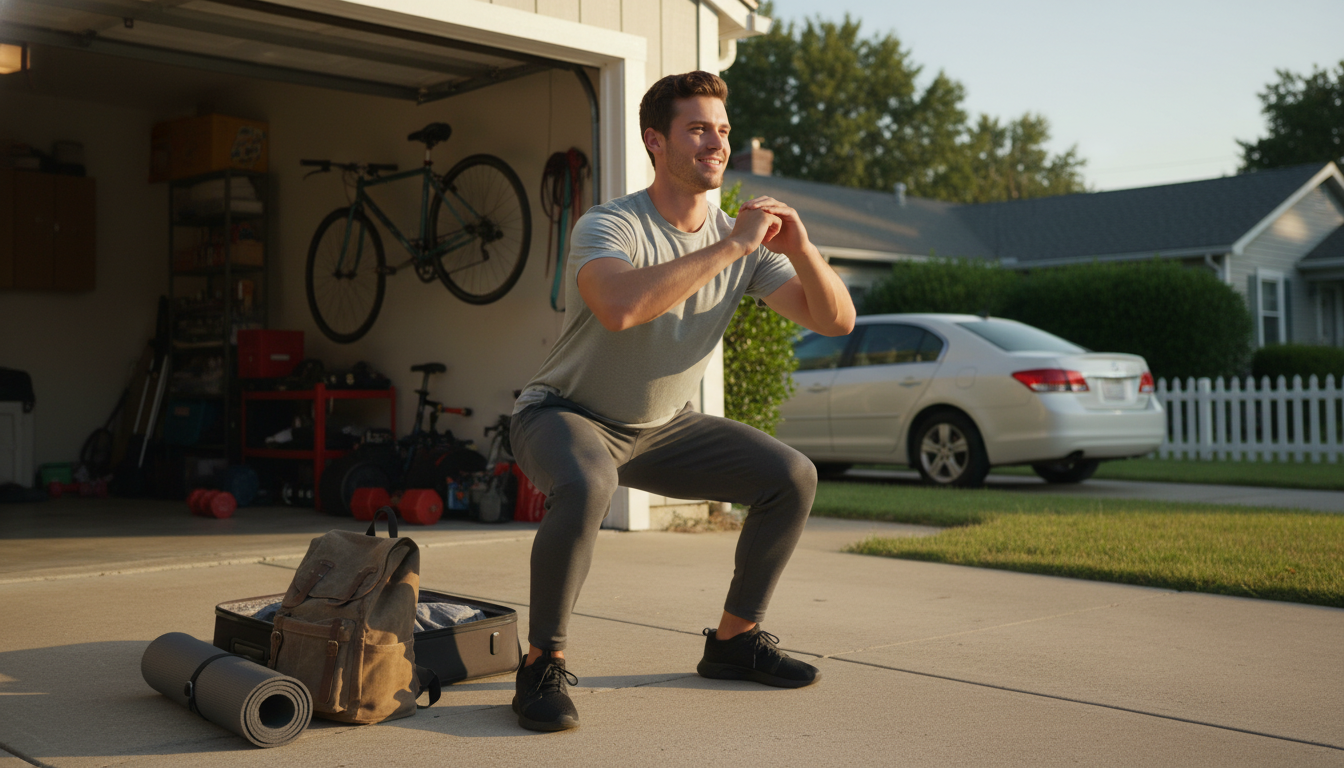
How do I build a full-body travel workout plan with only bodyweight exercises?
Start with a simple template you can repeat anywhere: a quick warm-up, 5–6 full-body moves that cover push, pull, legs, core, and cardio, then a short finisher. Keep the plan “equipment-free” by choosing exercises that can be scaled up or down with tempo, range of motion, and rest.
1) Set your travel-friendly schedule
For most trips, aim for 3 sessions per week (about 20–30 minutes each). If your days are packed, do a 10–15 minute “minimum effective” workout and add steps or stair climbing for extra activity.
2) Use a full-body movement checklist
Build every workout from these categories: (1) lower-body squat/lunge, (2) hinge/glutes, (3) upper-body push, (4) upper-body pull substitute, (5) core, (6) conditioning. Bodyweight pulling is the toughest while traveling, so use options like towel rows in a sturdy door setup only if safe, suitcase/backpack rows, or isometric “lat pulls” and slow reverse snow angels to keep your back engaged.
3) Sample no-equipment full-body workout (repeat 2–4 rounds)
Warm-up (3 minutes): jumping jacks, hip circles, arm circles, inchworms.
Main circuit (work 40 seconds, rest 20 seconds): air squats, reverse lunges, push-ups (or incline push-ups on a bed), glute bridges, hollow hold (or dead bug), mountain climbers.
Finisher (3 minutes): alternate 20 seconds fast / 40 seconds easy of high knees, shadow boxing, or stair intervals.
4) Progress without gear
Add difficulty by slowing the lowering phase (3–5 seconds), pausing at the hardest point, increasing rounds, shortening rest, or switching to single-leg/single-arm variations. Track reps or total rounds so each session has a clear target.
For a deeper breakdown and more travel-ready options, visit the complete guide here.
FAQ
How long should a bodyweight travel workout be?
Most people do well with 20–30 minutes, 3 times per week. If time is tight, a focused 10–15 minute circuit still maintains strength and momentum.












Leave a comment