

Build a Working Wooden Rubber Band Revolver 3D Puzzle
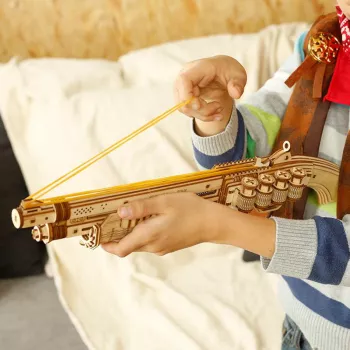
DIY Revolver Wood Mannequin Equipment with Rubber Band Bullets: A Buildable 3D Puzzle That Actually Does Something
A wooden build that clicks together into a working rubber-band launcher blends hands-on crafting with a playful finish. This type of 3D puzzle kit suits rainy-day projects, family game nights, and display shelves—offering both the satisfaction of assembly and a safe, low-impact way to play. If you enjoy models with moving parts (or want a screen-free project that ends with a functional toy), the DIY Revolver Wood Mannequin Equipment with Rubber Band Bullets – Enjoyable 3D Puzzle Toy for Youngsters and Adults is a clever pick that balances building, tinkering, and light target practice.
What this wooden revolver puzzle kit is
At its core, this is a build-it-yourself wooden model that assembles into a revolver-style rubber band shooter. Instead of being “just” a static model, it’s designed as a full 3D puzzle experience: sorting the wooden pieces, following staged instructions, and then testing the mechanism once everything seats correctly.
- A wooden 3D puzzle kit that becomes a rubber-band launcher when assembled
- A step-by-step building experience with a real mechanical payoff
- Fun for youngsters with supervision and for adults who like gadgets, models, and desk toys
- Rubber bands act as the “bullets,” keeping play low-impact compared with many projectile toys
Because it uses rubber bands rather than hard projectiles, the “action” stays on the safer side of toy play—especially when paired with clear rules and adult guidance for younger builders.
Why it stays enjoyable after the build
Some kits peak at the unboxing and then go straight to a shelf. A working rubber-band model tends to have a longer life because there’s something to do after the last piece clicks in.
- Build satisfaction: the finished model feels earned; careful assembly is rewarded with smoother motion.
- Mechanical delight: loading bands, working the action, and dialing in consistent shots encourages repeat use.
- Display value: wood models often look great on desks, bookcases, or hobby corners.
- Group-friendly: building, troubleshooting, and testing can be shared—especially during family time.
If you like interactive collectibles, it can be both a conversation piece and a hands-on toy that demonstrates simple mechanics.
Skill-building benefits for youngsters and adults
A buildable wooden mechanism supports practical skills that show up in other hobbies and school projects. It’s not about perfection—it’s about developing a steady approach and learning how parts interact.
- Fine-motor practice: pressing, aligning, and fitting pieces can improve dexterity and hand control.
- Following sequences: step-by-step assembly supports planning and attention control.
- Problem-solving: stiff motion or misaligned parts become small “engineering puzzles” to solve.
- Patience and persistence: visible progress makes it easier to stick with a longer build.
- Conversation starter: once finished, it naturally invites questions, demonstrations, and shared play rules.
For general toy safety considerations—especially around small parts and safe play habits—review guidance from the U.S. Consumer Product Safety Commission (CPSC) Toy Safety page and the overview of ASTM F963 toy safety standards.
Assembly tips for a smoother build
Wood puzzle kits are most fun when the moving parts glide instead of grind. A few simple habits can reduce frustration and help the mechanism work the way it should.
- Set up a clear workspace and use a tray or shallow box so small pieces don’t roll away.
- Dry-fit moving parts before final seating to keep the action free-moving.
- Use gentle, even pressure rather than forcing parts; if something resists, recheck alignment.
- Keep rubber bands off the build until assembly is complete, then test with single-band shots first.
- If motion feels stiff, confirm joints are seated evenly and nothing is twisted or pinched.
When something doesn’t move smoothly, pause and backtrack one step. With wooden mechanisms, “almost aligned” can feel like “stuck,” so a small correction often fixes the whole system.
Safety and play rules that keep it fun
A rubber-band launcher is still a launcher. A few house rules keep play enjoyable, respectful, and safer—especially with kids involved.
Quick checklist: what to look for in the kit box
| Item to confirm | Why it matters |
|---|---|
| Wooden puzzle pieces | Ensures the full model can be assembled without improvising parts |
| Rubber bands | Allows safe, low-impact “shots” once the mechanism is working |
| Instructions/diagrams | Reduces frustration and helps keep moving parts aligned |
| Parts checklist | Helps catch missing pieces before the build is underway |
| Target idea (paper or printable) | Makes first test shots structured and keeps play directed |
Gift ideas and who typically enjoys it
Related picks for creative play and collecting
- Little Angel 28cm Fashion Doll with Mechanical Joint Body: a poseable figure for imaginative play, photography, or display setups alongside models and mini scenes.
- 125mm F10 Schmidt-Cassegrain Computerized GoTo Astronomical Telescope with StarBright XLT: for makers who want a different kind of “mechanical wonder,” with long-term learning and nighttime exploration.
FAQ
Is a rubber-band revolver puzzle kit safe for youngsters?
It can be safe with supervision, clear eye-safety rules, and a strict “aim only at targets” policy. Use only the appropriate rubber bands for the model and keep play in a controlled area.
What if the mechanism feels stiff after assembly?
Recheck alignment and make sure joints are seated evenly without twisting. Test movement without rubber bands first, avoid forcing parts, and revisit the last steps where moving pieces were installed.
Can it be used as a display model as well as a toy?
Yes—wooden models often look great on shelves or desks. For display, store rubber bands separately and place the model out of reach of very young children.









Leave a comment