


Toddler Utensil Skills: When to Start & Easy Progress
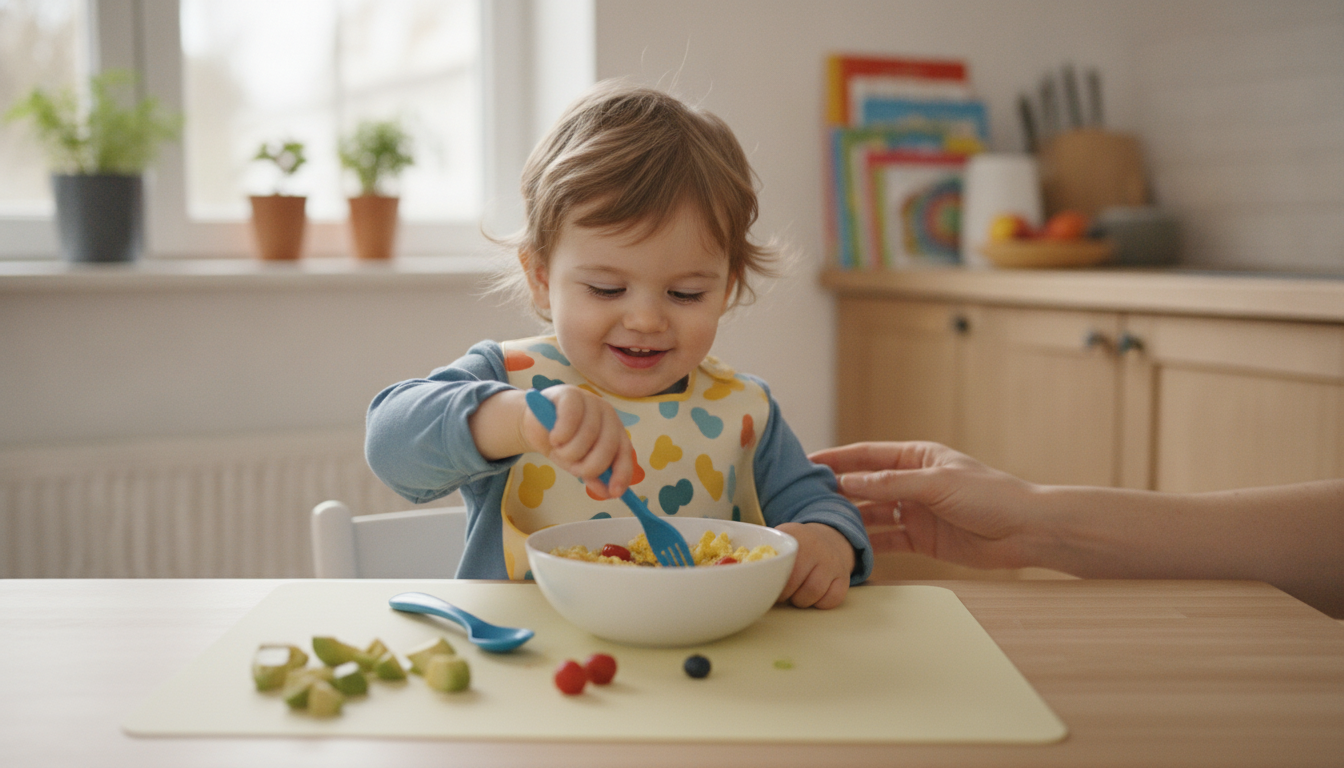
Utensil practice is a mix of timing, the right tools, and realistic expectations. The goal isn’t a perfectly clean toddler meal—it’s steady skill-building that gradually replaces big scoops-and-spills with confident bites. Below is a parent-friendly roadmap for when toddlers are ready, what to offer first, and how to coach progress step-by-step without turning every meal into a cleanup battle.
When Toddlers Are Ready to Start Using Utensils
Many toddlers begin meaningful spoon use around 12–18 months, though playful exposure can start earlier once solid foods begin. “Ready” doesn’t mean they’ll eat the whole meal neatly—it means they can participate and learn without constant frustration.
- Typical readiness window: Around 12–18 months for a spoon, with earlier “practice” through holding and mouthing safe utensils.
- Signs to watch for: Brings food to mouth reliably, sits with support, shows interest in copying adults, uses a pincer grasp, and tolerates short practice sessions.
- Age-appropriate expectations: Early utensil use often looks like holding a spoon while you feed some bites, then taking turns for a few self-fed bites.
For feeding guidance that aligns with pediatric recommendations on early eating skills, see the American Academy of Pediatrics’ resource on starting solid foods and the CDC’s overview of infant and toddler nutrition.
A Simple Timeline: What to Offer and When
Progress usually follows a predictable pattern: preloaded spoon success first, then scooping, then fork skills. Knives come much later (and always with close supervision).
- Start with a preloaded spoon: You load the spoon; your toddler brings it to their mouth. This is often the fastest path to early wins.
- Move to independent scooping: Thicker foods help the spoon stay loaded (yogurt, oatmeal, mashed sweet potato).
- Introduce a fork after spoon basics: Focus on stabbing soft foods like banana slices, steamed vegetables, or soft pasta.
- Delay knives: Butter knives for spreading commonly come around age 3+ with close supervision.
Utensil Skills by Age Range (Typical Progression)
| Age range | Utensil focus | Best practice foods | Parent setup that helps |
|---|---|---|---|
| 6–10 months | Playful exposure; holding a spoon; mouth exploration | Purees, thick purees | Offer a second spoon to hold while being fed |
| 10–14 months | Preloaded spoon to mouth; early scooping attempts | Yogurt, oatmeal, mashed foods | Short practice bursts; high-sided bowl; bib/splatter mat |
| 14–18 months | More accurate scooping; reducing spills | Thick soups, rice with binder foods, cottage cheese | Smaller portions; pause to reset posture; wipe hands mid-meal |
| 18–24 months | Fork practice (stabbing); switching hand positions | Soft fruit, pasta, steamed veggies | Cut food into stab-friendly pieces; stable plate |
| 2–3 years | Better control; mixed textures; more independence | Most family foods, with safety modifications | Teach “scoop against the side”; set a calm meal rhythm |
Choosing Toddler Utensils That Make Success Easier
The “best” toddler utensil is the one your child can control right now. Small design details can significantly reduce spills and frustration.
- Size and grip: Look for a short handle with a thicker grip. Long, slim handles are harder for small hands to steady.
- Spoon shape: A shallow spoon bowl helps prevent overfilling. Rounded edges feel more comfortable while learning.
- Fork tips: Toddler forks should be effective for soft foods without being sharp.
- Materials: Food-grade silicone or BPA-free plastic are common early on; stainless steel can work later when control improves.
- Skip “cute” if it slips: Prioritize stability, easy cleaning, and a shape that matches your toddler’s skill level.
Low-Mess Training Strategies That Still Allow Real Practice
Less mess comes from smart food choices and short, focused sessions—not from stopping practice. The trick is to set your toddler up to succeed before the first bite.
- Start with “sticky” foods: Yogurt, oatmeal, and mashed foods cling to the spoon longer than thin purees or soup.
- Serve tiny portions: A tablespoon or two at a time limits the size of spills and reduces the urge to over-scoop.
- Anchor dishes: Use a wide-base bowl, and place a damp cloth under it to reduce sliding.
- Teach one step at a time: Scoop → lift → level → mouth. Praise the step they’re practicing, even if the bite isn’t perfect.
- Keep practice brief: Five to ten minutes of true practice is often enough. Stop before frustration flips into a meltdown.
A 7-Day Utensil Practice Plan (Low Pressure, High Repetition)
Think of this as a gentle “mini routine” you can repeat whenever your toddler hits a new skill plateau.
- Day 1–2: Preloaded spoon with thick foods; your toddler controls the last step (to mouth).
- Day 3: Encourage dipping (spoon into yogurt) rather than full scooping.
- Day 4: Add a high-sided bowl and model “scoop against the side.”
- Day 5: Introduce a fork with soft, stab-friendly foods; keep the spoon available for backup.
- Day 6: Mixed meal: one easy utensil food plus one finger food to prevent frustration.
- Day 7: Practice during the calmest meal of the day; reduce distractions and keep routines predictable.
Common Challenges and Quick Fixes
Safety Notes for Utensil Learning
A Helpful Resource for Getting Started
If you want a simple walkthrough you can follow meal by meal, Introducing Utensils to Toddlers – A Parent-Friendly Guide on when to introduce utensils to toddlers for Confident, Mess-Free Mealtimes lays out readiness signs, realistic expectations, and easy routines you can repeat until skills stick.
For an at-home “practice buddy,” the Little Angel 28cm Fashion Doll with Mechanical Joint Body can be used for simple role-play (pretend feeding, “scooping,” and taking turns) that makes utensil practice feel like play instead of a test.
FAQ
When to start introducing utensils to a toddler?
Many toddlers are ready to start real spoon practice around 12–18 months, but you can offer playful exposure earlier once solids begin. Look for signs like sitting steadily, bringing food to the mouth reliably, and interest in copying you—then start with a preloaded spoon for quick success.










Leave a comment