


Snap-On 2-in-1 MagSafe Power Bank: iPhone + Watch
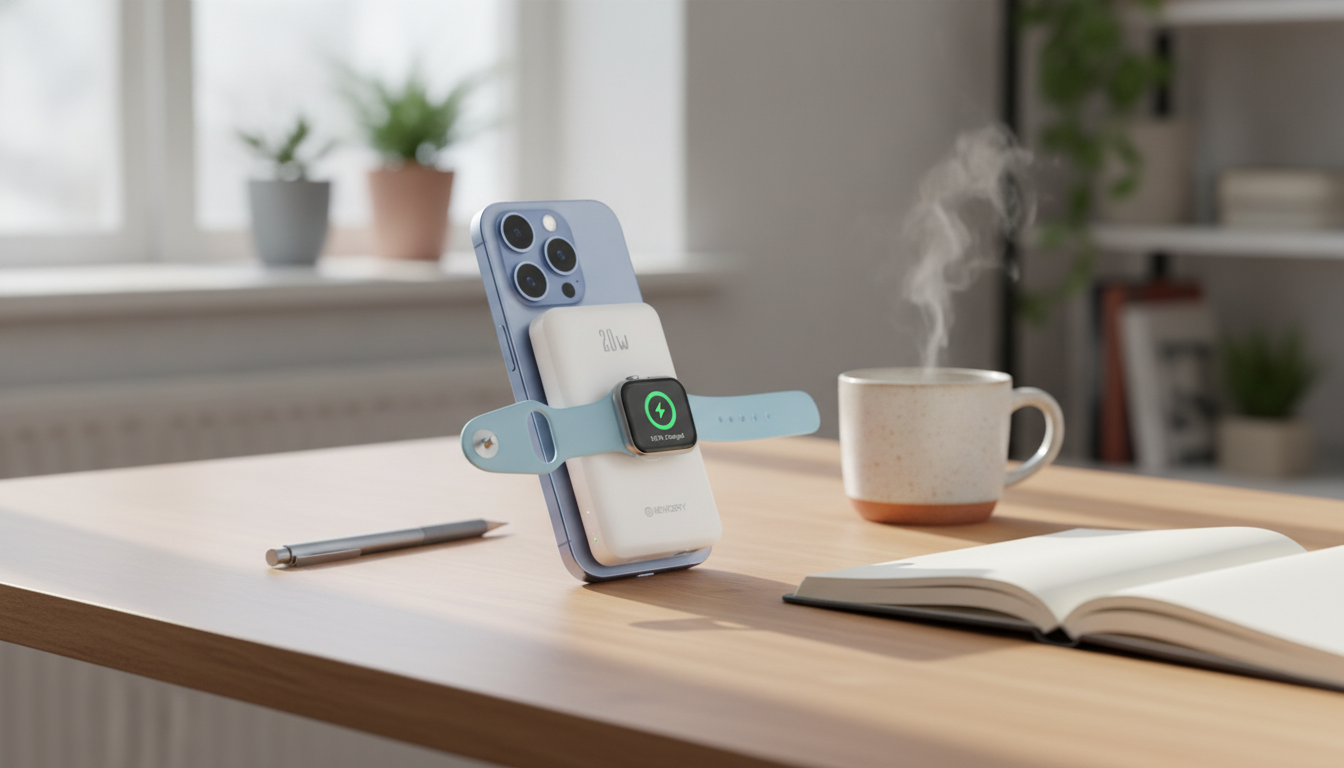
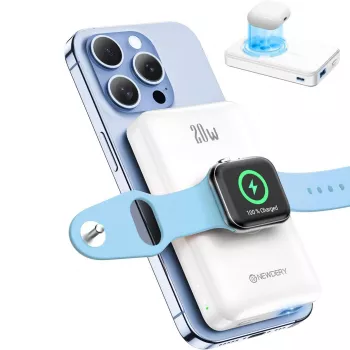
Keep iPhone and Apple Watch powered throughout the day with a compact 2-in-1 magnetic power bank designed for snap-on wireless charging plus fast wired output. This guide covers how it works, what to expect from charging speeds, compatibility details, and practical tips for daily carry and travel.
What the 2-in-1 design solves
A 2-in-1 magnetic power bank is built for the two devices that tend to run low first: your phone and your watch. Instead of packing separate chargers (and fighting for outlet space), one accessory can handle everyday top-offs for both.
- Charges two daily essentials in one accessory: iPhone via magnetic wireless charging and Apple Watch via a dedicated watch charging area.
- Cuts down cable clutter for commutes, office days, and weekend trips—one compact power source instead of multiple bricks and pucks.
- Magnetic alignment helps the phone land in a more consistent “sweet spot” than many non-magnetic pads.
- Works as an emergency backup when outlets aren’t available, while still supporting faster top-ups through a wired fast-charge port.
If you want an all-in-one option for daily carry, see the 2-in-1 Magnetic Wireless Power Bank for iPhone and Apple Watch with 20W Fast Charge.
Magnetic wireless charging, explained in plain terms
Magnetic wireless charging adds a ring of magnets around the charging coil so your phone naturally snaps into the right place. That alignment matters because wireless charging depends on two coils lining up closely and evenly.
- Magnets align the phone with the charging coil, improving placement and stability during charging.
- Better alignment can reduce energy loss and helps the charge stay “locked on” without constant repositioning.
- Grip strength varies with case thickness, attached accessories, and the specific phone model.
- Wireless charging creates heat; stable alignment plus airflow helps maintain comfort and performance during longer sessions.
For background on Apple’s magnetic ecosystem, Apple’s support coverage on MagSafe is a helpful reference: Apple Support: About MagSafe for iPhone. For the broader wireless standard that many devices share, the Wireless Power Consortium (Qi) overview explains the basics.
Fast charging: what “20W” changes
“20W” is typically the headline number for the wired fast-charge output. In practice, it means the power bank can deliver higher power through a cable than older 5W-style charging, which can noticeably improve quick top-ups when you’re short on time.
- The 20W rating generally applies to the wired output, which can charge faster with a compatible cable and device.
- Wireless charging is usually slower than wired fast charge; it’s best for convenience and steady top-offs.
- Real-world speed depends on battery level, temperature, device limits, and whether you’re actively using the phone while charging.
- For the fastest refill, use the wired port for iPhone and reserve wireless for cable-free moments.
For a deeper look at how modern fast charging negotiates power safely, USB-IF’s overview of USB Power Delivery provides useful context: USB-IF: USB Power Delivery.
Compatibility checklist (iPhone, Apple Watch, cases, and accessories)
Most charging frustrations come down to fit: magnets need close contact, coils need alignment, and the watch charging surface needs to sit flush against the back of the watch.
- iPhone: works best with MagSafe-compatible iPhone models and magnetic cases designed for MagSafe alignment.
- Apple Watch: supports charging for models that use magnetic watch charging (most modern Apple Watch generations).
- Cases: slim MagSafe cases usually perform better; very thick cases or cases with metal plates can weaken hold and reduce charging efficiency.
- Accessories: PopSockets, ring holders, and wallet attachments can interfere with alignment—remove them if charging is inconsistent.
Everyday use: setup and best practices
Once you get the alignment habit down, day-to-day charging becomes almost automatic—snap, set, and go.
For travel-heavy routines, pairing your charger setup with small comfort upgrades can also help. If long flights or late nights leave you looking tired, consider adding Naturally Awake: Puffy Eye Solutions – Natural Remedies for Puffy Eyes Guide to your trip prep.
Safety and device care
Quick spec snapshot and feature comparison
| Charging method | Best for | Typical convenience | Notes |
|---|---|---|---|
| Wired fast charge (up to 20W) | Fast iPhone top-ups | Medium (needs cable) | Speed depends on iPhone model and cable quality |
| Magnetic wireless charging | Casual charging while moving/working | High (snap-on, no cable to phone) | May be slower than wired and can warm the device |
| Apple Watch magnetic charging | Daily watch charging on the go | High (dedicated watch spot) | Remove bulky bands/attachments if they prevent flush contact |
Travel and carry tips
Common issues and simple fixes
FAQ
What is magnetic wireless charging?
Magnetic wireless charging uses magnets to line up the phone and charging coil so wireless power transfer stays stable and consistent. It’s typically more reliable than placing a phone on a non-magnetic pad, though it can still be slower than wired charging.
Are magnetic wireless chargers any good?
They’re a strong everyday option for convenience, portability, and easier alignment, especially for quick top-offs during work or commuting. The tradeoffs are more heat and usually slower charging than a wired fast-charge connection, plus some sensitivity to thick cases and attached accessories.
Do Samsung phones have magnetic wireless charging?
Many Samsung phones support Qi wireless charging, but most don’t include built-in MagSafe-style magnets. A magnetic case or adhesive ring can add alignment and attachment, but charging behavior still depends on the phone’s Qi capabilities and case fit.









Leave a comment