


Skin Barrier Repair: Ingredients + Routine That Works
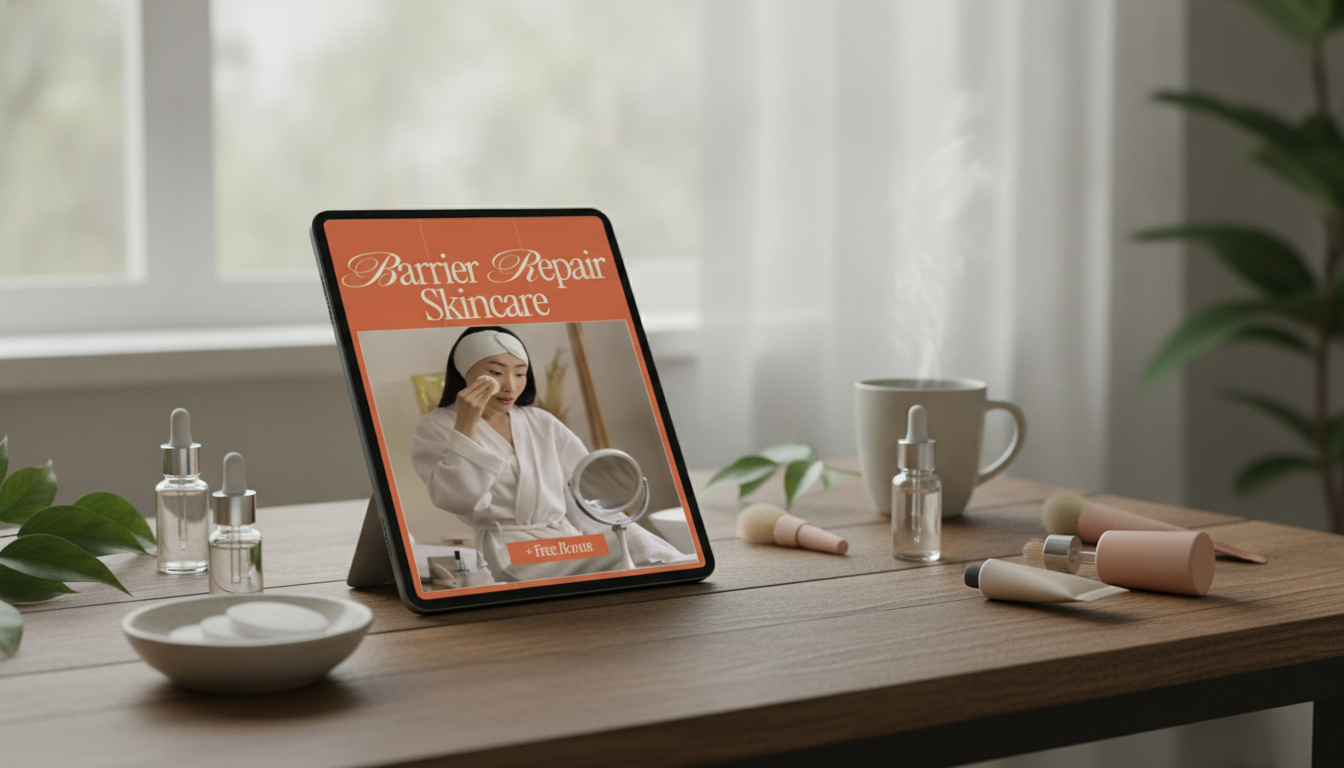
Barrier Repair Skincare: Skin Barrier Science, Ingredients, and a Smarter Routine Guide
A healthy skin barrier helps keep moisture in and irritants out. When it’s compromised, dryness, stinging, redness, flaking, and sudden sensitivity can show up fast. Barrier repair skincare isn’t about chasing one “miracle” product—it’s about giving skin the right conditions to recover, then reintroducing actives thoughtfully so irritation doesn’t keep repeating. For more guidance, see How to Repair Skin Barrier: Dermatologist Guide.
What “barrier repair” actually means
Your outermost protective layer is the stratum corneum. Think of it like a brick wall: corneocytes (cells) are the “bricks,” and a blend of lipids—ceramides, cholesterol, and fatty acids—acts as the “mortar” that keeps everything sealed and flexible. For further reading, see Your Complete Guide to Skin Barrier Repair.
When the barrier is disrupted, transepidermal water loss (TEWL) rises. That means water escapes more easily, leaving skin dehydrated and more reactive to ingredients, weather, and friction. “Repair” typically means restoring lipid balance, calming inflammation, and reducing ongoing irritation long enough for normal renewal cycles to stabilize. The most effective barrier support is a routine that protects, replenishes, and removes triggers—not a single step.
Signs the barrier may be compromised (and what they can look like)
Barrier issues can look different from person to person, but common patterns tend to cluster around discomfort and unpredictability: products that used to feel fine suddenly sting, skin looks both shiny and dry, or redness lingers longer than usual.
| What you notice | Likely pattern | First adjustment to try |
|---|---|---|
| Stinging with most products | Over-exfoliation or irritant overload | Pause acids/retinoids for 7–14 days; switch to bland cleanser + moisturizer |
| Tight, squeaky-clean feel after washing | Cleanser too stripping or washing too often | Use gentle cleanser once daily; lukewarm water only |
| Flaking + redness around nose/mouth | Compromised lipids; friction from tissues/masks | Apply ceramide-rich moisturizer; add petrolatum on hotspots at night |
| Oiliness + dehydration | Barrier dehydration prompting excess oil | Add humectant serum under moisturizer; reduce foaming cleansers |
| Rough texture that won’t smooth out | Actives too frequent; low lipid replenishment | Use barrier cream nightly; reintroduce actives slowly (1–2x/week) |
What destroys the skin barrier most often
The most common barrier “breakers” aren’t mysterious—they’re usually well-intended routines taken too far or stacked too tightly:
- Over-exfoliation: frequent AHA/BHA use, strong peels, or combining multiple exfoliants.
- Retinoid overload: increasing strength or frequency too quickly, applying on damp skin, or layering with acids.
- Harsh cleansing: high-foam surfactants, frequent cleansing, hot water, or long showers.
- Low humidity + indoor heating: increases TEWL, especially without occlusive protection.
- Friction and irritants: scrubs, cleansing brushes, tight masks, fragranced products, and repeated wiping.
For practical basics on minimizing dryness triggers, the American Academy of Dermatology recommends gentle cleansing, lukewarm water, and moisturizing immediately after washing. If eczema or chronic sensitivity is part of the picture, the National Eczema Association has a helpful overview of barrier function and why it matters.
Ingredients that support barrier recovery (and how to use them)
Barrier recovery works best when ingredients are chosen for a job—and layered in a way that reduces water loss instead of creating more sting.
- Ceramides + cholesterol + fatty acids: Most effective when formulated as a balanced blend to replenish the lipid “mortar” between cells.
- Humectants (glycerin, hyaluronic acid, low-% urea): Pull water into the stratum corneum; pair with a moisturizer so the hydration doesn’t evaporate.
- Soothers (panthenol, allantoin, colloidal oatmeal, centella): Help reduce discomfort while you simplify your routine.
- Occlusives (petrolatum, dimethicone, squalane, shea butter): Seal in moisture; useful at night or dabbed on hotspots.
- Niacinamide: Often supports barrier function and redness, but if it stings, reduce concentration or pause temporarily.
When skin is reactive, avoid introducing multiple new actives at once. Fewer variables makes it easier to identify what helps (and what quietly irritates).
A simple routine that adjusts like an “AI-powered” plan (without guesswork)
Instead of forcing the same routine every day, use a quick check-in before applying products. Rate each from 0–3: dryness/tightness, stinging, redness, and flaking.
- If any symptom is 2–3: switch to “recovery mode” for 3–5 days: gentle cleanse, barrier moisturizer, sunscreen (AM), and skip exfoliants/retinoids.
- If all symptoms are 0–1 for a full week: reintroduce one active at a time, 1–2 nights per week, then increase slowly.
- Buffering helps: if sensitive, apply actives after moisturizer. Also avoid applying potent actives on damp skin if you’re prone to stinging.
AM basics: gentle cleanse (or rinse), moisturizer, broad-spectrum sunscreen.
PM basics: gentle cleanse, barrier cream; occlusive on hotspots if needed.
Recommended guides to simplify your barrier-first routine
If you want a structured, step-by-step framework—especially for reintroducing actives without triggering a setback—these in-stock digital guides can help keep decisions simple:
- Barrier Repair Skincare eBook – Learn What Barrier Repair Skincare Means, Skin Barrier Science, Ingredients & AI-Powered Routine Guide
- Naturally Awake: Puffy Eye Solutions – Natural Remedies for Puffy Eyes Guide
When to get extra help
FAQ
What is the best ingredient for skin barrier repair?
There isn’t one single best ingredient for everyone. A practical, widely tolerated combo is a lipid blend (ceramides/cholesterol/fatty acids) plus a humectant like glycerin, topped with a moisturizer or light occlusive to reduce water loss.
What actually fixes the skin barrier?
Reducing ongoing irritation and giving skin time is what fixes the barrier. Pause over-exfoliation, switch to gentle cleansing, moisturize consistently, wear sunscreen daily, and reintroduce actives slowly only after comfort is stable.
What destroys the skin barrier?
Common culprits include harsh or frequent cleansing, hot water, stacking acids and retinoids, physical scrubs and friction, low humidity without protection, and irritating fragrances. Prevention usually starts with fewer actives, gentler cleansing, and better moisturization.











Leave a comment