
Seasonal Capsule Swap Checklist for a Calm Closet
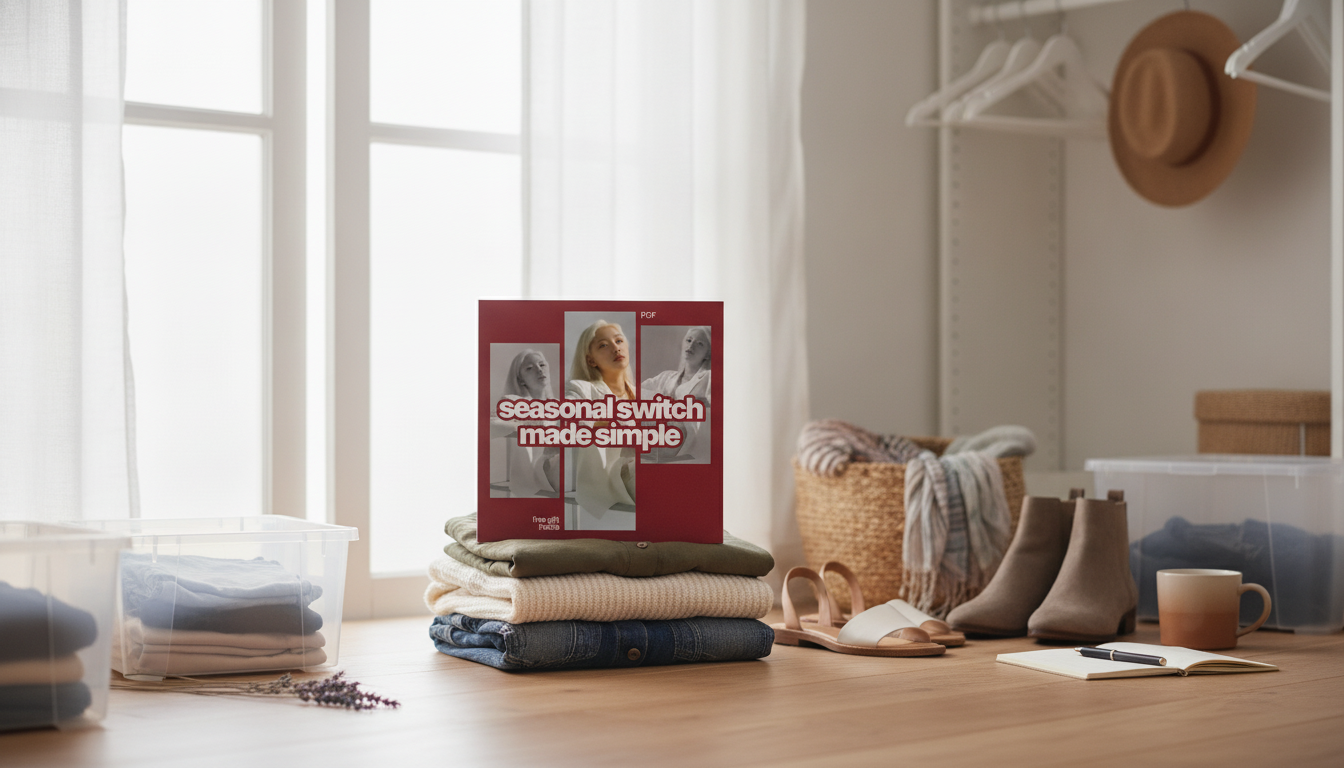
Seasonal Switch Made Simple: The Ultimate Checklist for Seasonal Capsule Wardrobe Swaps
A seasonal capsule swap works best when it’s repeatable: review what you wore, pack what you didn’t, refresh essentials, and build outfits that match the next 8–12 weeks of weather and routines. This checklist breaks the process into a quick reset that keeps closets calm, outfits cohesive, and storage under control. For more guidance, see The Only Year-Round Capsule Wardrobe Checklist You’ll ….
If you want a printable, step-by-step version you can reuse every season, save Seasonal Switch Made Simple: The Ultimate Checklist for Seasonal Capsule Wardrobe Swaps for your next changeover. For further reading, see The Perfect Capsule Wardrobe Built Around 6 ….
Before the swap: a 15-minute reset
- Pick a swap window: one evening for sorting plus 30 minutes the next day for outfit building.
- Do a fast laundry sweep: decisions are easier when items are clean and ready to wear.
- Set up four zones: Keep Now, Store, Repair/Tailor, Donate/Sell.
- Grab supplies: lint roller, garment steamer, stain remover, storage bins, labels, and cedar/moth protection if needed.
- Check the 10-day forecast: avoid packing away the one warm layer you still need.
Small detail that saves time: keep an empty hanger stack nearby so anything leaving “Keep Now” can be removed from the rack immediately—instant breathing room.
Step 1: Review last season with a quick wear audit
- Pull photos from the last season (mirror selfies, calendar events) to see what actually got worn.
- Flag items that caused friction: pinching shoes, itchy knits, fussy fabrics, pieces that required constant tugging or special bras.
- Identify your “uniform” outfits (repeat combinations) and keep their core pieces as anchors for the next capsule.
- Note gaps by situation: workdays, weekends, workouts, formal events, travel, and weather extremes.
Fast wear-audit prompts
| Prompt | What to do | Outcome |
|---|---|---|
| Worn 10+ times | Keep in easy reach | Reliable capsule core |
| Worn 1–2 times | Ask why (fit, comfort, styling, care) | Fix, re-style, or store |
| Never worn | Try on once; decide in 5 minutes | Donate/sell or schedule a repair |
| Always reached for | Duplicate if it’s a true workhorse | Reduce outfit stress next season |
Step 2: Sort and try-on—keep only what earns its space
- Try on “maybe” items immediately: decision-making improves when the piece is on the body, not on a hanger.
- Use a simple keep test: fits today, feels good for 8 hours, works with at least 3 bottoms/tops, and matches your current lifestyle.
- Separate sentimental items: store them elsewhere so your functional closet stays uncluttered.
- Create a bridge mini-capsule (3–6 items): for transitional weeks—light jacket, one warmer knit, versatile pants, and weather-flex shoes.
When time is tight, prioritize try-ons for shoes and bottoms first. Those are the pieces most likely to trigger comfort issues and derail outfits.
Step 3: Build the next capsule around outfits, not categories
- Start with your most frequent activities (example: office 3 days/week, errands 2 days, dinner 1 night, outdoors 1 day).
- Choose a tight color story: 2–3 neutrals plus 1–2 accent colors to multiply combinations.
- Aim for a balanced mix: layers, base pieces, and finishing pieces (outerwear, shoes, accessories).
- Make at least 10 complete outfits before finalizing; if you can’t, add a missing connector piece (a cardigan, belt, or shoe style).
- Reserve 1–2 “joy” items (bold print, special jacket) so the capsule feels personal, not bland.
A helpful shortcut: pick one “default silhouette” you love (straight-leg pants + slim top + layer, or wide-leg pants + fitted knit, etc.). Then create variations by swapping shoes, outerwear, and accessories.
The 3-3-3 rule (and how to adapt it for a season)
- The 3-3-3 rule is a quick capsule framework: typically 3 tops, 3 bottoms, and 3 shoes to create a compact set of outfits.
- For a full seasonal capsule, scale the idea while keeping the principle: a small, mixable set that covers real life.
- Practical seasonal adaptation: build 3 outfit “lanes” (casual, work, occasion) and ensure each lane has 3 complete outfits ready to go.
- If weather swings are common, treat outerwear as a separate mini-module (light layer + warm layer + rain option).
3-3-3 variations
| Version | Best for | Example set |
|---|---|---|
| Classic 3-3-3 | Weekend trips, minimal closets | 3 tops + 3 bottoms + 3 shoes |
| Seasonal lanes | Busy schedules with mixed settings | 3 casual outfits + 3 work outfits + 3 going-out outfits |
| Weather module add-on | Unpredictable climates | Add 3 layers: rain, warmth, light jacket |
Pack and store the off-season capsule (so it comes back ready)
Refresh checklist: repairs, tailoring, and smart replacements
If your swap session runs late, pairing it with a quick self-care reset can help you finish strong the next day—especially if you’re prone to tired, puffy eyes after sorting. Keep Naturally Awake: Puffy Eye Solutions – Natural Remedies for Puffy Eyes Guide bookmarked as a simple add-on for recovery between rounds of try-ons and packing.
Make the swap repeatable: a monthly 10-minute maintenance routine
FAQ
What is the 3-3-3 rule capsule wardrobe?
The 3-3-3 rule is a simple capsule framework: 3 tops, 3 bottoms, and 3 pairs of shoes that all mix and match. The goal is fewer decisions and more outfits from fewer pieces; for a full season, it can be scaled by creating three “outfit lanes” (casual, work, occasion) and adding a small outerwear module for changing weather.
How far in advance should a seasonal wardrobe swap happen?
Use your local climate patterns plus the 10-day forecast, then swap in layers first before fully changing over. A 2–4 week bridge mini-capsule (a light jacket, a warmer knit, versatile pants, and flexible shoes) keeps you covered while temperatures fluctuate.











Leave a comment