

Film Photography for Beginners: Exposure, Film & Workflow
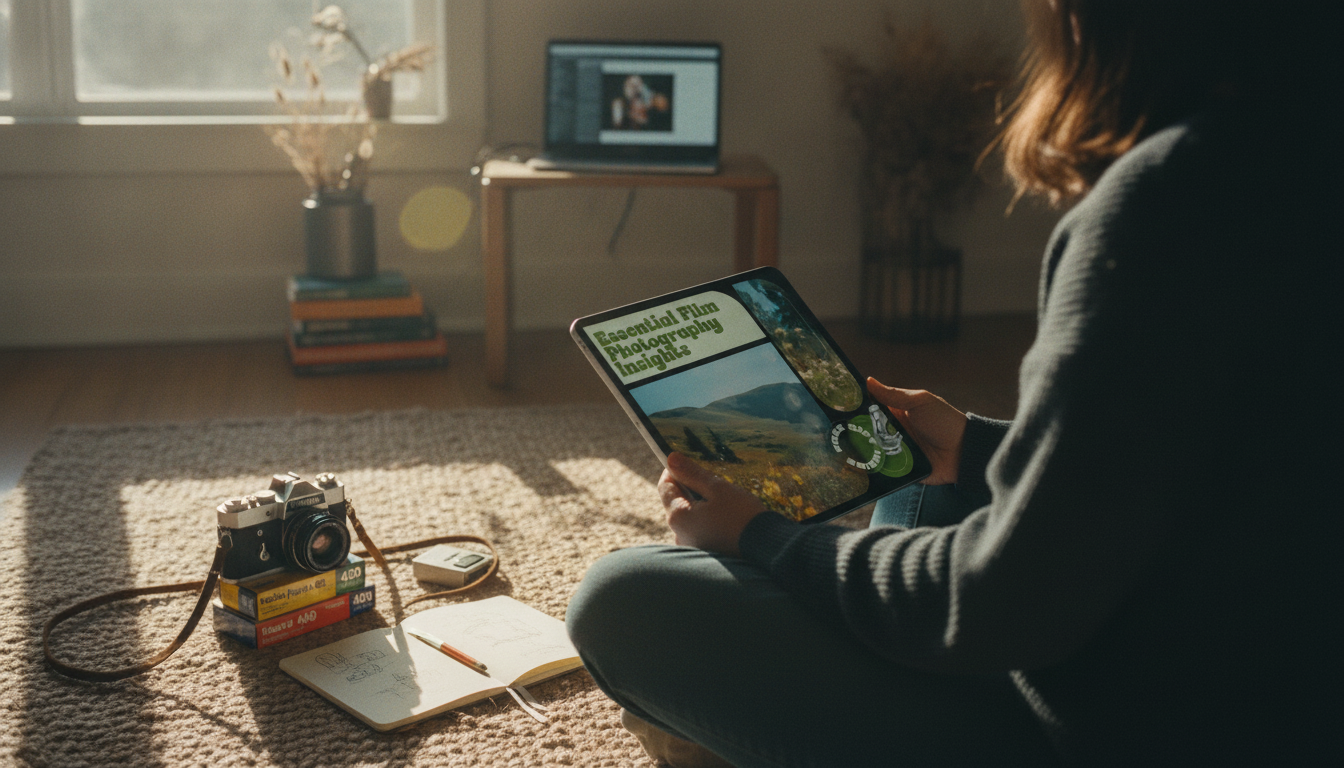
Essential Film Photography Insights for Beginners
Film photography gets a lot easier (and far more predictable) once a few core ideas click: choosing a simple camera setup, matching film stock to the light, nailing exposure, and building a repeatable routine for loading, shooting, developing, and scanning. The goal isn’t perfection on roll one—it’s consistency you can trust from roll to roll.
Start With a Simple Film Setup
Early progress comes from limiting variables. Pick one format and learn it well: 35mm is the most flexible and widely supported (lots of labs, scanners, and affordable film), while medium format can deliver higher detail but is slower and costs more per frame.
Whatever camera you choose, prioritize basic reliability over “cool factor.” A clean viewfinder, accurate shutter speeds, and a working light meter (or a clear plan to meter externally) matter more than brand names. For lenses, keep it straightforward: a 50mm prime on 35mm (or roughly an 80mm lens on a 6×6 medium-format camera) teaches composition and focus without extremes.
A few accessories prevent common failures: fresh batteries (if your camera uses them), a blower plus microfiber cloth to keep dust off the lens and viewfinder, and a light-tight bag so spare rolls don’t bake in direct sun.
Understanding Film: Speed, Color vs Black-and-White, and Latitude
Film speed (ISO) is your baseline sensitivity to light. ISO 100–200 suits bright conditions; ISO 400 is the most forgiving “do almost anything” choice; ISO 800 and above helps in low light, faster action, or indoor scenes where you don’t want motion blur.
Color negative film (C-41) is often the easiest place to start because it’s forgiving—especially if you slightly overexpose. Black-and-white can be just as beginner-friendly, but it shines when you want to learn hands-on control through development at home. Slide (reversal) film looks stunning, yet it demands accurate exposure and tends to punish mistakes.
Latitude is the hidden superpower: many color negative films tolerate overexposure better than underexposure. Slide film generally has much tighter latitude in both directions, so metering habits matter.
Quick Guide to Common Film Choices
| Film type | Best for | Exposure tolerance | Typical workflow notes |
|---|---|---|---|
| Color negative (C-41) | Everyday shooting, portraits, travel | High (especially overexposure) | Lab processing is common; scanning strongly affects final look |
| Black-and-white | Learning, contrast control, classic look | Moderate to high (varies by stock) | Easy to develop at home; flexible in development time and agitation |
| Slide / reversal (E-6) | Vivid color, projection, precise exposure practice | Low | Meter carefully; lab processing recommended for consistency |
Exposure Basics That Actually Work in the Field
Exposure comes down to three controls: aperture (depth of field), shutter speed (motion blur), and ISO (your film choice). Since ISO is fixed once you load the roll, most of your decisions become a tradeoff between aperture and shutter speed.
Build one repeatable metering habit. If your camera meter is trustworthy, use it to meter a midtone area (like pavement or grass in similar light) rather than a bright sky or deep shadow. If highlights matter—wedding dresses, clouds, reflections—avoid pushing them too far by checking a brighter area and adjusting accordingly.
A practical rule of thumb for daylight is Sunny 16: in bright sun, start around f/16 at a shutter speed near 1/ISO (for ISO 400, think 1/500 or 1/400 if available). Open up a stop or two for light clouds, and more for shade or backlight.
One common mismatch: using a slow shutter speed with a longer lens. The blur can look like missed focus, and it’s a fast way to lose confidence in your setup. When in doubt, pick a faster shutter and open the aperture.
Focusing, Composition, and Getting Consistent Frames
Loading, Shooting, and Storing Film Without Losing Frames
Developing and Scanning: What Changes the Final Look Most
Beginner Mistakes and Fast Fixes
A Simple First-Roll Practice Plan
Recommended Beginner-Friendly Picks (In Stock)
If you want a structured, repeatable approach, the Essential Film Photography Insights for Beginners | Film Photography Insights eBook | Beginner Film Camera Guide, Analog Photography Basics, Shooting & Developing Film is designed to keep early decisions simple and results consistent.
Need a no-pressure subject to practice focus and composition indoors? A small posing model like the Little Angel 28cm Fashion Doll with Mechanical Joint Body makes it easy to repeat the same scene with different exposure and depth-of-field choices.
For experimenting beyond daylight—like the moon or bright planets—an accessory such as the 125mm F10 Schmidt-Cassegrain Computerized GoTo Astronomical Telescope with StarBright XLT can support long-lens setups and careful, tripod-based shooting.
Helpful References for Learning and Consistency
For deeper exposure and tonal-control fundamentals, Kodak’s educational resources are a solid starting point: Kodak Professional. For black-and-white processing basics and technique, see Ilford Photo. For film and imaging product information, visit Fujifilm.
FAQ
Which film camera brand is best?
Condition and usability matter more than the logo. Choose a system with reliable metering (or a simple external meter plan), easy service availability, and lenses that fit your budget and style.
Is it worth getting into film photography?
Yes if you enjoy a slower pace, more intentional shooting, and a distinct look that comes from film plus scanning. Costs add up (film, processing, scanning), so starting with one camera and one film stock helps keep expenses predictable.
What are the best 35mm film cameras of all time?
There isn’t one universal winner—great choices depend on whether you want an SLR for through-the-lens viewing, a rangefinder for compact street shooting, or a point-and-shoot for simplicity. Many classics are excellent if they’ve been serviced and match your needs for metering, manual control, and lens options.











Leave a comment