


Car Fluid Leak Colors: Identify, Trace, Fix Fast
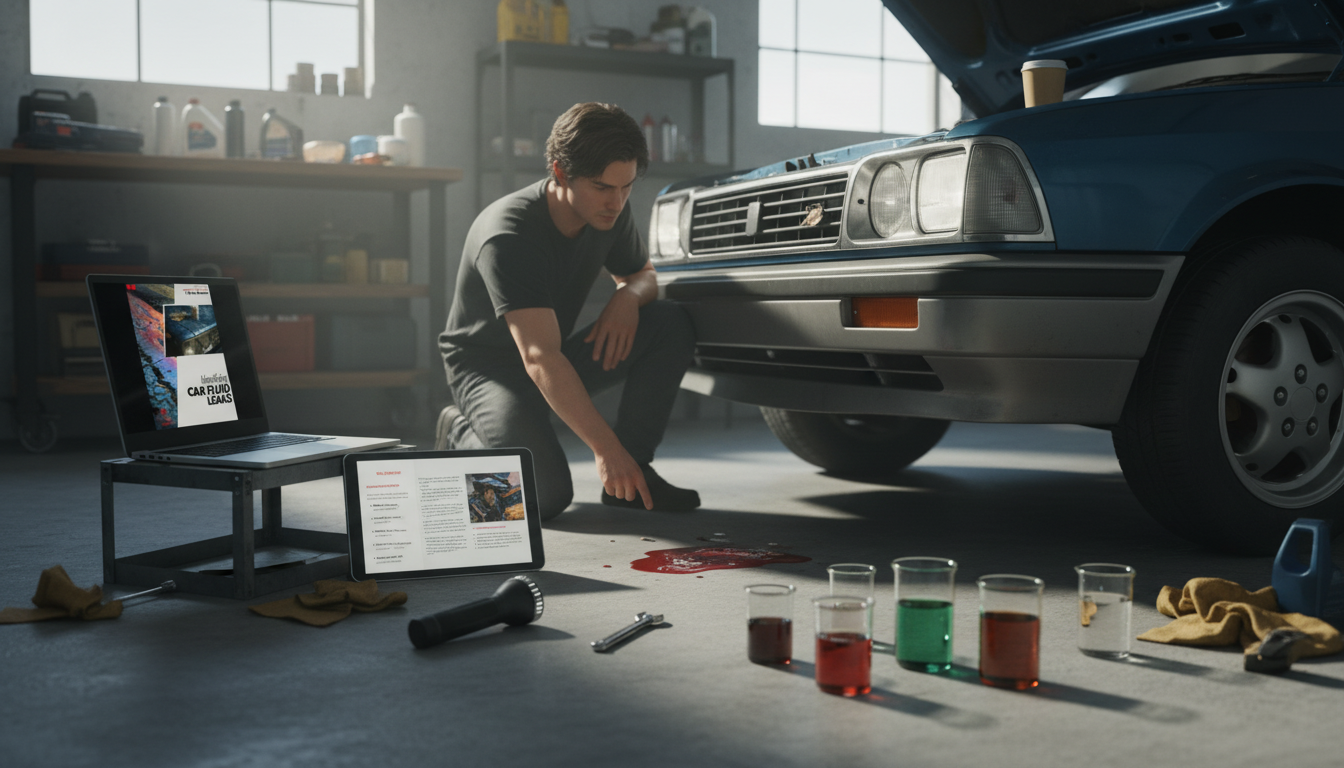
Identifying Car Fluid Leaks by Color: A Step-by-Step Guide to Spotting and Fixing the Source
A puddle under the car can be harmless condensation—or the first sign of a costly failure. Color, smell, and location provide fast clues to which system is leaking and how urgent it is. Below is a safe, repeatable process for identifying common automotive fluids by color and narrowing down the most likely leak points before choosing a fix.
Safety First: What to Do Before Checking Any Leak
- Park on a level surface, set the parking brake, and let the engine cool before touching anything hot.
- Wear gloves and eye protection; avoid tasting fluids and minimize skin contact.
- Keep rags or absorbent pads handy; dispose of contaminated materials according to local rules.
- If the leak is large, warning lights are on, or steering/braking feel changes, do not drive—tow instead.
For general maintenance and safety reminders, review guidance from NHTSA Vehicle Maintenance and Safety.
Step-by-Step: Confirm the Leak and Collect Clues
- Catch the drip: Place a clean piece of cardboard under the engine bay and another under the middle/rear of the vehicle overnight. This helps separate “front” leaks from “mid” or “rear” leaks.
- Check color in daylight: Lighting can change how a fluid looks. Take a photo and compare it to what you see in accessible reservoirs (coolant bottle, brake reservoir) or on dipsticks (oil, some transmissions).
- Feel the texture (carefully): Oily slick usually points to engine oil, ATF, power steering, or gear oil. Watery suggests A/C condensation, washer fluid, or diluted coolant. Coolant often feels slightly sticky when it dries.
- Smell without getting close: Sweet can indicate coolant; burnt/oily leans toward engine oil or overheated ATF; sharp petroleum can indicate fuel; strong sulfur/rotten egg is common with some gear oils.
- Map the location: Note whether the drip is front center, front left/right, midline, near a wheel, or rear differential area. Location often narrows it down faster than color alone.
If you’ll be cleaning or disposing of fluids, follow the EPA used oil management recommendations and local disposal rules.
Quick Color Guide: What the Puddle Usually Means
Use this as a fast reference, then confirm by checking levels and tracing the wettest point upward (gravity can move drips away from the true source).
| Fluid | Common Color | Typical Smell/Feel | Where It Often Drips | Urgency |
|---|---|---|---|---|
| A/C condensation | Clear | Water-like, no odor | Passenger-side firewall area | Low (usually normal) |
| Coolant/antifreeze | Green/Orange/Pink/Yellow | Sweet, slightly oily/sticky | Radiator/front, hoses, water pump area | High |
| Engine oil | Amber to black | Oily, burnt smell possible | Oil pan, filter, valve cover area | Medium–High |
| Transmission fluid (ATF) | Red to reddish-brown | Oily, sometimes sweet/burnt | Front-middle, pan, cooler lines | High |
| Brake fluid | Clear to amber | Slick, harsh/chemical | Near wheels/master cylinder | Critical |
| Power steering fluid | Red/amber | Oily | Near steering rack/pump | High |
| Gear oil (diff/transfer case) | Dark amber/brown | Very strong sulfur odor, thick | Rear/center undercarriage | High |
| Washer fluid | Blue/green | Alcohol-like | Front bumper area, reservoir | Low |
Pinpointing the Source by Location
- Front center: engine oil (filter/pan), coolant (radiator), ATF (front seal/pan), A/C condensation (often passenger side).
- Front left/right: coolant hose connections, power steering lines, brake fluid at calipers/hoses, washer reservoir or cracked lines.
- Near a wheel: brake fluid, grease from a torn CV boot (thick, dark, often flung onto the wheel well), or shock/strut seep (oily film).
- Mid-vehicle: transmission pan, fuel lines, brake lines, transfer case seep, or normal exhaust condensation.
- Rear center: differential pinion seal, axle seals, rear cover gasket; the strong gear oil smell is a major clue.
Common Leak Points and Practical Fix Paths
Coolant (green/orange/pink/yellow)
Look for wetness or crusty residue at radiator end tanks, hose connections, thermostat housing, heater hoses, and the water pump weep hole. Small coolant leaks often show up best during a pressure test. Treat any coolant loss as urgent because overheating can escalate quickly.
Engine oil (amber to black)
Common sources include valve cover gaskets, the oil filter seal, drain plug washer, oil pan gasket, and PCV-related blow-by that pushes oil mist out of seals. Clean the area, drive briefly, then recheck to confirm the highest wet point (the true origin).
Transmission fluid / power steering fluid (red to reddish-brown)
Brake fluid (clear to amber)
Gear oil (dark amber/brown, strong odor)
When It’s Safe to Drive (and When It Isn’t)
For additional maintenance best practices, consult AAA car maintenance tips.
Downloadable Guide for Color-Based Leak Diagnosis
- Identifying Car Fluid Leaks: A Step-by-Step Guide to Spotting and Fixing Leaks by Color | eBook Download ($22.99)
- Naturally Awake: Puffy Eye Solutions – Natural Remedies for Puffy Eyes Guide ($6.99)
- 125mm F10 Schmidt-Cassegrain Computerized GoTo Astronomical Telescope with StarBright XLT ($2727.59)
FAQ
How much does it cost to fix a front differential fluid leak?
It depends on where it’s leaking (cover reseal vs. axle seal vs. pinion seal) and how much labor is needed to access the parts. A simple reseal is typically less than a pinion seal job, which may require additional setup steps and careful reassembly.
What color is a coolant fluid leak?
Coolant is commonly green, orange, pink, or yellow depending on the type, and it often has a sweet smell with a slightly slippery or sticky feel. Confirm by checking the coolant reservoir level and looking for wet spots around the radiator, hoses, and water pump area.
What color is a transmission leak?
Transmission fluid is usually red when fresh and may turn reddish-brown as it ages; it feels oily and may smell sweet or burnt. Drips often show up near the transmission pan, cooler lines, or the front-middle underside of the vehicle.











Leave a comment