

Schmidt-Cassegrain Telescopes: Pros, Cons, Best Uses
Are Schmidt Cassegrain telescopes good?
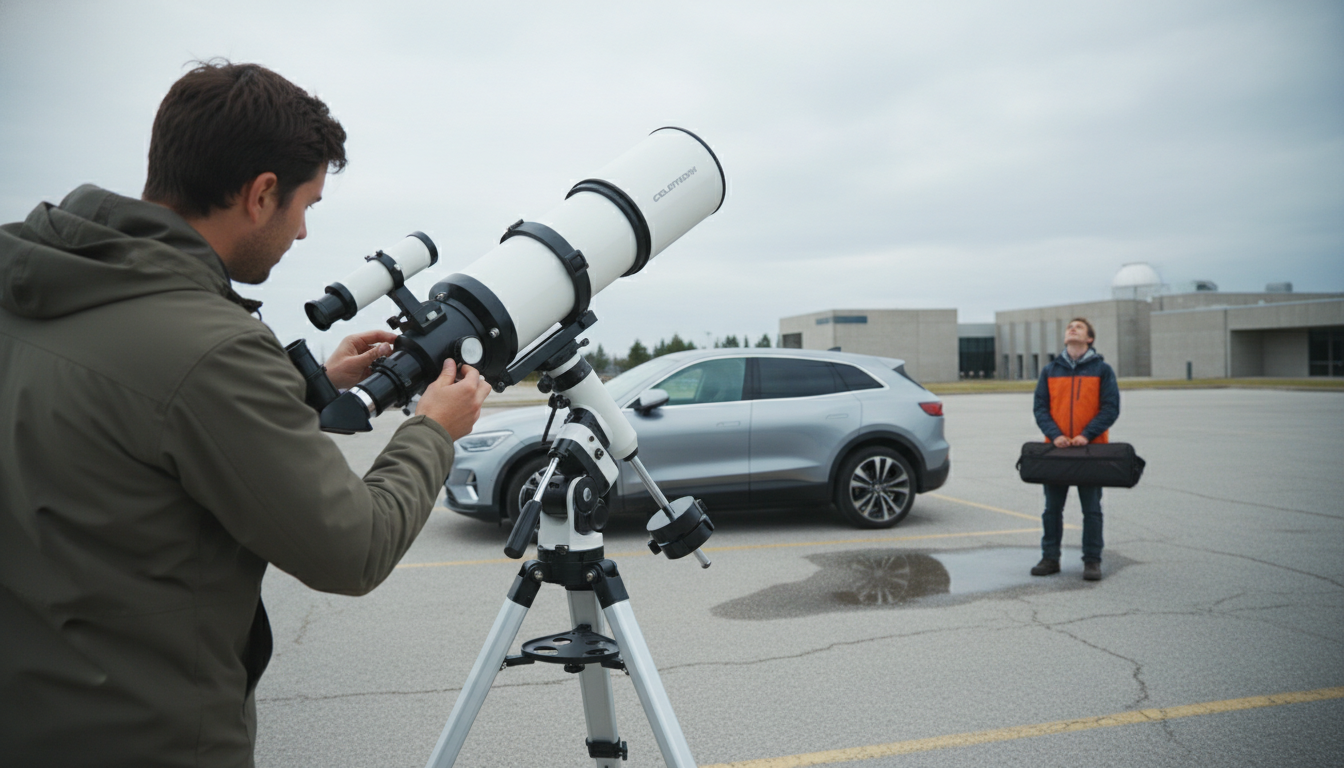
Yes—Schmidt Cassegrain telescopes (SCTs) are a strong all-around choice for many backyard astronomers because they combine a long focal length with a compact tube. That “big performance in a small package” design makes them easier to store, carry, and mount than many refractors or Newtonians with similar reach. SCTs are especially satisfying for lunar and planetary viewing, double stars, and smaller deep-sky objects where magnification and focal length help.
That said, “good” depends on what matters most. SCTs typically have a narrower maximum field of view than short-focus refractors, so wide, sweeping views of large nebulae and star fields aren’t their specialty (though accessories like focal reducers can help). They also need a bit of cooldown time to deliver sharp high-power views, and collimation (alignment) is something owners should be willing to learn for best results.
What SCTs do best (and where they can frustrate)
If the priority is detailed looks at the Moon’s craters, Jupiter’s cloud bands, Saturn’s rings, or tight star clusters, an SCT’s f/10-ish optical system can be a real advantage. Their closed-tube design can also reduce some dust and help keep optics protected during transport.
On the flip side, SCTs can feel slower to set up for spontaneous sessions if the scope needs time to reach outdoor temperature. For beginners, the combination of long focal length and tracking requirements can also make “find and frame” a bit more demanding—though GoTo mounts largely solve that once aligned.
Picking the right setup
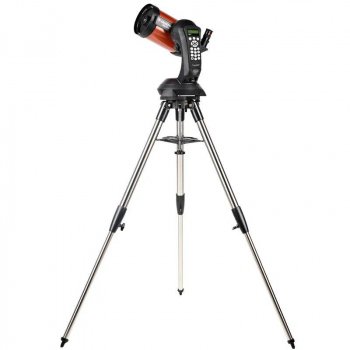
A mid-aperture SCT (often around 5 inches/125mm) can be a sweet spot: portable, capable, and friendly to smaller mounts. Look for quality coatings, a stable mount, and practical accessories (a comfortable finder, a couple of eyepieces, and—if desired—a focal reducer for wider views).
For a detailed, real-world walkthrough of what a 125mm f/10 GoTo SCT can deliver and how to get the most from it, see the complete guide here: 125mm f/10 GoTo SCT observing guide.
FAQ
Are schmidt cassegrain telescopes good for the money
They can be, especially when portability and versatility are priorities. A single SCT can cover planets, the Moon, and many deep-sky objects without needing an oversized tube or mount.
Are schmidt cassegrain telescopes good for astrophotography
They can work well, but the long focal length makes tracking and guiding more demanding. Many users start with planetary imaging or add a focal reducer to make deep-sky imaging more forgiving.










Leave a comment