


Stop Undercarriage Rust: Clean, Coat, and Protect
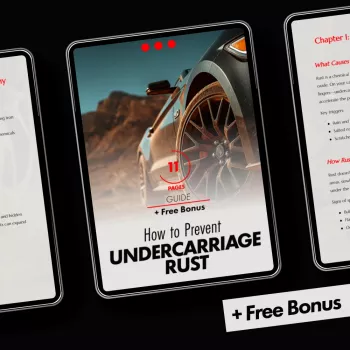
How to Prevent Undercarriage Rust: Practical Steps to Protect Your Car’s Underside
Undercarriage rust starts where moisture, road salt, and grime linger out of sight—on seams, welds, fasteners, and inside frame rails. A few seasonal habits and the right protective coatings can slow corrosion dramatically, preserve resale value, and reduce the odds of expensive suspension and brake-line repairs.
Why undercarriage rust happens (and why it spreads fast)
Rust is an electrochemical reaction, and the underside of a vehicle is a perfect place for it to accelerate. Road spray delivers water and oxygen, and winter chemicals make the reaction move faster.
- Road salt and brine speed corrosion by increasing electrical conductivity on metal surfaces.
- Moisture traps form in pinch welds, boxed frames, subframes, and behind plastic liners.
- Chipped paint and thin factory coatings expose bare steel; rust then creeps under surrounding paint.
- Mud and wet leaves hold water against metal longer than rain alone, especially after short trips that never fully dry the underside.
Early warning signs to spot before repairs get costly
Most expensive rust repairs are preceded by small, easy-to-miss clues. Catching corrosion early usually means you’re cleaning and coating—not replacing parts.
- Surface discoloration and flaky scale on control arms, crossmembers, and exhaust hangers.
- Rust lines at seams and spot welds; bubbling under underbody coating indicates corrosion underneath.
- Soft brake or fuel lines, dampness near fittings, or pitting on metal tubing.
- Unusual creaks, clunks, or alignment issues that can follow rust-weakened mounting points.
- Failing inspection items: perforation near rocker panels, subframe mounting points, or structural rails.
Rust severity guide: what it usually means
| Severity | What it looks like | Typical risk | Next step |
|---|---|---|---|
| Light surface rust | Orange/brown staining, no flaking | Low | Clean, dry, apply protective coating |
| Moderate scaling | Flakes, rough texture, minor pitting | Medium | Mechanical removal + converter + coating; inspect lines and mounts |
| Advanced corrosion | Deep pitting, holes, swelling seams | High | Professional assessment; parts replacement or structural repair |
Cleaning routine that prevents salt from lingering
The simplest rust prevention habit is removing salt frequently enough that it can’t stay wet and active on seams and fasteners. If you drive in the “salt belt,” build rinsing into your winter routine.
- Rinse the undercarriage regularly during winter and spring thaw; focus on wheel wells, rocker pinch welds, and rear subframe areas.
- Use a lawn sprinkler-style undercarriage rinse tool or wand to reach flat pans and crossmembers.
- After rinsing, take a 10–15 minute drive to help evaporate moisture from seams and brackets.
- Avoid parking long-term on wet grass, packed snow, or damp gravel where humidity stays high near metal.
- Remove packed mud from behind liners and around drain holes; clogged drains trap water inside body cavities.
Protective options: coatings, sprays, and what they’re best at
Not all rust protection works the same way. The best choice depends on whether you’re protecting clean metal, stabilizing early rust, or reaching hidden cavities.
- Oil/wax-based rust inhibitors: creep into seams and displace moisture; ideal for annual or semi-annual reapplication.
- Rubberized undercoating: good impact resistance, but must be applied to clean, rust-free surfaces to avoid sealing in corrosion.
- Paint + rust converter systems: best for spot-treatment after removing loose scale; follow with a durable topcoat.
- Cavity wax for inside doors, rockers, and frame rails: targets hidden areas where corrosion often starts.
- Choose products compatible with existing coatings; test a small area if the underbody has unknown prior treatments.
Common underbody protection methods compared
| Method | Strengths | Limitations | Maintenance cadence |
|---|---|---|---|
| Oil/wax spray | Creeps into seams, easy touch-ups | Can wash off over time, attracts dust | Every 6–12 months |
| Rubberized undercoating | Chip resistance, tidy finish | Bad over existing rust; can trap moisture if misapplied | Inspect annually; repair chips |
| Converter + paint | Stops active rust where prepped well | Labor intensive; limited seam penetration | Touch up as needed |
| Cavity wax | Excellent for enclosed spaces | Needs access points and careful application | Every 12–24 months |
Step-by-step: protecting an undercarriage the right way
A good rust-prevention job is mostly preparation. The goal is to remove what’s loose, stabilize what’s left, and seal out moisture—without trapping it.
High-risk zones on most vehicles
When professional rust-proofing makes sense
Helpful resources and recommended reads
For safety and maintenance best practices, review guidance from NHTSA. For deeper technical background on automotive materials and corrosion topics, browse SAE. For broader context on road salt considerations, see the EPA.
For a deeper, hands-on walkthrough, see How to Prevent Undercarriage Rust: The Ultimate Guide to Protecting Your Car’s Undercarriage from Rust Damage. Other digital guides available include Naturally Awake: Puffy Eye Solutions – Natural Remedies for Puffy Eyes Guide.
FAQ
How much does it cost to remove rust from a car undercarriage?
Light surface rust cleanup and a protective coating often runs about $150–$600. Moderate scaling that needs scraping, converter, and refinishing commonly lands around $500–$2,000, while advanced rust involving brake/fuel line replacement, suspension parts, or welding can reach $1,500–$6,000+ depending on the vehicle and regional labor rates.
How serious is undercarriage rust?
It ranges from cosmetic staining to serious safety risk when it reaches brake lines, subframe mounts, suspension attachment points, or structural rails. Left untreated, rust can cause inspection failures, weakened mounting points, and reduced resale value.
Is undercarriage rust-proofing worth it?
For salt-belt and coastal drivers, it’s often worth it because it can delay costly brake-line, fastener, and subframe-related repairs and extend vehicle life. The value is highest when treatments are maintained with periodic inspections and reapplication.










Leave a comment