


Schmidt-Cassegrain Telescopes: Are They Worth the Money?
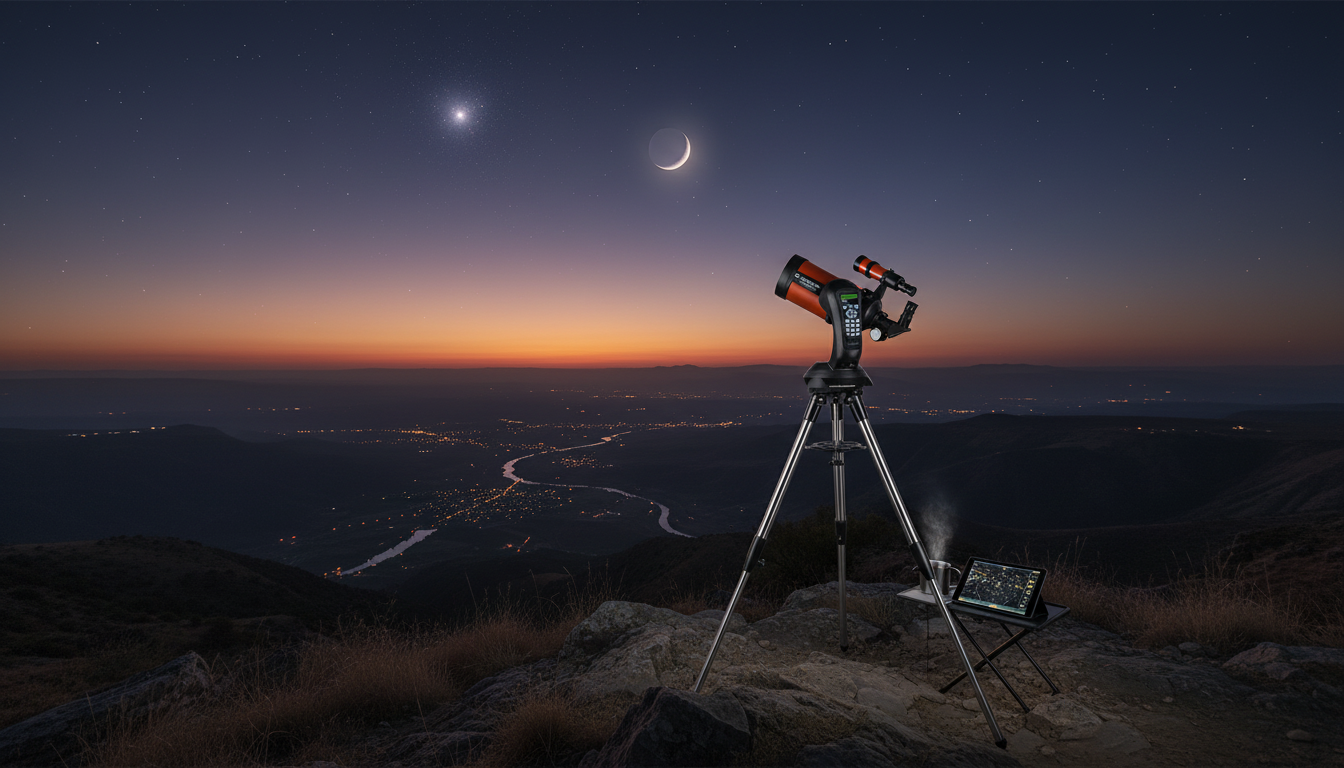
Are Schmidt-Cassegrain telescopes good for the money?
Schmidt-Cassegrain telescopes (SCTs) are often a strong value because they pack a lot of capability into a compact tube. For many shoppers, the “good for the money” verdict comes down to what you want to observe and how you plan to transport and use the scope. If portability, all-around versatility, and the option for computerized tracking matter, an SCT can be one of the most cost-effective ways to get there.
Why SCTs can be a great value
The SCT design delivers a long focal length in a short, easy-to-carry package. That makes it convenient for small patios, quick car trips, and storage in tight spaces. The long focal length also supports higher magnification for the Moon, planets, and many double stars without requiring extremely short eyepieces.
Many SCT packages are sold with GoTo mounts and tracking, which can be a major value add if you like finding targets quickly or sharing views with family and friends. Tracking helps keep objects centered at high magnification, which is especially helpful for planetary observing.
Where the “money” can go faster
SCTs aren’t automatically the cheapest path to bright deep-sky views. If your top priority is the most light-gathering power per dollar, a Dobsonian reflector often wins. SCTs can also require patience with cool-down time, occasional collimation, and (depending on conditions) dew control gear for the corrector plate.
They typically have a narrower maximum true field of view than many refractors or fast Newtonians, so wide, sweeping views of very large star fields and nebulae may not be their strongest suit without careful accessory choices.
Who gets the best value from an SCT
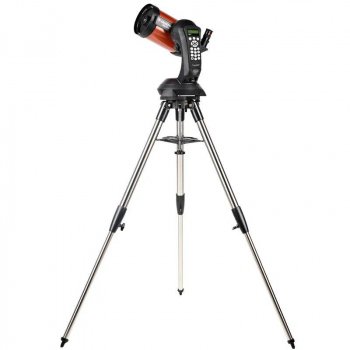
An SCT is usually “good for the money” for observers who want one telescope that does a bit of everything: planets, the Moon, brighter deep-sky objects, and casual astrophotography upgrades over time. For a concrete example of what a mid-size GoTo SCT can do in practice, see this observing-focused guide: https://splendena.com/guide-125mm-f10-goto-sct-starbright-xlt-observing-guide/.
FAQ
What can you see with a 125mm Schmidt-Cassegrain telescope?
You can get sharp views of the Moon and planets, resolve many double stars, and observe bright deep-sky targets like the Orion Nebula, the Ring Nebula, and several globular clusters. From darker skies, you’ll also see more galaxies and fainter nebulae, though they’ll appear subtle compared with photos.










Leave a comment