

Car Overheating? Immediate Steps to Stay Safe & Prevent Damage
What to Do Immediately When Your Car Is Overheating
An overheating engine can turn dangerous fast, but the right sequence of actions can prevent injuries and reduce the risk of major engine damage. Heat-related failures can escalate quickly—from a small coolant leak to a blown hose, warped cylinder head, or damaged head gasket—so treat any temperature spike as urgent and act calmly, in order.
Spot the warning signs before it becomes an emergency
Most overheating situations give a few early clues. Catching them sooner can be the difference between a simple fix and a costly repair.
- Temperature gauge climbing toward the red zone or an overheating warning light.
- Steam from the hood or a sweet smell (often coolant).
- Loss of power, pinging/knocking sounds, or the A/C suddenly blowing warm.
- Coolant puddles under the car or a hissing sound after stopping.
- If any warning appears, treat it as urgent—continued driving can warp the cylinder head or damage the head gasket.
Immediate actions while still driving
Your goal is to reduce engine load and safely reach a place to stop—without pushing the engine into the danger zone.
- Turn off the A/C to reduce engine load. Then turn the heat to full hot with the fan on high to pull heat away from the engine.
- Move out of traffic safely: signal early, avoid hard acceleration, and aim for a flat shoulder or parking lot.
- If the gauge is rising quickly or the warning light flashes, stop as soon as it’s safe rather than trying to “make it home.”
- If stuck in traffic: shift to neutral/park when stopped (automatic) and avoid revving; keep a close eye on the gauge.
- If the engine begins to misfire or power drops sharply, stop immediately and shut the engine off.
Safe stopping protocol (the first 5 minutes)
Once you’re stopped, safety comes first—both traffic safety and burn prevention.
- Pull over, park, set hazard lights, and keep passengers away from traffic.
- Shut off the engine if the temperature is near/at red, steam is visible, or the warning light indicates severe overheating.
- Do not open the hood immediately if steam is blasting out—wait until it subsides.
- Let the engine cool at least 15–30 minutes; longer if there is heavy steam or the gauge was pegged hot.
- Never remove the radiator cap on a hot engine; pressurized coolant can cause severe burns.
Overheating response checklist
| Situation | Do this now | Avoid this |
|---|---|---|
| Gauge creeping up but not in red | Turn off A/C, turn heat on full, head to a safe pull-off | Hard acceleration or climbing steep grades |
| Gauge in red / warning light severe | Pull over ASAP, hazards on, shut engine off | Trying to drive “just a few more miles” |
| Steam from hood | Stop, wait for cooling, keep distance from front of car | Opening the radiator cap or leaning over the engine bay |
| Coolant leak visible | Shut engine off, call for tow if leak is significant | Adding coolant and immediately driving without confirming the leak source |
| No steam but overheating repeats | Check coolant level after cooling; inspect fans and belts | Ignoring it—repeat overheating can cause serious engine damage |
What to check after it cools (quick, practical inspection)
After the engine has cooled down, a fast inspection can reveal obvious problems. If you’re on a narrow shoulder or feel unsafe, skip the checks and call for a tow.
- Coolant level: check the overflow reservoir first. If it’s empty, look for obvious leaks around hoses, radiator seams, and the water pump area.
- Radiator cap: only touch/open if the engine is fully cool. Use a thick cloth and open slowly to release any remaining pressure.
- Belts: look for a broken/loose serpentine belt that could stop the water pump (many vehicles) and alternator.
- Cooling fans: if it’s safe to do so, confirm electric fans run when warm. A fan that never kicks on often causes overheating at idle.
- Obstructions: debris blocking the radiator/condenser (plastic bags, leaves, mud) can restrict airflow.
- Heater performance: if heat won’t get hot even on max, coolant may be low or there may be air in the system.
Adding coolant or water: when it’s acceptable and how to do it safely
Deciding whether to drive or call for a tow
Preventing the next overheating episode
Step-by-step guidance to keep in the glovebox (digital)
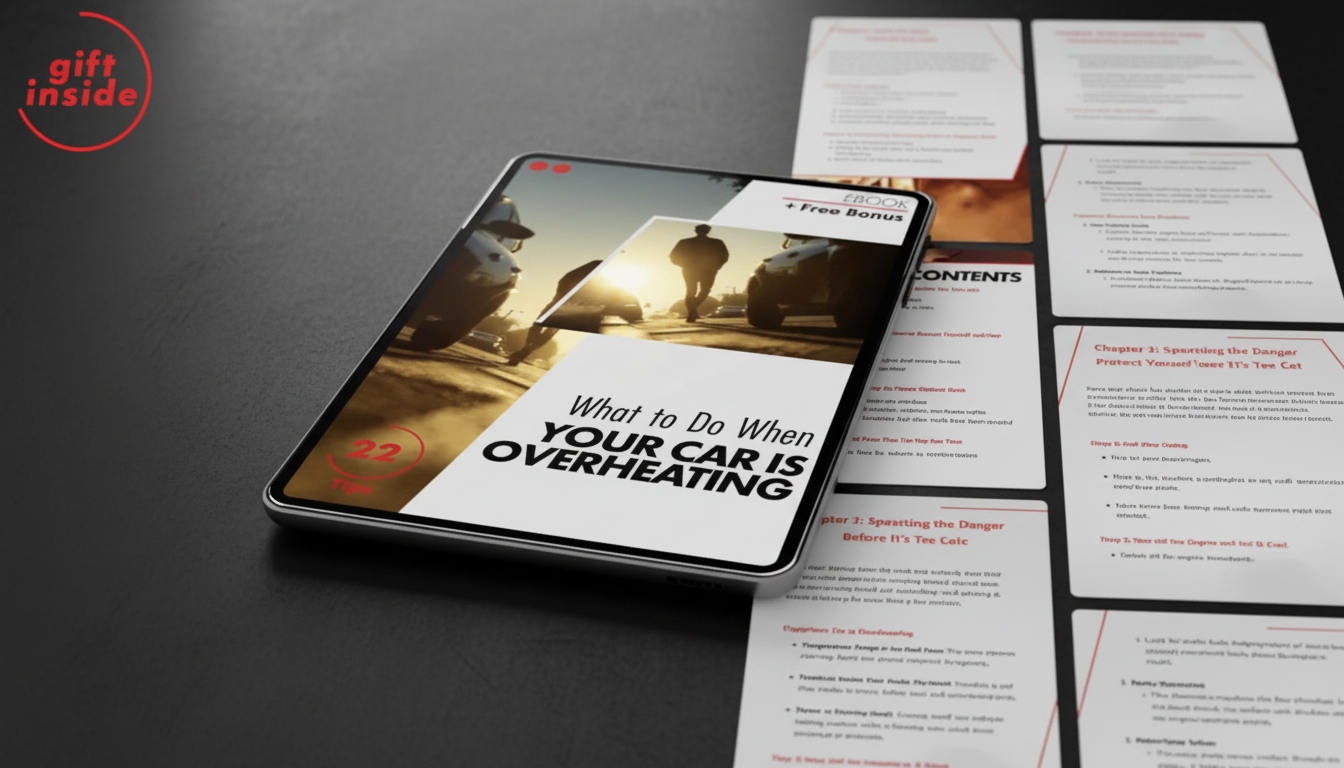
- What to Do When Your Car is Overheating | Practical Emergency Car Care eBook (quick steps, cooling timelines, refill rules, and tow/drive decision points).
- 100W USB-C to USB-C Fast Charging Cable with PD 3.0 & QC 4.0 – 5A Power (helps keep your phone alive for navigation, roadside assistance, or emergency calls).
Trusted resources for safety and maintenance
- NHTSA Vehicle Safety
- AAA Car Care: Cooling System Basics
- Car Care Council: Cooling System Maintenance
FAQ
Should the engine be turned off immediately when it overheats?
If you’re in traffic, focus on pulling over safely first. If the gauge is near/in the red, steam is visible, or a severe warning appears, shut the engine off as soon as you’re safely parked; only keep it running briefly to reach a safe spot if temperatures aren’t extreme and you’re actively moving.
Can water be used instead of coolant in an emergency?
Yes, but only as a temporary measure after the engine has cooled. Water lacks the proper corrosion protection and temperature control of the correct coolant mix, so it should be replaced with the right coolant as soon as possible.
Why does a car overheat only at idle or only on the highway?
Overheating at idle commonly points to weak cooling fans, fan controls, or low coolant; at highway speeds it can indicate restricted airflow through the radiator, a sticking thermostat, poor water-pump flow, or more serious internal problems. If the pattern repeats or the gauge spikes quickly, have the cooling system inspected promptly.











Leave a comment