
Cat-Friendly Home Layout Ideas for a Calm Indoor Cat
A Home Your Cat Truly Loves: Practical Layout Ideas for a Calm, Happy Indoor Cat
A cat-friendly home isn’t about adding more stuff—it’s about arranging space so your cat can climb, hide, observe, scratch, eat, and rest without stress. Small layout changes can reduce zoomies at night, tension between pets, and problem scratching while helping an indoor cat feel confident, safe, and entertained.
Start With Cat Needs: Safety, Choice, and Predictable Routes
Most indoor stress comes from three everyday friction points: limited safe rest, awkward traffic patterns, and crowded “resources” (food, water, litter). Designing around these basics often changes behavior faster than new toys.
- Prioritize essentials: safe resting spots, clear travel paths, and easy access to food, water, and litter.
- Build choice into each room: aim for at least one elevated perch and one covered hide so your cat can control social distance.
- Create “no-surprise” routes: don’t force a cat to pass loud appliances, tight corners, or another pet to reach litter or water.
- Reduce conflict with exits: favorite perches and rooms should have two ways out when possible (even if one is a simple shelf “step” to bypass a bottleneck).
Room-by-Room Layout Ideas That Lower Stress
Instead of redoing your whole home, choose one problem area and make it easier for your cat to move, rest, and scratch without being startled or blocked.
- Living room: place a stable perch near a window for daylight and bird-watching, but away from speakers, high-traffic doorways, and slamming doors.
- Bedroom: set up a quiet sleep zone (cat bed or folded blanket on a chair) plus a separate night perch to reduce midnight face-walking.
- Kitchen/dining: avoid feeding next to noisy appliances. Create a low-traffic feeding corner with a washable mat.
- Hallways: turn “dead space” into a travel corridor using a narrow runner, a wall shelf, or a scratcher that guides movement.
- Home office: add an “approved” nearby spot (small bed or shelf) so your cat can be close without camping on your keyboard; rotate one quiet toy to prevent boredom.
Simple placements that support calm behavior
| Area | Add/Adjust | Why it helps | Quick tip |
|---|---|---|---|
| Window zone | Stable perch or shelf | Supports natural surveillance and enrichment | Keep one side against a wall for security |
| Busy doorway | Move beds away from the threshold | Prevents startle responses and disrupted sleep | Aim for a corner with a view of the room |
| Tight corners | Add a second exit route via shelf/bench | Reduces ambush stress and conflict | Avoid forcing cats to pass face-to-face |
| Underused wall | Vertical stepping shelves | Creates exercise and confidence without adding floor clutter | Space steps so jumps feel easy |
| Couch area | Scratch post near (not behind) the couch | Redirects scratching to an approved target | Put it on the cat’s approach path |
Vertical Space: Shelves, Trees, and “Cat Highways” Without Chaos
Vertical space is the simplest way to add “square footage” to an indoor cat’s world, especially in apartments. The goal is purposeful routes, not random climbing options that wobble or lead to dead ends.
- One elevated option per main room: a cat tree, wall shelf, or sturdy cabinet top with a non-slip mat.
- Create a mini “cat highway”: connect two favorite zones (window perch → shelf → cat tree) so movement feels intentional.
- Choose traction and stability: secure shelves into studs, use non-slip surfaces, and avoid wobbly furniture.
- Offer height variety: include one mid-level lounge spot and one higher retreat for confidence and decompression.
- Multi-cat rule of thumb: add at least one vertical resource per cat, plus one extra, to reduce competition.
Resting and Hiding Spots: The Calm Starts Here
Cats relax best when they can choose between being near you and being unbothered. A predictable “public” nap spot and a dependable “private” hide can cut down on startle responses and defensive behavior.
- Two resting zones per cat: one social (near people) and one private (quiet, low traffic).
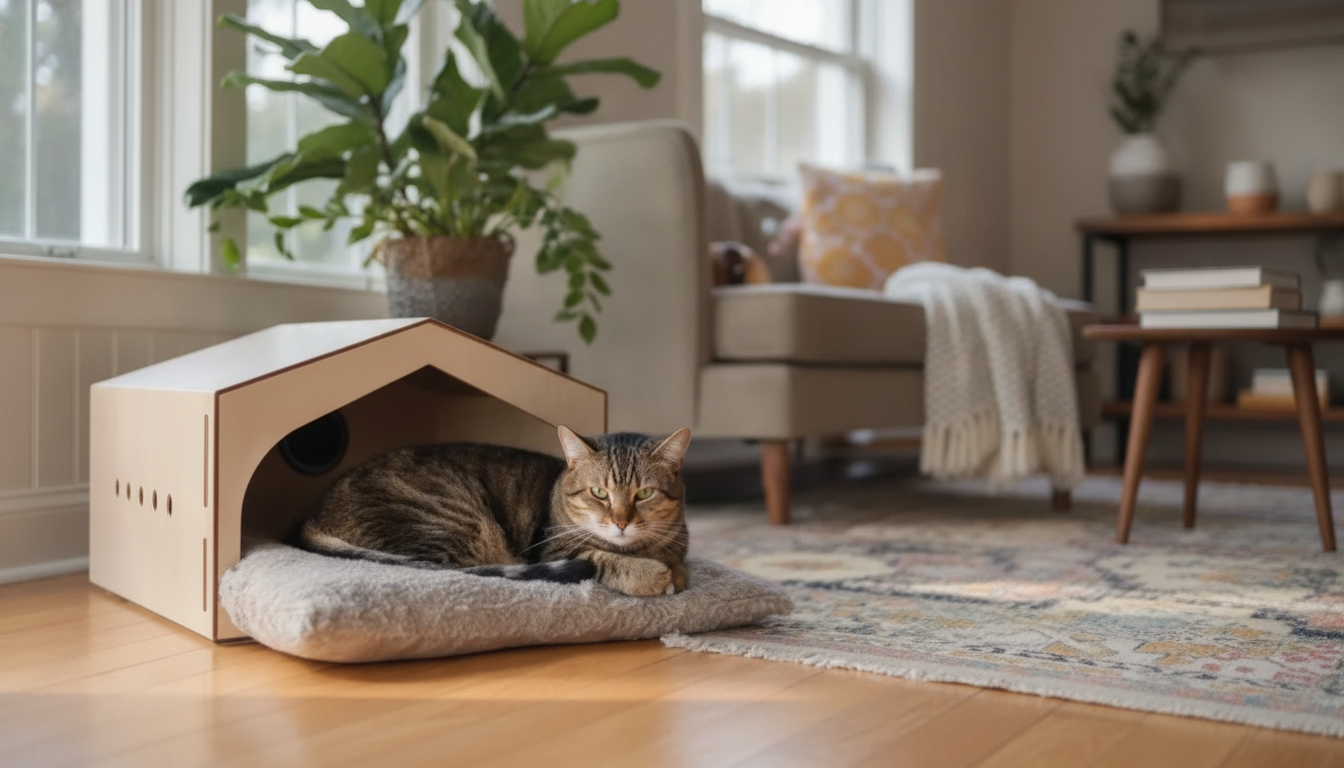
- Covered comfort works: a cave bed, a box with a blanket, or a chair draped with fabric can lower stress quickly.
- Hideouts should still have a view: cats settle more when they can see the room entrance while staying partially concealed.
- Separate sleep from litter and food: it supports a sense of cleanliness and safety.
- For shy cats: begin with lower, enclosed options and gradually add higher perches as confidence grows.
Scratching Zones That Protect Furniture (and Feel Good to the Cat)
Scratching is normal maintenance and communication. The layout trick is to place “yes” options exactly where your cat already wants to scratch, so the approved choice wins by convenience.
Litter Box and Feeding Placement That Prevents Avoidance
A Simple 7-Day Reset Plan for a More Cat-Friendly Home
Guidebook for Layout Ideas and Calm Indoor Cat Routines
For a step-by-step reference you can revisit as your cat’s habits change, A Home Your Cat Truly Loves – Practical Guide with Cat Friendly Home Layout Ideas for a Calm, Happy Indoor Cat focuses on budget-friendly room setups, vertical space, and resource placement that support calm indoor behavior—especially helpful when troubleshooting scratching, nighttime restlessness, or litter box avoidance by adjusting the environment first.
If long days leave you feeling run-down while you’re improving routines at home, Naturally Awake: Puffy Eye Solutions – Natural Remedies for Puffy Eyes Guide is an easy, at-home reference for simple recovery habits that can complement a more consistent day-to-day schedule.
Expert-Backed Resources for Cat-Friendly Homes
- American Association of Feline Practitioners (AAFP) — Feline Behavior Guidelines
- International Cat Care — Advice on Indoor Cat Environmental Needs
- ASPCA — Cat Care and Behavior Resources
FAQ
What is “I love you” in cat language?
Common “I love you” signals include slow blinking, relaxed posture and tail, head bunting, gentle kneading, following you from room to room, and choosing to rest nearby. Trust grows fastest with consent-based affection—let your cat approach and opt in, rather than forcing contact.











Leave a comment