


Morning Quotes for a Fresh Start: A 5-Minute Reset
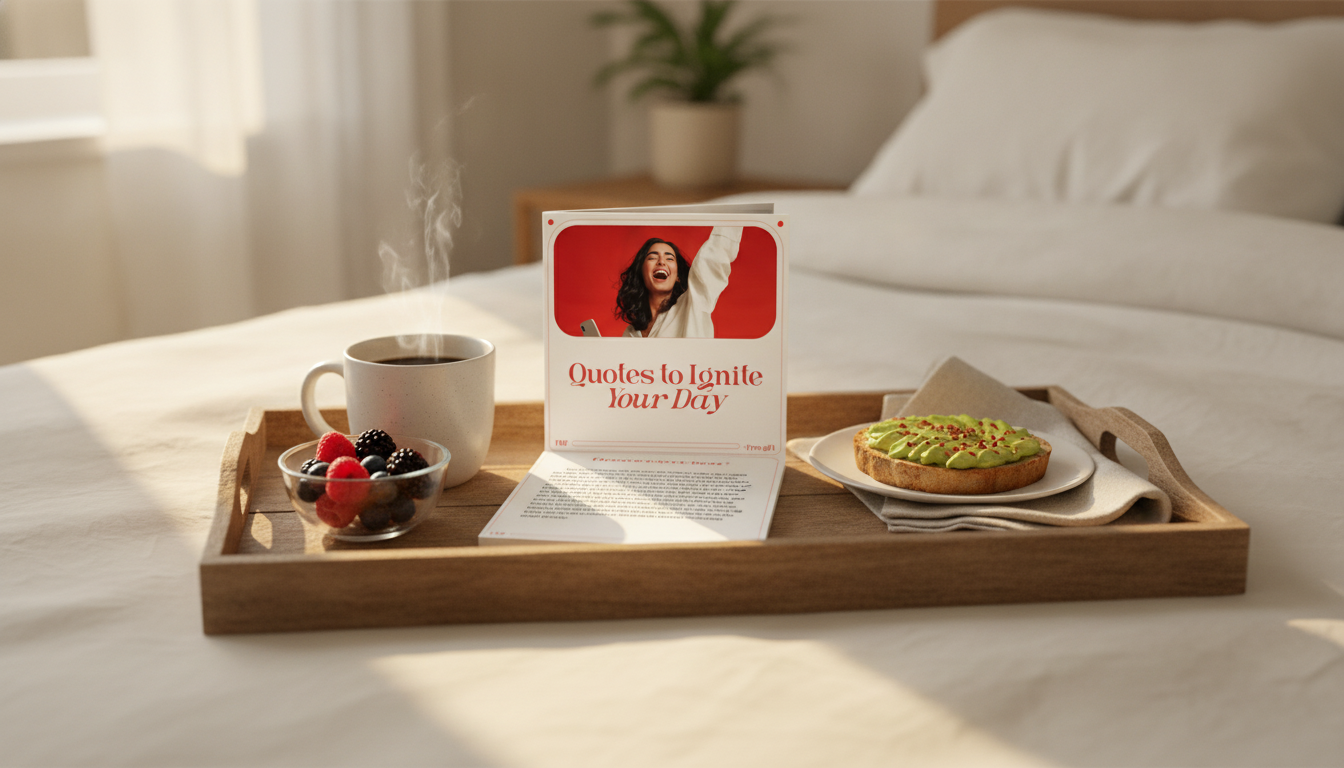
Sunrise Sparks: Morning Quotes That Reset Your Mindset and Kick-Start the Day
Morning words can act like a mental switch—shifting attention from stress to intention, and from autopilot to choice. A few lines at sunrise won’t erase a full calendar, but they can change how you enter it: steadier breathing, clearer priorities, and a more workable first step. Below is a practical way to use uplifting quotes in the first minutes of the day, plus a simple routine that turns inspiration into momentum you can actually feel.
Why Morning Quotes Work When Motivation Feels Low
Motivation often dips right after waking because the mind is already scanning for problems: unfinished tasks, messages, decisions, and uncertainty. Short, positive language can interrupt rumination and reduce that “too much, too soon” feeling. Instead of arguing with your thoughts, a compact phrase gives your attention a new place to land.
A single theme—courage, patience, focus, or gratitude—also gives the brain a clear target before notifications and tasks take over. That simplicity matters. It’s easier to hold one steady idea than to “feel motivated” in a general way.
Repeating a line daily builds a cue-routine loop: quote → breath → next action. This is where quotes become more than decoration. When a phrase is paired with a consistent behavior (stretching, journaling, hydration), the mindset tends to “stick” because it’s linked to something physical and repeatable. If you want a deeper look at how self-talk influences attention and behavior, the American Psychological Association has a helpful overview on the power of self-talk.
A Simple 5-Minute Sunrise Routine Using Quotes
This routine is designed for real mornings—sleepy, busy, imperfect. Keep it small enough that you’ll do it even on stressful days.
Minute 1: Read one quote slowly twice
Underline (or mentally highlight) one word that feels relevant today: “begin,” “steady,” “breathe,” “simplify,” “kind.”
Minute 2: Take 5 deep breaths
Repeat the underlined word on each exhale. Let the word set the pace of your breathing rather than the other way around.
Minute 3: Write one sentence
Finish: “Today, I choose ____.” Keep it realistic and actionable—something you can demonstrate, not just admire.
Minute 4: Identify one next step under 10 minutes
Choose a concrete action (send one email, draft five lines, clear one surface, prep breakfast). Set a timer for later if you can’t do it immediately.
Minute 5: Visualize, then reset physically
Picture completing that small step, then stand up and do a quick physical reset: shoulder rolls, neck stretch, and a glass of water. If you can, step into natural light—your body’s internal clock responds to morning cues, as the NIH notes in its overview of circadian rhythms.
Quote themes and what to do next
| Quote theme | When it helps most | One small action to pair with it |
|---|---|---|
| Focus | Scattered mornings, too many tabs open | Write the top 1 priority and hide the rest for 60 minutes |
| Courage | Starting something uncomfortable | Send the message, make the call, or draft the first 5 lines |
| Calm | Anxious wake-ups, tense body | 2-minute box breathing, then a short walk to sunlight |
| Gratitude | Low mood, negativity bias | List 3 specific things and text one thank-you |
| Discipline | Procrastination loops | Use a 10-minute timer and begin before feeling ready |
How to Pick the Right Quote for Today (Not Just a Pretty Line)
The best morning quote is the one that matches your day’s constraint. If the day is packed, choose language that narrows attention: “simplify,” “one thing,” “start.” If the day is uncertain, choose language that stabilizes: “steady,” “breathe,” “adapt.” If there’s conflict ahead, choose words that protect your tone: “kind,” “listen,” “respond.”
On busy days, prefer “directive” quotes with clear verbs like begin, choose, breathe, simplify. On slower days, “reflective” lines can help you realign values and direction. Avoid extremes that trigger guilt—quotes that imply you must be fearless, perfect, or endlessly productive often backfire. Support progress, not perfection.
If a quote feels good but changes nothing, convert it into an if-then plan: “If I feel resistance, then I will do 2 minutes anyway.” That tiny bridge from feeling to behavior is where momentum is built. For a broader perspective on how positive thinking can support well-being, Harvard Health Publishing discusses positive thinking and health.
Make Quotes Stick: Place, Repeat, and Anchor
A Giftable Way to Build a Morning Mindset Library
If you want an easy, ready-to-open resource, Sunrise Sparks: Quotes to Ignite Your Day is designed for quick morning use—short quotes you can turn into a 5-minute reset, even on hectic days.
For mornings when you want your mindset to match your face (especially after poor sleep), a small self-care cue can reinforce your routine. Pair your quote with a simple refresh step like hydration and a quick eye-care habit; Naturally Awake: Puffy Eye Solutions – Natural Remedies for Puffy Eyes Guide fits well alongside a sunrise routine when you’re trying to look and feel more awake.
FAQ
What is a good morning quote to start the day?
Try one that matches your challenge: “Start where you are. Use what you have. Do what you can.” (focused), “Breathe in calm, breathe out tension.” (calm), “Do one thing today that your future self will thank you for.” (disciplined), “Let today be simple and steady.” (grounded), or “I choose courage over comfort for the next 10 minutes.” (courage). Pick one, then pair it with a small action like writing your top priority or setting a 10-minute timer.
How do you use inspirational quotes without losing momentum later?
Link the quote to a specific behavior (quote → 5 breaths → one concrete task), then set a short timer for that first step so it actually happens. Revisit the same line at midday as a reset—one reread and one “next right step” is usually enough to get back on track.












Leave a comment