

Pet Harness Fit Guide: Comfort, Safety & No-Pull Walks
The Perfect Harness for Your Pet: A Stress-Free Guide to Fit, Comfort, and Confident Walks
A well-chosen harness can turn daily walks into calmer, safer outings—especially for pets that pull, startle easily, or dislike gear. The right style and fit reduce strain, improve control without harsh pressure, and help your pet feel more secure once a routine is established. Below is a practical guide to harness types, measuring, fit checks, quick fixes, and low-stress training steps that make harness time smoother.
Why Harness Choice Matters More Than It Seems
Harnesses aren’t one-size-fits-all. Small design differences can change how pressure is distributed, how much your pet can move naturally, and how secure the gear stays during surprises.
- Less pressure on the neck: Compared with collar-only walking, a harness can reduce strain around the throat—especially for pets who lunge or pull.
- Better control in real-world moments: A stable harness can help prevent slipping out when a pet startles, spins, or backs up.
- More confidence on walks: When gear fits predictably and doesn’t rub, pets often settle faster and focus better.
- Matches body shape and lifestyle: Coat type, chest depth, and activity level all influence which design is most comfortable.
Harness Styles and What They’re Best For
Choosing a style first helps narrow sizing and features, especially if your pet has a history of pulling, fearfulness, or harness “breakouts.”
- Back-clip: Great for everyday walking when pulling is mild; often the easiest to put on.
- Front-clip: Helps redirect pulling by turning the body toward you; useful for loose-leash training.
- Dual-clip: Lets you switch between front and back depending on the walk or training stage.
- Step-in: Avoids going over the head; helpful for head-shy pets and some small breeds.
- Over-the-head: Common, adjustable, and often very secure when fitted correctly.
- Escape-resistant: Extra strap(s) around the waist for pets prone to backing out.
- Padded/Y-harness vs. straight chest strap: Y-shaped fronts often allow freer shoulder movement; straight straps can restrict if positioned poorly.
Quick Match: Harness Type to Walking Needs
| Walking situation | Harness features to prioritize | Common pitfalls to avoid |
|---|---|---|
| Strong puller | Front-clip or dual-clip; sturdy webbing; broad chest support | Too-loose chest strap; thin straps that dig in |
| Anxious or startle-prone | Escape-resistant design; multiple adjustment points | Single-strap designs that shift or loosen |
| Head-shy pet | Step-in style; calm fitting routine | Forcing over-the-head entry too quickly |
| Long walks/hikes | Breathable padding; reflective trim; secure buckles | Heavy, heat-trapping materials in warm weather |
| Small or delicate build | Lightweight hardware; soft edges; close fit | Bulky clips that bounce or rub |
Measure First: Getting the Numbers Right
Before buying, measure with a soft tape. If you don’t have one, a string plus a ruler works—just keep it consistent and snug without squeezing.
- Neck measurement: Measure around the base of the neck (lower than where many collars sit).
- Girth measurement: Measure the widest part of the chest, just behind the front legs.
- Check brand-specific charts: Back length and chest depth can matter depending on the design.
- If between sizes: Choose based on girth first, then use adjustments to stabilize the fit.
- Account for coat: Measure with the coat as it will be during use; avoid compressing thick fur too much.
The Stress-Free Fit Check (Comfort + Safety)
A harness should feel secure without restricting breathing or movement. Plan a quick “fit audit” before your first walk and again after a short test outing.
- Two-finger rule: You should be able to slide two fingers under straps, but the harness shouldn’t shift easily side-to-side.
- Chest and shoulder clearance: The front should not block shoulder extension or rub at the armpits.
- Back panel stability: The harness should stay centered and not rotate when your pet turns or sniffs.
- Hardware check: Buckles should close fully; stitching should look even and intact; no sharp edges.
- Chafing hotspots: Watch armpits, sternum, and behind elbows—especially after the first few walks.
- Leash connection: Confirm you’re clipping to the intended ring (front vs. back) and the ring lies flat.
Common Fit Problems and Fast Fixes
Getting a Pet Comfortable Wearing a Harness
For training support, positive reinforcement basics from the ASPCA can help you keep sessions upbeat and consistent.
Walking Confidence: Handling Tips That Support the Harness
For more loose-leash walking guidance, the American Kennel Club offers helpful training tips that pair well with front-clip or dual-clip setups.
A Practical Ebook Guide for Picking the Right Harness
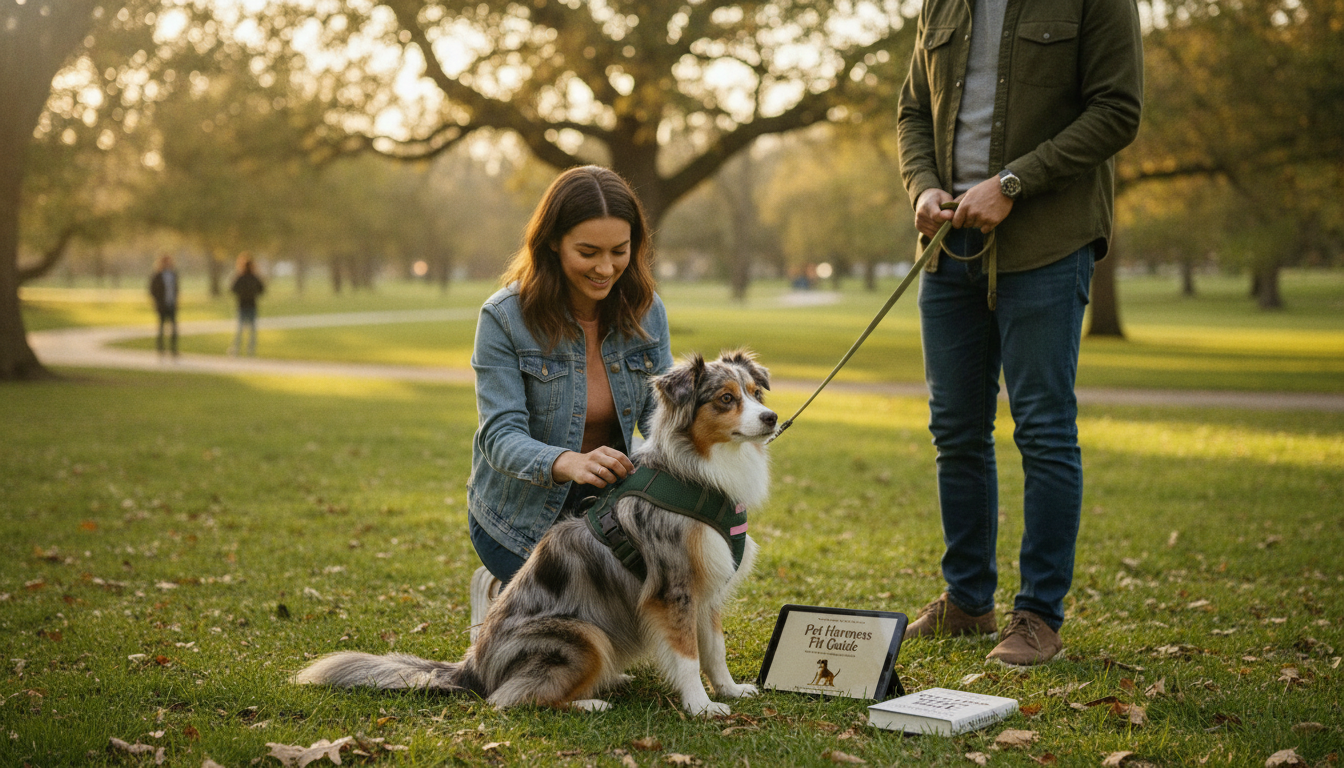
If you want a step-by-step reference you can keep on your phone, The Perfect Harness for Your Pet ebook guide walks through sizing, fit checks, comfort and safety checkpoints, and simple routines that build calm harness acceptance.
For readers who also like practical, easy-to-follow wellness guides, Naturally Awake: Puffy Eye Solutions – Natural Remedies for Puffy Eyes Guide is another quick digital read available in the shop.
FAQ
How tight should a pet harness be?
A harness should be snug enough that it won’t slide or rotate, but loose enough that you can fit two fingers under most straps. After a short walk, re-check for rubbing, pinching, or any signs of restricted breathing or shoulder movement.
Is a front-clip harness better for pulling?
Front-clip harnesses can reduce pulling by redirecting your pet’s body toward you when they surge forward. They work best as a training aid paired with rewards for walking on a loose leash, not as a stand-alone fix.
How can a pet escape a harness and how is it prevented?
Pets most often escape by backing out or twisting when the harness is too loose, poorly positioned, or lacking security straps. Proper sizing, symmetrical strap adjustments, and escape-resistant designs with an extra waist strap help prevent slip-outs.












Leave a comment