


AI Freelance Income Forecasting: Predict Monthly Cash

AI-Powered Freelance Forecasting: A Smarter Way to Predict Monthly Income
Freelance income can swing month to month due to seasonality, client churn, and project timing. When payments land late (or early), it gets even harder to tell what’s actually “coming in” versus what’s simply “promised.” A smart forecasting system turns messy invoice histories and half-written pipeline notes into clearer monthly expectations—so savings goals feel realistic, tax planning gets calmer, and you can choose work that stabilizes cash flow instead of amplifying volatility.
For a practical, step-by-step framework, the AI-Powered Freelance Forecasting | Smart Ebook for Predicting Freelance Income Using AI | Practical Guide for ai for freelance income forecasting focuses on lightweight tools, repeatable rules, and AI-assisted cleanup—without requiring complex finance software.
What Freelance Forecasting Means (and Why It’s Hard)
Forecasting is the practice of estimating future revenue using past invoices, your current pipeline, and your delivery capacity. For freelancers, the difficulty isn’t the math—it’s the irregularity. Payment dates move, scopes change, and one-off projects distort simple averages.
A useful forecast separates revenue into three buckets:
- Committed revenue (signed work, deposits received, or active retainers)
- Probable revenue (strong leads with clear next steps and realistic timelines)
- Speculative revenue (early conversations and “maybe” projects)
Accuracy improves when you update weekly, not monthly. Small signals—follow-ups sent, a client going quiet, a proposal requested—change the timing and the odds, which is exactly what forecasting should capture.
How AI Helps: From Gut Feel to Repeatable Signals
AI is most useful when it translates your real-world mess into consistent inputs. Instead of trying to “predict the future” in an abstract way, it helps summarize patterns you already have—then applies them repeatedly.
Common freelance forecasting inputs and what they improve
| Input | Example | What it improves |
|---|---|---|
| Invoice history | Last 12 months paid amounts and dates | Baseline seasonality and typical monthly range |
| Pipeline stages | Lead → Discovery → Proposal → Negotiation → Won/Lost | Probability-weighted revenue and timing |
| Client payment behavior | Net-30 but often pays in 45 days | Cash-flow timing vs. booked revenue |
| Capacity plan | Billable hours per week and booked delivery dates | Feasibility checks and overload risk |
| Rate and scope changes | Retainer increased, project expanded | More realistic projections and variance tracking |
A Practical Setup: Spreadsheet + AI Assistant Workflow
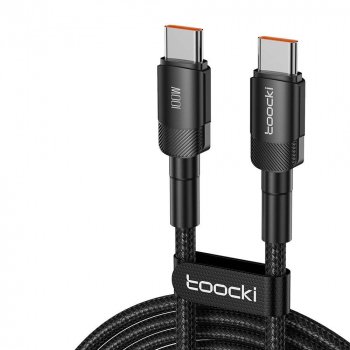
If you work across devices (laptop, tablet, travel setup), keeping your data accessible matters. A reliable accessory like the 100W USB-C to USB-C Fast Charging Cable with PD 3.0 & QC 4.0 – 5A Power can help prevent “dead battery” moments during weekly reviews or client follow-ups.
Forecasting Methods That Work for Freelancers
1) Conservative baseline (your floor)
2) Probability-weighted pipeline (your upside)
3) Cash-flow timing adjustment (your reality check)
4) Scenario planning (your decision tool)
Simple probability guide for pipeline stages
| Stage | Typical probability | Upgrade condition | Downgrade condition |
|---|---|---|---|
| Discovery scheduled | 20% | Clear budget + decision maker confirmed | No response after 2 follow-ups |
| Proposal sent | 40% | Verbal interest + timeline agreed | Price objection with no counter |
| Negotiation | 60% | Redlines are minor + start date tentatively set | Start date pushed repeatedly |
| Verbal yes | 80% | Contract out for signature | Stakeholder missing or new approval layer |
| Signed / paid deposit | 95–100% | Deposit received | Client requests indefinite pause |
Turning Forecasts into Decisions: Savings, Taxes, and Work Mix
- Savings: Set a minimum monthly “runway target” using the cautious scenario. Treat that as your buffer against late payments and slow seasons.
- Taxes: Plan quarterly payments using forecasted cash receipts, not booked revenue. The IRS guidance on estimated taxes is a helpful reference for timing and expectations: IRS Estimated Taxes.
- Work mix: Identify volatility sources—one big client, seasonal niches, inconsistent lead flow—and diversify intentionally. For context on alternative work arrangements, see: Bureau of Labor Statistics: Contingent and Alternative Employment Arrangements.
- Capacity: Use the capacity tab to decide when to raise rates, pause outreach, or prioritize retainers over one-off projects.
- Risk register: Add a column for dependencies (stakeholder approvals), responsiveness, and scope uncertainty—anything that can move revenue by weeks.
What the Smart Ebook Covers (and Who It’s For)
The AI-Powered Freelance Forecasting smart ebook is built for freelancers and solo consultants who want practical forecasting without heavy finance software. It centers on a repeatable system: clean data structure, probability-weighted pipeline, cash timing adjustments, scenario planning, and lightweight AI support to reduce manual effort.
If your freelance routine includes travel or working from variable locations, comfort basics can also support consistency in weekly reviews and planning sessions; a simple item like a Cotton Sleeping Bag Liner can be a practical add-on for overnight trips without disrupting your workflow.
Getting Started Today: A 30-Minute Quick Start
FAQ
How accurate can freelance income forecasting be?
Accuracy improves with consistent inputs and weekly updates, especially when forecasts are split into cautious/base/aggressive scenarios. Tracking why a month missed (late payment, lost deal, scope change) helps tighten your stage probabilities and timing rules over time.
What data is needed to forecast freelance income with AI?
The essentials are invoice/payment history, a pipeline with stages and deal values, expected dates, payment terms, and a simple capacity view. Optional upgrades include client-specific payment delay profiles and deal notes that AI can summarize into stage, next steps, and risk flags.
Is AI forecasting useful without accounting software?
Yes—spreadsheets work well when you keep a minimal structure (Payments, Pipeline, Capacity). AI is especially helpful for cleaning client names, categorizing notes, and keeping probabilities and expected dates consistent during your weekly review.











Leave a comment