

Modern Etiquette Made Easy: Texting, RSVPs & Social Media

Good manners still matter—today they just show up in group chats, comments, invites, and quick everyday interactions. Modern etiquette isn’t about being “perfect”; it’s about being clear, considerate, and consistent so people aren’t left guessing. The payoff is real: fewer misunderstandings, smoother plans, and relationships that feel easier to maintain. For more guidance, see [PDF] FAIRFIELD UNIVERSITY COURSE DESCRIPTIONS 2025-2026.
What Modern Etiquette Looks Like Today
Etiquette has always been about making shared life more comfortable. The modern version is less formal, but it’s still built on a few steady principles: For further reading, see [PDF] Mobile learning anytime everywhere – Web Publishing for Students.
- Politeness as clarity: Respond, confirm, and close loops so others know where things stand.
- Respect for time and attention: Keep messages focused, choose appropriate timing, and avoid unnecessary follow-ups.
- Matching context: Friends, coworkers, family, and strangers all have different expectations—adjust accordingly.
- Assuming good intent while setting boundaries: Stay kind without tolerating disrespect.
- Consistency over perfection: Small habits done repeatedly build trust faster than occasional grand gestures.
For a broader foundation on traditional etiquette principles that still apply today, the Emily Post Institute is a helpful reference point. For context on how widespread social platforms are in daily life, see the Pew Research Center social media fact sheet.
Texting Etiquette That Prevents Awkwardness
Texting is convenient, but it’s easy to accidentally sound dismissive, pushy, or unclear. A few habits reduce friction immediately.
Response timing
If a message involves plans, logistics, money, or feelings, a quick acknowledgment goes a long way—even if the full reply has to wait. A simple “Got this—replying after my meeting” prevents uncertainty.
Tone cues (and when they help)
Emojis can soften tone with friends, but they may read as unprofessional in work threads or serious conversations. Also remember: short texts with periods can look blunt to some people, while others see them as normal. When it matters, add a few extra words for warmth (“Thanks—appreciate it!”).
Group chats
- Avoid side conversations that exclude others when decisions affect everyone.
- Summarize outcomes: “So we’re meeting at 7 at Oak Street—see you there.”
- If conflict starts, take it private rather than derailing the group.
Plans by text
Confirm the basics (who/what/where/when). If you’re running late, say so early. If you’re meeting someone, a quick “on my way” is considerate—especially when timing affects parking, reservations, or childcare.
Sensitive topics
When emotions, conflict, or nuance are involved, texting can turn a small issue into a big one. Move to a call or in-person if the conversation needs tone, context, or care.
Double texting
One follow-up is usually fine. Multiple nudges can feel pressuring, especially if the person is at work, traveling, or managing family responsibilities. If it’s urgent, say it’s urgent and why.
If staying reachable is part of your etiquette toolkit (especially during travel days or event logistics), having reliable charging can help. A simple practical add-on is the 100W USB-C to USB-C Fast Charging Cable with PD 3.0 & QC 4.0 – 5A Power for keeping your phone ready when plans change.
Social Media Manners: Comments, DMs, and Boundaries
Social platforms blur public and private life. The best rule is to treat people like they’re in the room with you—because screenshots and shares make that effectively true.
RSVPs and Invitations: The Fastest Way to Be Considerate
Quick RSVP Guide
| Situation | Best response | Timing |
|---|---|---|
| Invitation received but schedule uncertain | Reply with what is known and ask if a firm answer is needed | Within 24–48 hours |
| Accepting an event | Confirm attendance and note any key details (arrival time, dietary restrictions if requested) | By the RSVP deadline |
| Declining | Decline clearly, thank the host, and avoid lengthy excuses | As soon as possible |
| Last-minute conflict after accepting | Notify the host immediately and apologize briefly | Immediately |
| Plus-one not mentioned | Ask politely rather than assuming | Before the RSVP deadline |
Everyday Politeness Habits That Make Life Smoother
Common Etiquette Gray Areas (and Simple Rules of Thumb)
A Compact Way to Practice: A Printable Micro-Course
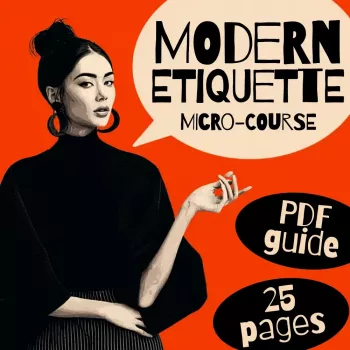
If etiquette feels like a lot to hold in your head, a short structure helps. The Modern Etiquette Micro-Course | Printable Digital Etiquette Guide organizes the most common “What do I do?” moments—texting, social media, RSVPs, and everyday interactions—into simple, repeatable habits. It’s designed to be easy to reference on a phone/tablet or keep at a desk for quick reminders.
FAQ
How quickly should someone respond to a text?
For urgent or time-sensitive messages (plans, arrivals, problems), reply as soon as you reasonably can—often within minutes to an hour. For casual texts, same-day is usually fine; when you’re busy, a quick acknowledgment (“I’ll reply tonight”) helps set expectations. Workplaces and relationships vary, so match the norms of the group when possible.
Is it rude to decline an invitation without giving a reason?
A clear, timely decline is usually enough, and it’s often more considerate than a late “maybe.” If you want to add a reason, keep it brief and neutral (“I can’t make it, but thank you for inviting me”). Avoid over-explaining or blaming the host or event.
What’s the best way to handle a social media disagreement?
Pause before replying, keep it respectful, and focus on the idea rather than the person. If the topic is sensitive or you want nuance, move it to private messages—or step away if the exchange won’t be productive. Not every comment needs a response.










Leave a comment