

Real vs Faux Leather Crossbody Bags: 5 Easy Checks
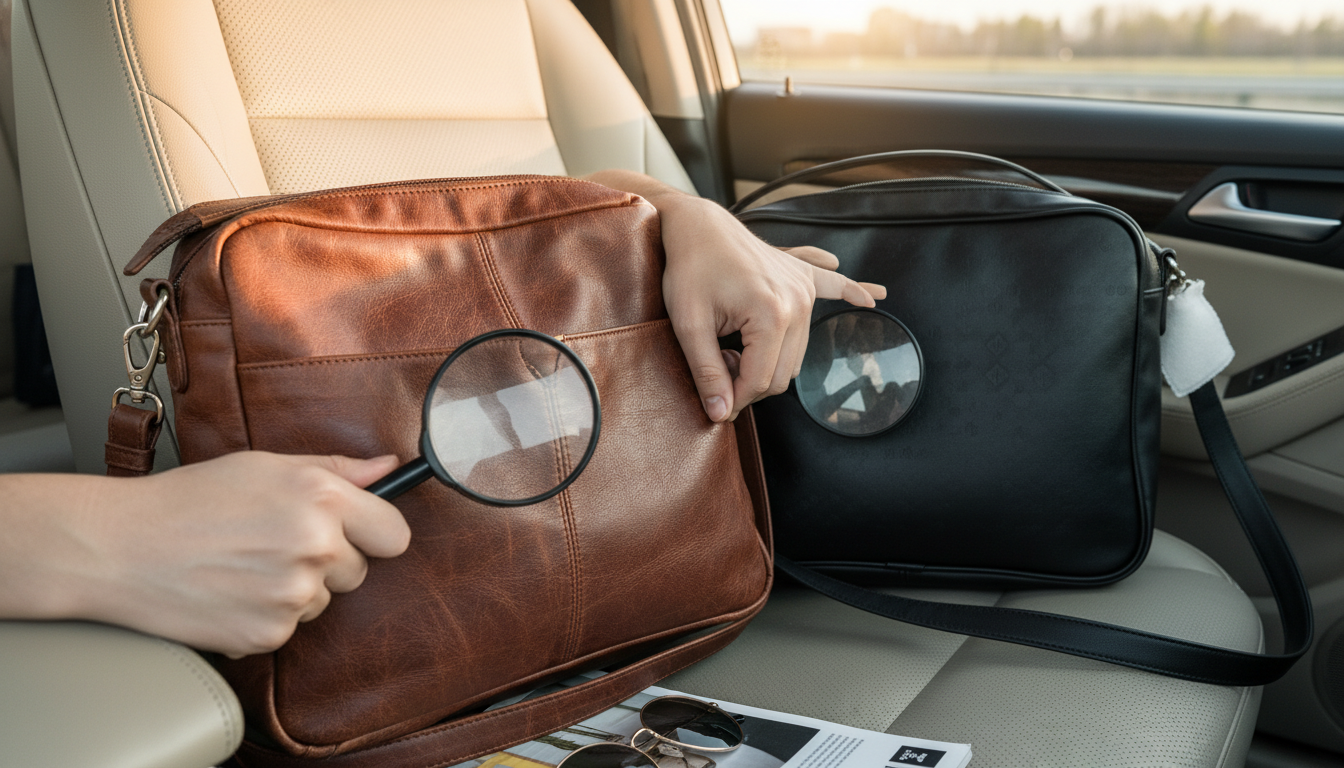
How can I tell if a leather crossbody bag is real leather or faux leather?
Check the label and the price point (but don’t stop there)
Start with the tag or product description: real leather may be listed as “full-grain,” “top-grain,” “genuine leather,” “suede,” or “nubuck,” while faux leather is often labeled “PU,” “polyurethane,” “vegan leather,” or “PVC.” Price can be a clue, but it isn’t proof—quality faux leather and discounted real leather both exist.
Look closely at the grain and edges
Real leather typically has natural variation: tiny imperfections, uneven grain, and subtle pore patterns that don’t look stamped. Faux leather often repeats an identical texture across panels. Check raw edges or strap holes: real leather edges may look fibrous or slightly fuzzy, while faux leather tends to look plasticky, smooth, or layered like a coating.
Use the touch test
Real leather feels warm and supple and tends to “give” slightly when pressed, showing gentle wrinkling that relaxes back. Faux leather can feel cooler, stiffer, and overly uniform. If you pinch a small area, real leather usually forms fine creases; faux leather may crease sharply or not at all.
Smell and sound can help
Real leather has a distinct, earthy scent from tanning. Faux leather often smells like plastic or chemicals, especially when new. Also listen: real leather is quieter and softer when flexed; faux leather can make a faint “crinkly” sound due to its surface coating.
Try a safe at-home test (optional)
If the seller allows it and you can test a hidden spot, place a tiny drop of water on the underside or an interior seam. Real leather absorbs slowly and darkens temporarily; faux leather usually beads on the surface. Avoid harsh “burn tests” that can permanently damage the bag.
For more buying pointers on choosing and wearing luxury shoulder-to-crossbody styles, visit this leather shoulder-to-crossbody bag guide.
FAQ
What’s the difference between full-grain and top-grain leather?
Full-grain keeps the outermost hide layer and develops a rich patina over time, while top-grain is sanded and finished for a smoother look. Both are real leather, but full-grain is usually the most durable and natural-looking.










Leave a comment