
No-Equipment Travel Workouts: 10–30 Min Plan Anywhere

Move Anywhere, Train Everywhere: No-Equipment Workouts for Travel and Home
Staying consistent with training gets harder when schedules change, space is limited, or a gym isn’t available. A simple no-equipment plan removes the friction: short sessions, clear progressions, and a repeatable checklist that works in a hotel room, living room, or outdoors—without sacrificing strength or cardio goals.
What makes a no-equipment plan work anywhere
The best travel-and-home routines aren’t complicated—they’re built around movement patterns you can repeat in almost any space. Start with fundamentals: a squat or lunge for legs, a hinge for the posterior chain, a push for the upper body, a pulling substitute (since there’s rarely a bar available), core stabilization, and a little locomotion or “move-your-body” conditioning.
To keep sessions realistic, use time-efficient formats like intervals, circuits, and density blocks. Ten to thirty minutes is enough when the structure is clear and the exercises are chosen to stay crisp under fatigue. The key is progression without equipment: change leverage (incline/decline), slow the tempo, add pauses, increase range of motion, shift to unilateral work, or reduce rest.
Finally, balance strength and conditioning so travel weeks don’t turn into “lost weeks.” Strength-focused work preserves muscle and joint resilience; short finishers protect cardio without draining you for the next day’s schedule.
Quick start: set the goal and choose the session type
Strength focus (10–25 minutes): Pick fewer moves, push harder variations, use slower tempo, and rest a little longer. Your goal is quality reps—stop before form deteriorates.
Cardio focus (10–25 minutes): Use intervals with shorter rests and simple movements that you can repeat with clean technique (quiet feet help in hotels).
Hybrid (15–30 minutes): Run a short strength circuit, then add a brief finisher to elevate heart rate without turning the whole session into a grind.
Minimum effective dose: 2–3 sessions per week is typically enough to maintain momentum during travel. 3–5 sessions per week builds faster, especially if you also walk daily and keep meals consistent.
The core movement menu (with easy progressions)
Use the menu below to build sessions quickly. When a move becomes easy, progress it by slowing down, adding a pause, or choosing the next variation.
Lower body (squat/lunge)
Air squat → tempo squat (3–1–1) → split squat → reverse lunge → single-leg squat to a chair.
Hinge/posterior chain
Glute bridge → single-leg bridge → hip hinge “good-morning” (slow) → hamstring walkouts.
Push
Incline push-up (hands on bed/desk) → standard push-up → close-grip → decline push-up → pike push-up.
Pull substitutes (no bar needed)
Towel isometric row (pull against a sturdy towel/strap) → suitcase/doorframe isometric holds → prone “swimmers” and reverse snow angels for upper-back endurance.
Core
Dead bug → plank → side plank → hollow hold variations → mountain climbers (controlled).
Travel-friendly training checklist (copy/paste and repeat)
Warm-up (3–5 minutes): Joint circles, light squats, inchworms, hip openers, and an easy plank to “wake up” the trunk.
Main set (8–20 minutes): Pick 4–6 moves: one lower-body, one push, one hinge, one pull substitute, one core move, plus optional cardio.
Finisher (2–6 minutes): Brief intervals to lift heart rate without wrecking form. Think controlled mountain climbers, high-knee marching, or fast step-backs.
| Segment | Time | What to do | Intensity cue |
|---|---|---|---|
| Warm-up | 4 min | 30s each: marching + arm swings, squats, hip hinges, inchworms, plank hold, lunges | Breathing easy; move smoothly |
| Circuit (repeat 3x) | 12 min | 40s work/20s rest: split squats (L), split squats (R), push-ups, glute bridge, towel row isometric, dead bug | Last 10s of each interval feels challenging but controlled |
| Finisher | 3 min | 20s fast/40s easy x3: mountain climbers or high-knee march (quiet feet) | Heart rate up; form stays clean |
| Cool-down | 1 min | Nasal breathing + gentle forward fold | Calm down; no strain |
How to scale for beginners, intermediate, and advanced
Common pitfalls during travel weeks (and simple fixes)
A simple way to stay consistent: one plan, many locations
If you want a ready-to-run format, Move Anywhere, Train Everywhere | No-Equipment Bodyweight Fitness Guide, Travel Workout eBook, At-Home Strength & Cardio Training Checklist is built around repeatable checklists and progressions you can use in tight spaces.
For travel comfort that supports recovery, a cleaner sleep setup can help—especially when bedding is unpredictable. Consider the Cotton Sleeping Bag Liner for simpler, more comfortable nights on the road.
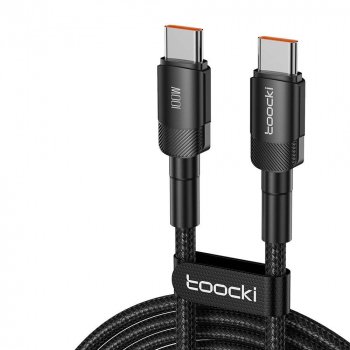
And since training plans live on your phone for many trips, keeping devices powered matters. The 100W USB-C to USB-C Fast Charging Cable with PD 3.0 & QC 4.0 – 5A Power is an easy add-on for packing a reliable setup.
Helpful activity guidelines (for context)
If you want a simple benchmark for weekly movement, see recommendations from the CDC and the World Health Organization. These guidelines can pair well with short, consistent travel workouts plus daily walking.
FAQ
Can no-equipment workouts build strength, or only endurance?
They can build strength, especially when you progress via leverage (incline/decline), tempo, pauses, unilateral variations, and reduced rest or higher density. Measure progress by harder variations, more controlled reps, and more work completed in the same time without losing form.
How often should a travel workout routine be done to maintain fitness?
For most people, 2–3 sessions per week maintains fitness during travel, and 3–5 sessions per week tends to improve it faster. Adding daily walking and a short finisher once or twice a week can boost conditioning without extending workouts.
What’s the safest way to modify workouts in a small hotel room?
Choose low-impact, quiet-foot movements and keep ranges of motion controlled so form stays clean. Avoid unstable furniture, use isometrics when space is tight, and prioritize moves you can repeat confidently without jumping or fast direction changes.











Leave a comment