
Aerial Yoga Hammock Guide: Setup, Safety, Beginner Flow
What an aerial yoga hammock is and what it’s used for
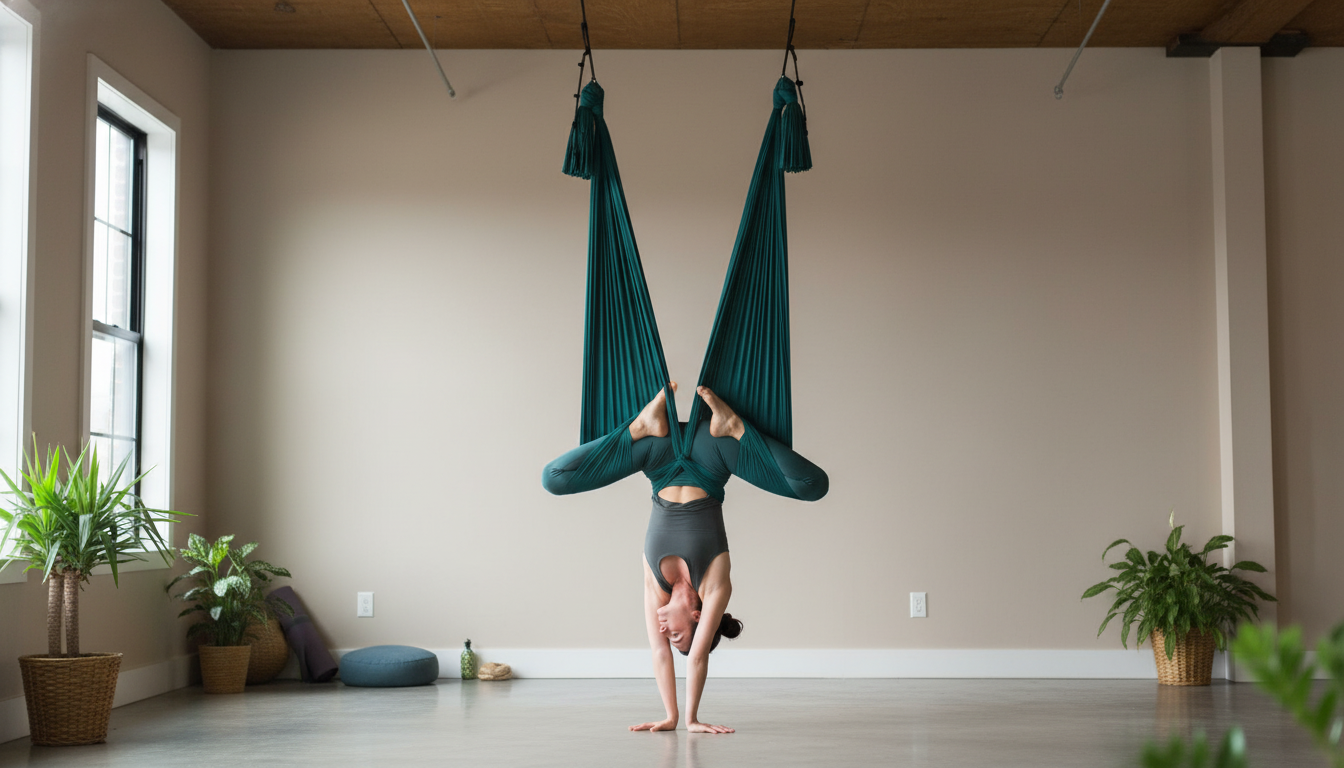
An aerial yoga hammock is a soft, wide fabric sling that hangs from one or two overhead anchor points. Unlike narrow straps or rings, the hammock spreads support across a broader surface, making it easier to rest the hips, back, or shoulders while you explore stretches, supported inversions, and strength-focused transitions.
People use a hammock for goals like gentle spinal decompression, better hip and shoulder mobility, improved balance, and steady core control. It’s also popular for restorative shapes—think supported forward folds and “cocoon” relaxation—because the fabric can hold you in place while you focus on slow breathing.
A hammock practice can be short and effective (10–20 minutes) or feel like a full class when paired with a warm-up, a few controlled sequences, and a calm cooldown. For most home setups, slower and lower is the sweet spot: fewer dramatic moves, more consistent comfort.
Benefits and what to expect in the first few sessions
The first couple of sessions typically feel equal parts fun and humbling. The biggest adjustment is learning how to “trust the fabric” while still staying active through your core and shoulder blades.
- Grip and comfort: The hammock’s width often feels more comfortable than narrower aerial apparatuses because pressure is distributed instead of concentrated.
- Spine and shoulders: Gentle traction can feel relieving when it’s done slowly, with control, and without forcing depth.
- Strength and control: Many movements emphasize core engagement and scapular stability, especially when sitting down into the sling or standing up out of it.
- Confidence curve: Feeling wobbly is normal. Consistent, short practice sessions usually build comfort faster than occasional long workouts.
- After-session feel: Mild soreness in the core or upper back can happen. Sharp pain, tingling, or joint strain is a stop signal.
For general flexibility and injury-prevention basics, reliable guidance from sources like Harvard Health Publishing and the Mayo Clinic can help reinforce smart pacing and safe progression.
Safety first: who should avoid it and when to get clearance
Aerial yoga can be gentle, but it’s still a form of loaded movement and (often) inversion. Skip inversions and get medical clearance if you have uncontrolled high blood pressure, glaucoma or retinal issues, a recent concussion, severe vertigo, recent surgery, or any condition where inversions are contraindicated.
Use extra caution and individualized guidance if you’re pregnant, have osteoporosis, hypermobility disorders, hernias, or significant neck/shoulder injuries. During practice, stop immediately if you notice numbness or tingling, headache or eye pressure, sharp joint pain, or dizziness that doesn’t resolve after returning upright.
When learning inversions, drops, or transitions close to the floor, a trained instructor or a spotter can be a meaningful safety upgrade—especially early on.
How to set up at home (space, height, anchor points)
Start with space planning. Choose a clear area with enough radius for gentle swinging and transitions. Remove fragile items and watch for sharp corners on nearby furniture. A thick mat is a baseline; a larger crash mat is worth considering if you’ll practice inversions.
Height matters more than many beginners expect. Set the hammock low (around hip height) for learning so you can sit down and stand up without jumping. Raise it only after you can transition in and out smoothly and consistently.
For anchoring, use a structural ceiling joist/beam with proper mounting hardware, or choose a rated freestanding aerial frame designed for dynamic loads. Avoid improvised mounting into drywall, unknown ceiling structures, decorative fixtures, or un-rated clips and straps.
Quick home setup checklist
| Item to verify | What “good” looks like | Common mistake to avoid |
|---|---|---|
| Anchor point | Structural beam/joist or rated aerial frame | Mounting into drywall or unknown ceiling structure |
| Hardware | Rated carabiners/straps and secure connections | Using un-rated clips or worn webbing |
| Height | Low enough to sit/stand safely while learning | Hanging too high and relying on jumps |
| Floor safety | Non-slip mat + adequate padding | Practicing over hard floor with no cushioning |
| Clearance | Open space in all directions | Practicing near corners, lamps, or sharp furniture |
Choosing the right hammock style for comfort and practice goals
Not all hammocks feel the same. The fabric’s weave, stretch, width, and rigging options can change how supported (or unstable) a pose feels.
If you’re ready to build a consistent home routine, the Aerial Yoga Hammock is a straightforward starting point for supported stretching, controlled inversions, and restorative holds.
For extra comfort during longer relaxation segments, some people like adding a washable layer between skin and fabric; a Cotton Sleeping Bag Liner can also double as a cozy wrap for cooldowns and floor-based breathing after your session.
Aerial hammock vs aerial silks: which feels easier
Beginner-friendly flow ideas (low height, high control)
Care, maintenance, and long-term safety habits
FAQ
What is an aerial hammock good for?
It’s great for supported stretching, mobility work, gentle inversions for decompression, and building core and upper-back stability. Many people also use it for relaxation because the fabric can hold you in comfortable, low-effort positions.
Who should not do aerial yoga?
People with contraindications to inversions—such as glaucoma/retinal issues, uncontrolled blood pressure, recent concussion, severe vertigo, or recent surgery—should avoid it or get medical clearance. Pregnancy and significant neck or shoulder injuries also warrant individualized guidance from a clinician and a qualified instructor.
Is an aerial hammock easier than silks?
Often, yes: a hammock usually feels easier because it provides wider support, requires fewer wraps, and tends to demand less grip strength for beginner shapes. Silks can be better for advanced dynamic skills, but they typically have a steeper learning curve.










Leave a comment