


125mm f/10 GoTo SCT with StarBright XLT: Observing Guide
125mm F/10 Schmidt-Cassegrain Computerized GoTo Telescope with StarBright XLT: What It’s Like to Observe With
A 125mm Schmidt-Cassegrain with computerized GoTo is built for observers who want compact storage, long focal length reach, and quick target acquisition for planets, double stars, and bright deep-sky objects. StarBright XLT coatings aim to maximize light throughput while keeping the setup portable enough for frequent backyard sessions and occasional travel. For more guidance, see Celestron NexStar 8SE Review: Yes, It’s Worth It! Here’s Why..
At a Glance
- 125mm aperture with an f/10 optical system emphasizes magnification-friendly viewing and a narrower true field of view.
- Schmidt-Cassegrain design keeps the tube compact for transport and storage.
- Computerized GoTo helps locate objects quickly after alignment, reducing time spent star-hopping.
- StarBright XLT coatings are designed to improve overall transmission compared with older coating generations.
Key Snapshot
| Item | What it means for observing |
|---|---|
| 125mm aperture | Good resolution for lunar/planetary detail; bright enough for many Messier objects under dark skies. |
| F/10 focal ratio | Naturally supports higher magnifications; narrower field for wide nebulae/star fields. |
| GoTo mount | Automated pointing/tracking after alignment; helpful under light pollution. |
| StarBright XLT | Higher light throughput potential; better contrast perception on faint targets. |
Optical Design and What You’ll See
The 125mm f/10 Schmidt-Cassegrain format leans toward “reach” rather than sweeping vistas. The longer focal length makes it easy to work in the magnification ranges that bring out fine detail, while the compact tube keeps the overall footprint manageable for a backyard patio or a quick drive to darker skies. For further reading, see Best Telescope 2026 – The Nine Planets.
- Planetary observing: The f/10 system supports comfortable mid-to-high magnifications for Jupiter’s cloud bands, Saturn’s ring structure (and often the Cassini Division when conditions cooperate), and Mars near opposition—limited more by atmospheric seeing than by the optics on many nights.
- Lunar observing: Expect crisp crater rims, sharply defined terminator shadows, and plenty of room to “tour” rilles and mountain ranges without constantly fighting drift, thanks to tracking.
- Deep-sky observing: This configuration excels on compact targets: many globular clusters, brighter galaxies, and planetary nebulae. Very large nebulae and extended star fields can feel tight at f/10, since true field of view is narrower.
- Double stars: With good collimation and steady air, the combination of aperture and focal length can produce clean splits on many classic pairs, with pinpoint stars and distinct dark space between them.
- Reality check: 125mm gathers a modest amount of light compared with larger apertures, so faint nebulosity and low-contrast galaxy detail will remain subtle from suburban skies. Darker skies make a bigger difference than almost any accessory.
StarBright vs StarBright XLT: Practical Differences
Coatings matter because a Schmidt-Cassegrain has multiple optical surfaces: the corrector plate plus primary and secondary mirrors. Each surface can reflect or absorb a small percentage of light; improved coatings aim to reduce losses and preserve contrast.
StarBright XLT is commonly positioned as an upgraded coating set compared with earlier StarBright generations, targeting higher overall transmission/reflectivity. In practical observing, the difference is most noticeable on borderline targets: faint open clusters that look a touch more “present,” or galaxies where the core and halo separation is slightly easier to perceive. It’s less about a dramatic jump in brightness and more about small gains in throughput and perceived contrast.
That said, thermal equilibrium, accurate collimation, and steady seeing can outweigh coating differences on many sessions. A well-cooled, well-collimated scope with average coatings often outperforms a poorly tuned scope with premium coatings.
GoTo and Tracking: How It Changes Night-to-Night Use
Computerized GoTo reshapes how a 125mm SCT gets used. Instead of spending the first half hour searching, sessions tend to become more “observe-forward,” especially when time is limited.
Setup, Portability, and Maintenance
Recommended Gear (In Stock)
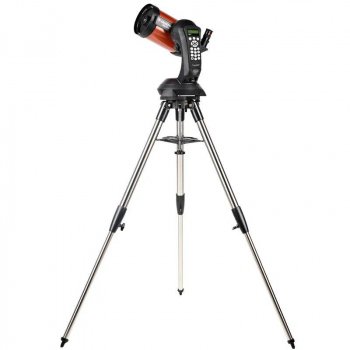
- 125mm F/10 Schmidt-Cassegrain Computerized GoTo Astronomical Telescope with StarBright XLT for a compact, long-focal-length observing setup with automated pointing and tracking.
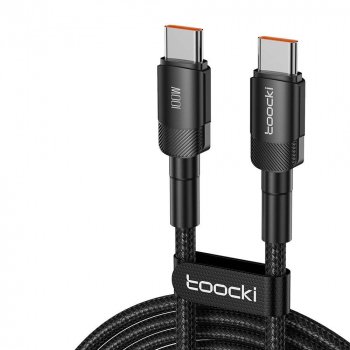
- 100W USB-C to USB-C Fast Charging Cable with PD 3.0 & QC 4.0 – 5A Power as a handy spare for compatible power banks and devices used at the scope (always match your mount’s required voltage and connector type).
- Cotton Sleeping Bag Liner for extra comfort during longer, colder observing sessions when temperatures drop after midnight.
Who This Telescope Fits Best
Price, Availability, and What to Check Before Buying
Further Reading from Trusted Sources
- Celestron Support: Telescope basics and help articles
- Sky & Telescope: Observing guides and equipment articles
FAQ
Are Schmidt Cassegrain telescopes good?
Yes—Schmidt-Cassegrains are popular because they pack long focal length into a compact tube, work well for lunar/planetary observing, and stay versatile with accessories. The main trade-offs are cooldown time, occasional collimation, a narrower field at f/10, and the possibility of dew forming on the corrector plate.
What is the difference between Celestron StarBright and XLT?
StarBright XLT generally refers to an upgraded coatings package intended to improve overall transmission/reflectivity compared with earlier StarBright generations. In real observing, the benefit is usually subtle—showing more as a small contrast/throughput improvement on faint targets—while sky quality, collimation, and thermal stability often make a larger difference.
What is the Celestron CPC 1100 GPS XLT telescope?
It’s a larger-aperture, fork-mounted computerized GoTo Schmidt-Cassegrain that includes GPS and XLT coatings, designed for significantly more light-gathering and deeper reach than a 125mm SCT. The trade-off is greater size, weight, and cost, making it less grab-and-go but more capable on faint deep-sky targets.










Leave a comment