1500W Oscillating Heater with Remote & Thermostat Guide
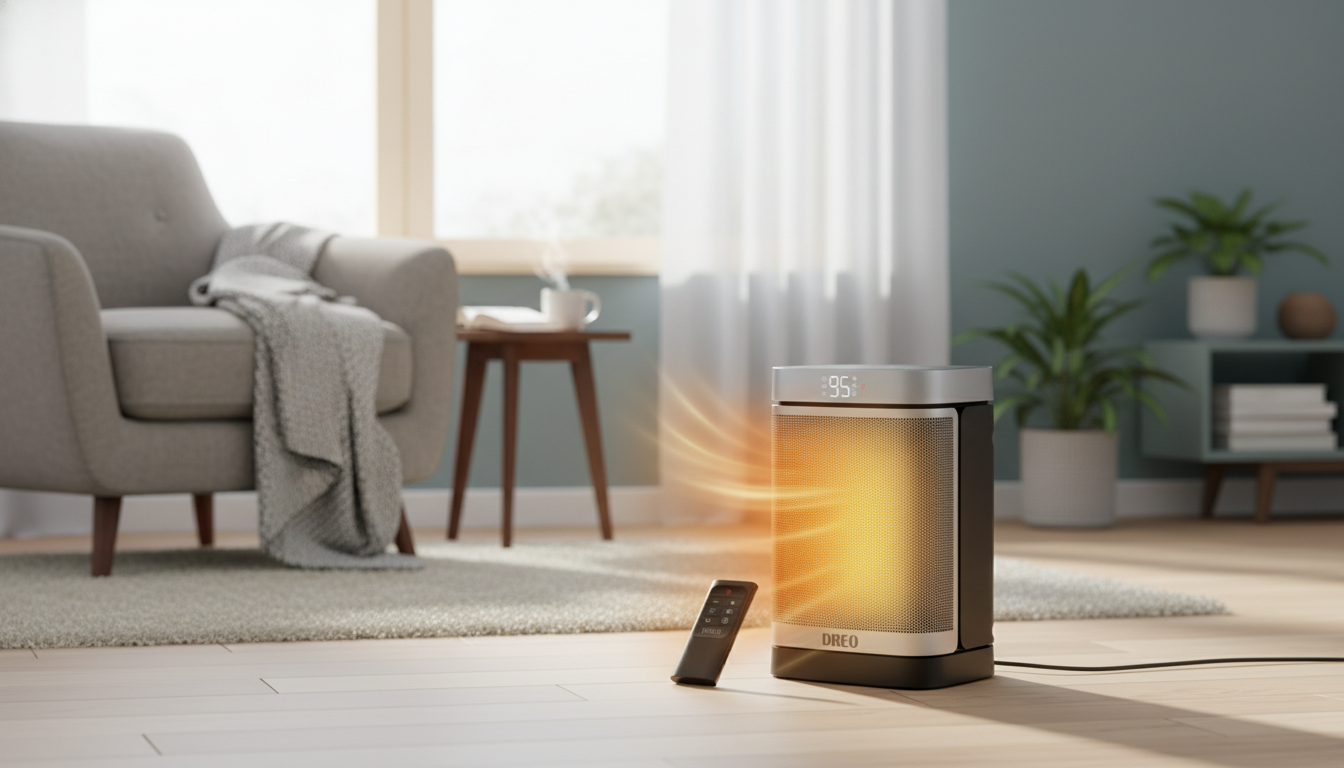
1500W Oscillating Area Heating System: Portable Indoor Heater with Remote & Thermostat
A compact 1500W oscillating heater can warm up a bedroom, office, or living space quickly while helping maintain a steady temperature through thermostat control. This guide breaks down how an oscillating portable indoor heating system with a remote works, what features matter for comfort and safety, and how to get efficient heat without over-drying the room or driving up energy use.
What an Oscillating Area Heater Does (and When It Makes Sense)
An oscillating area heater is built for “zone heating”—warming the space you’re actually using rather than trying to raise the temperature throughout an entire home. That’s especially helpful when a single room runs cold, you’re working at a desk for hours, or you want extra warmth at night without cranking central heat.
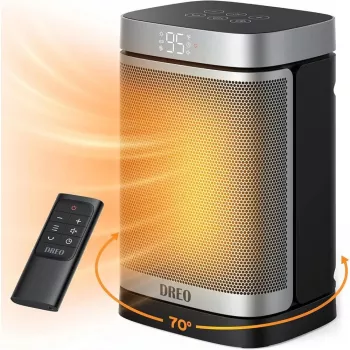
Oscillation matters because it sweeps warm airflow side-to-side, spreading heat across a wider portion of the room. Instead of a hot spot directly in front of the unit and cooler corners elsewhere, oscillation can reduce temperature pockets and make the room feel more evenly comfortable.
These heaters are a strong fit for bedrooms, home offices, living rooms, and drafty corners—provided they’re placed safely and used only indoors in dry locations (unless the product is explicitly rated otherwise). They can also be useful in a garage or workshop for short periods if the space is clean, dry, and you’re following clearance guidelines.
That said, a portable 1500W heater isn’t a full replacement for central heating in very large or poorly insulated spaces. Performance depends on room size, insulation quality, ceiling height, and how much air leaks in through doors and windows.
Key Comfort Features: Remote Control, Thermostat, and Heat Settings
Comfort often comes down to control. A remote lets you change settings from the couch, desk, or bed—useful for nighttime adjustments and for anyone who wants fewer up-and-down trips across a chilly room. A built-in thermostat helps hold a target temperature by cycling the heating element on and off, which can reduce overheating and keep the room feeling more consistent.
Multiple heat levels (commonly low/high) are another practical feature. Instead of running at full output nonstop, you can match the heater’s intensity to the room’s needs—especially handy during milder evenings or when you only need a gentle boost while you work.
If your heater includes a timer or sleep mode, it can support set-and-forget routines, helping prevent accidental all-night operation. Noise can matter too: fan-assisted heaters typically create a steady airflow sound. Many people prefer a consistent, low fan tone for sleeping rather than frequent loud changes.
| Feature | Why it matters | What to look for |
|---|---|---|
| 1500W max output | Fast warm-up for small-to-medium rooms | High/low modes for flexibility |
| Oscillation | More even heat distribution | Stable base and smooth swing motion |
| Remote control | Convenient adjustments from a distance | Clear buttons; works across the room |
| Thermostat | Helps hold a steady temperature | Adjustable setpoint; predictable cycling |
| Overheat protection | Reduces risk if airflow is blocked | Auto shutoff when too hot |
| Tip-over switch | Shuts off if knocked over | Instant cut-off; stable stance |
Safety Essentials for Portable Indoor Heating
Portable heaters are convenient, but safety needs to be treated as a primary feature—not an afterthought. Place the unit on a hard, flat surface where it won’t wobble. If you’re using it in a bedroom, keep it away from thick carpet edges or clutter where it could be bumped.
For additional guidance, review safety recommendations from the U.S. Consumer Product Safety Commission and heating safety tips from the NFPA.
Efficient Heating Habits That Keep Bills Lower
It also helps to understand the basic math: a 1500W heater uses up to 1.5 kWh per hour when running at full power. With thermostat cycling, the average consumption is often lower, depending on insulation and your target temperature. For more energy-saving tips, the U.S. Department of Energy offers practical guidance on using space heaters efficiently.
Room Placement and Setup for Even Warmth
Maintenance and Care to Extend Heater Life
Product Snapshot: 1500W Oscillating Area Heating System with Remote & Thermostat
If you want quick warm-up plus simple, from-across-the-room control, the 1500W Oscillating Area Heating System – Portable Indoor Heating System with Remote & Thermostat is designed for everyday zone heating. With oscillation to spread warmth and thermostat control to help maintain a steady feel, it’s a practical option for bedrooms, offices, and other frequently used spaces during cooler months.
For nighttime comfort, pairing room heat with the right bedding layers can help you stay warm without pushing the thermostat too high. A breathable layer like a Cotton Sleeping Bag Liner can add cozy coverage and help reduce that “cold sheet” feeling when you first get into bed.
FAQ
How much electricity does a 1500W portable heater use?
At full power, a 1500W heater uses up to 1.5 kWh of electricity per hour. If the thermostat cycles the heater on and off, the average hourly use is often lower, and your actual cost depends on your local electricity rate.
Is it safe to run a portable heater overnight?
It can be safer when the heater is on a hard, flat surface with 3 feet of clearance from bedding and curtains, and when it has tip-over and overheat protection. Avoid extension cords, keep airflow unobstructed, and use thermostat or timer features according to the manufacturer’s instructions.
What does oscillation do on an indoor heater?
Oscillation sweeps the heater’s warm airflow side-to-side to distribute heat more evenly across a room. Use it for shared spaces or when you want broader coverage, and turn it off when you want focused warmth in one seated area.









Leave a comment